


By Tinotenda Bhunu
HARARE – LET’S be honest. For most Zimbabweans, the word “inflation” stopped being just an economics term a long time ago. It became something you felt in your pocket, at the till, in the eyes of a vendor recalculating prices mid-conversation. So when the Reserve Bank of Zimbabwe (RBZ) says annual inflation is now sitting at 3.85%, single digits, for the first time in over thirty years, you are allowed to stop and actually take that in.
That’s not spin. That’s a real number, and it means something.

The Monetary Policy Committee met on 24 March and came away with a decision that won’t make headlines for its drama: hold the Bank Policy Rate at 35%, keep reserve requirements where they are, don’t rock the boat. “Stay the Course” is how they put it. It sounds almost boring. But after everything this economy has been through, boring is underrated.
The Numbers That Matter
The foreign currency picture has quietly turned encouraging. Mining exports, gold and platinum mostly, have pushed total inflows to US$3.35 billion in just the first two months of 2026. That’s nearly double what came in over the same stretch last year. Those dollars are doing real work: rebuilding reserves, holding the ZiG steady, giving both businesses and ordinary people some breathing room in a market that used to feel like it could tip over at any moment.
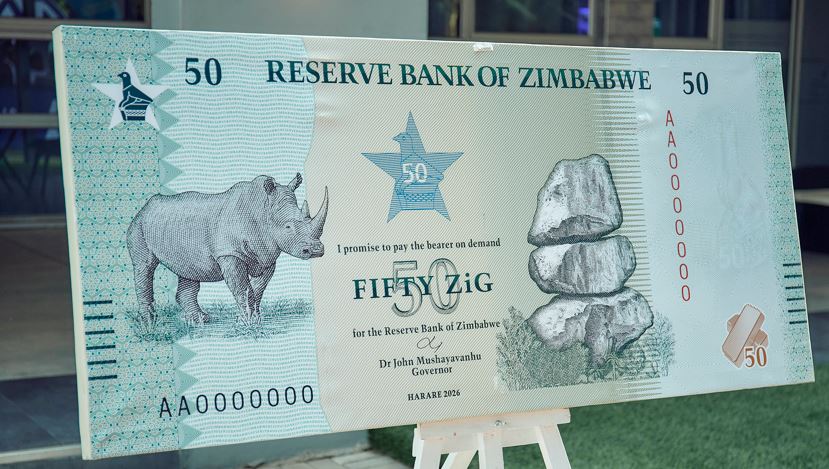
And the public seems to feel it. The BiG 5 ZiG Banknote Series, dropping on 7 April, has been met with genuine enthusiasm across provinces. That might sound like a small thing, but it isn’t. When people actually want to hold local currency instead of running from it, that’s not a communications win. That’s a shift in trust. And trust in a currency, once broken, costs an enormous amount to earn back. The MPC knows this better than most.
But the Room Is Still Shaking
Here’s where it gets complicated.
Oil prices have spiked globally, pushed higher by tensions in the Middle East. Zimbabwe doesn’t produce oil, so there’s nothing the Reserve Bank can do about that directly and to their credit, they say so openly. Fuel prices are a supply side problem, not a monetary one. Fair enough.
The trouble is what happens next. Fuel gets more expensive. Trucks and kombis cost more to run. Those costs move into transport fares. Transport fares move into food prices. Food prices change what workers ask for in wages. Wages change what businesses charge for goods. And somewhere in that chain, the inflation you thought you’d tamed starts creeping back, not because money supply got out of hand, but because a chain reaction that began somewhere in the Persian Gulf eventually landed at a bus rank in Harare.
The MPC expects month on month inflation to nudge upward through March, April and May before settling down from June. In a policy document, that reads as a contained and temporary blip. At Mbare Musika, those are three months of daily price decisions, thinner margins, and credit arrangements that were never built to absorb this kind of sustained pressure.
The informal economy doesn’t work on quarterly projections. It works today.
The Question Treasury Needs to Answer
This is the part of the conversation that keeps getting skipped over.
Monetary policy is carrying a load it was never meant to carry alone. When prices rise because oil is expensive in Rotterdam, not because Zimbabweans are spending recklessly, the response should involve fiscal tools too. Fuel levy reviews. Duty adjustments. Targeted relief where the pressure is sharpest. Those instruments belong to the Treasury, not the Reserve Bank.
The RBZ can’t produce oil. It can’t fix a global supply chain. What it can do, what it is doing, is hold the monetary environment stable enough that a bad situation doesn’t spiral into a currency crisis. That matters enormously. But if the Treasury isn’t moving alongside it, the Reserve Bank ends up holding an umbrella while the roof is coming apart above it.
Governor Mushayavanhu’s signal that the MPC will act quickly if conditions change is the right thing to say. The decision to temporarily pause the 90% export retention threshold for small scale gold miners, held back because too many artisanal miners simply aren’t banked yet, also shows a practical side that’s easy to overlook. Sometimes the right call is admitting a policy isn’t ready to land yet, rather than forcing implementation and dealing with the mess later.
A Rare Moment Worth Not Wasting
Single digit inflation. Growing reserves. A currency people are actually willing to use. These things coexist in Zimbabwe right now, and that is not nothing. It has taken years of painful adjustment to get here, and the MPC’s job, an unglamorous one, is to keep it from unravelling while the world outside does its best to complicate things.
“Staying the Course” is the right call. But let’s be clear about what that actually means: it’s a deliberate choice to absorb some short term pain rather than risk the exchange rate stability that everything else is sitting on. That’s not a weakness. That’s the discipline this economy has historically found it hardest to hold onto.
The harder question, the one that needs answering more urgently, is whether fiscal policy is ready to pull its weight. Because the Reserve Bank can keep the room steady. But it can’t stop the room from shaking on its own.

Tinotenda Bhunu is an economist and emerging thought leader specializing in economic policy, entrepreneurship, and development in fragile economies. With a sharp focus on market reforms, private property rights, and sustainable growth, he transforms complex economic challenges into actionable solutions that empower communities and shape the future of Zimbabwe and Africa.
Discover more from Etimes
Subscribe to get the latest posts sent to your email.