


By Andrea Nokwanda Bule
HARARE – MARCH is Women’s Month, a time when the world celebrates the achievements of women across industries, particularly in Science, Technology, Engineering and Mathematics (STEM).
As someone who comes from the field of Telecommunication Engineering, I celebrate these milestones with pride. Yet, the reality across much of Africa, including Zimbabwe, reminds us that the journey toward digital equality is far from complete.
Despite relatively strong internet penetration growth in Zimbabwe, connectivity, digital literacy and technical skills remain unevenly distributed, with women and rural communities often left behind. As of late 2025, Zimbabwe’s internet penetration stood at 38.4%. This means 10.5 million of our people which is 61.6% of the population remain offline.

In the era of Artificial Intelligence, this imbalance presents both a challenge and an opportunity. The recently launched Zimbabwe National Artificial Intelligence Strategy (2026–2030) arrives at a crucial moment—when the country must decide whether it will remain a consumer of global technologies or emerge as a creator of African AI solutions.
Zimbabwe’s strategy sends a clear message: the nation intends to shape the AI revolution rather than be shaped by it. It is time we stop being passive observers of the digital age and start owning our space as architects of our own future.
A Vision Rooted in Development and Sovereignty
Zimbabwe’s National AI Strategy is not simply a technology roadmap. It is a national development blueprint aligned with Vision 2030, aimed at transforming the country from a resource-based economy into a knowledge-driven and innovation-led economy.
The strategy envisions Zimbabwe becoming a regional hub for “AI for Development” in Southern Africa, using artificial intelligence to transform sectors such as agriculture, mining, healthcare, education and governance.
What makes this strategy uniquely Zimbabwean is its philosophical grounding in Ubuntu, ensuring that technology development remains human-centered, ethical, inclusive and culturally relevant. In essence, AI is not viewed as an abstract technological concept but rather as a tool for national prosperity, resilience and social transformation.
The Six Strategic Pillars of Zimbabwe’s AI Future
AI Talent and Capacity Development
At the heart of any AI ecosystem lies human capital. Zimbabwe’s strategy recognizes its greatest asset: a high literacy rate and strong education culture. The government aims to develop a robust talent pipeline through AI literacy programs, research centers and advanced AI education. One ambitious initiative is the goal to train over 1.5 million coders. This represents more than a technical initiative; it is a nationwide empowerment program, particularly for youth and women entering STEM fields.
AI Infrastructure and Computational Sovereignty
Artificial intelligence cannot exist without data, connectivity and computational power. The strategy prioritizes high-performance computing infrastructure, sovereign data platforms, Tier IV data centres, nationwide broadband connectivity and cloud architecture. These investments aim to ensure Zimbabwe maintains digital sovereignty. However, infrastructure must extend beyond cities; for AI to truly serve development, connectivity must reach the last mile.
Connectivity: The Hidden Backbone of AI
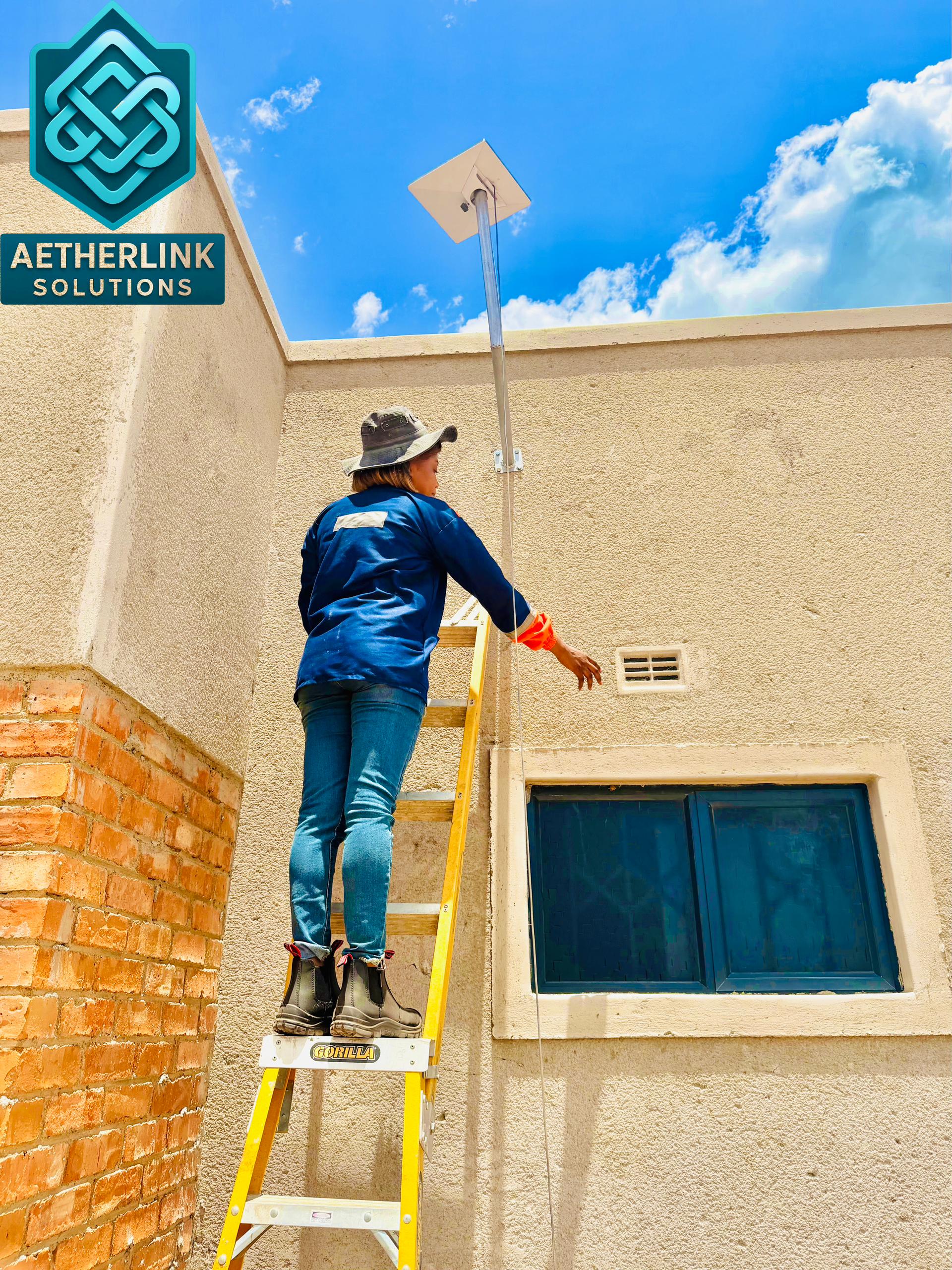
As someone deeply passionate about expanding connectivity through Aetherlink, a startup focused on Starlink deployments, connectivity solutions and data storage, I have witnessed firsthand the transformative power of internet access.Installing satellite connectivity kits in rural homes, schools and communities is more than a technical exercise. It is an act of unlocking opportunity.Once connected, communities gain access to digital education platforms and global information networks,remote healthcare services, online entrepreneurship, AI-powered agricultural tools.Connectivity, therefore, becomes the foundation upon which the AI ecosystem is built.
The strategy acknowledges this clearly: AI adoption requires robust network infrastructure, including fibre networks, mobile broadband and emerging technologies such as Low Earth Orbit (LEO) satellites.
LEO satellites, including systems like Starlink, represent a game-changing opportunity for Africa, allowing countries like Zimbabwe to leapfrog traditional infrastructure limitations.
The Rural Revolution
For years, the rural-urban digital divide was treated as an almost unsolvable problem. Traditional infrastructure fibre and cell towers struggled to reach the “last mile” due to cost and terrain. Starlink has bypassed that entirely.
To bridge this gap, the government has moved from rhetoric to action, most recently launching the Presidential Internet Scheme, which includes the donation of 8,000 Starlink kits specifically to primary and secondary schools across our remote and underserved districts. Initiatives like these, supported by partners like the People’s Own Savings Bank (POSB), are finally bringing solar-powered, high-speed internet to schools that were previously left in the dark.
The Reality Check: Why the Gap Still Exists
While the surge in Starlink adoption, reaching over 40,000 subscribers by the second half of 2025 is proof of progress, we must remain unapologetic about what remains to be done.
Connecting a school is not the same as connecting a community. The remaining gap is not just about the “dish” it’s about:
The Cost of Entry: Even with more affordable hardware, the monthly subscription fees remain a significant barrier for rural households living in the informal economy.
Digital Literacy: Providing a connection is only half the battle; we need the local skills to turn that connection into educational and economic output.
Power Infrastructure: Reliable internet is useless without reliable electricity. Sustainable solar-power solutions are the mandatory companion to every internet kit we deploy.
We are moving fast, but we cannot afford to leave any Zimbabwean behind. The goal isn’t just to see Starlink dishes in our villages; it’s to ensure that the farmer, the student, and the small-business owner in the furthest corners of our nation are creators of digital value, not just passive users.
From Users to Creators: Accelerating AI Adoption
Zimbabwe possesses a unique advantage. Instead of replacing outdated legacy systems, we can leapfrog directly into AI-driven infrastructure. The strategy encourages a phased journey:
AI Users: Citizens adopt AI-powered tools.
AI Builders: Developers create applications and local solutions.
AI Innovators: Zimbabwe exports AI technologies globally.
The Power of Data: Zimbabwe’s Next Strategic Asset
Artificial intelligence thrives on data. The strategy highlights the need for strong data governance and interoperable datasets. Across sectors like agriculture—where IoT sensors and smart monitoring are already changing how we view crop disease and climate-smart farming—and logistics, where AI-driven cold-chain monitoring is essential for our growing blueberry exports, the potential is massive.
Cybersecurity: The Invisible Pillar of Digital Transformation
As connectivity expands, cybersecurity becomes non-negotiable. The strategy integrates safeguards to protect citizen data, national infrastructure and our growing digital identity systems. We cannot build a house on a weak foundation; robust cybersecurity frameworks are the only way to ensure our digital transformation is secure and sustainable.
A National Opportunity
Ultimately, Zimbabwe’s National AI Strategy represents something far greater than a policy document. It is a national call to action for us—the engineers, the entrepreneurs, the startups and the innovators. When millions of Zimbabweans gain access to these tools, the country will possess its most valuable resource: a digitally empowered population capable of building the future.
Conclusion: Building the Foundations of an AI Nation
Artificial Intelligence is often discussed in terms of algorithms and machines. Yet the real foundation lies in something much simpler: people, connectivity and data.
Zimbabwe stands at a pivotal moment. We can successfully expand connectivity, invest in skills, protect our rights and empower our innovators, we can emerge as a continental leader. But one principle must remain central: AI must serve humanity and leave no Zimbabwean behind. Only then will the promise of the Fourth Industrial Revolution translate into shared prosperity for our nation.
Andrea Nokwanda Bule is a BSc Telecommunications Engineering graduate and Founder of AetherLink Solutions, a startup dedicated to expanding digital connectivity across Zimbabwe. With expertise in satellite deployments and infrastructure logistics, she bridges the digital divide for underserved communities. Andrea is a Cisco Certified Network Associate , Data Analyst and a member of the Young AI Leaders Community, advocating for sovereign digital infrastructure and human-centric AI adoption.

Phone number: +263771537759
Email address: andrea@aetherlink.co.zw
LinkedIn: https://www.linkedin.com/in/andrea-n-bule
Discover more from Etimes
Subscribe to get the latest posts sent to your email.