


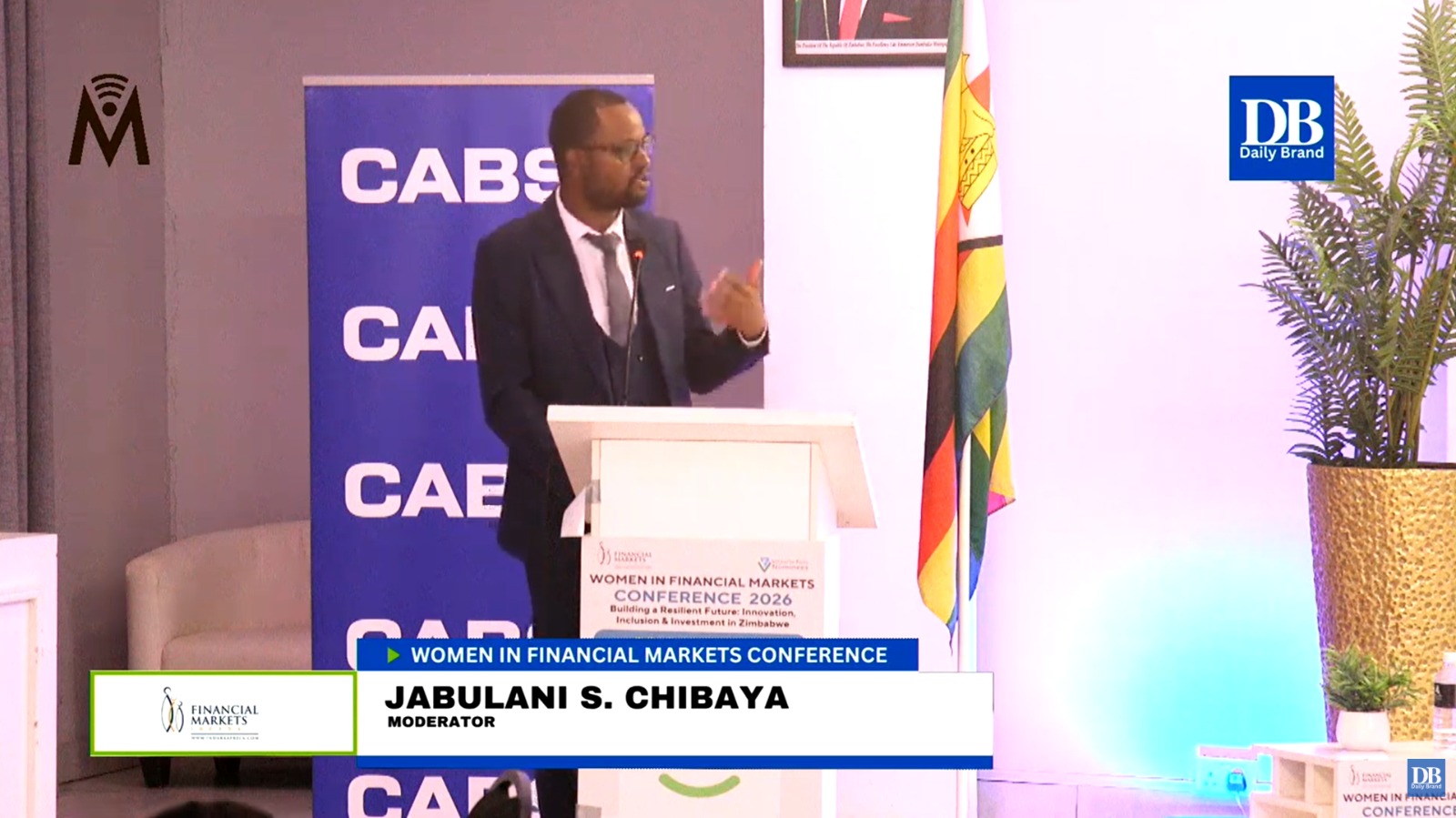
By Jabulani Simplisio Chibaya
HARARE – THE Women in Financial Markets 2026, hosted by Financial Markets Indaba and Victoria Nominees on 20 March at Golden Conifer, was not just another industry gathering—it was a reflection of a financial ecosystem in transition. Bringing together women across banking, insurance, fintech, and investment, the event created a platform for rich, forward-looking dialogue on personal branding, leadership, smart money strategies, and the rapidly evolving payments landscape.
At the heart of the conversations was a simple but powerful reality: Zimbabwe is undergoing a structural shift in how money is stored, moved, and trusted.

From Zvigaba to ZIPIT: The Evolution of Money in Zimbabwe
One of the most compelling panels, “From Cash to Clicks: The Role of Digital Payment Platforms in Scaling E-Commerce and Driving Financial Inclusion,” captured this transformation vividly. Moderated by Jabulani Chibaya, the discussion framed Zimbabwe’s journey from informal saving mechanisms—zvigaba tins and piggy banks—to a sophisticated digital ecosystem powered by mobile apps, USSD, internet banking, WhatsApp integrations, and instant payment solutions like ZIPIT.
This evolution is not merely technological—it is cultural and economic. Payments are no longer just transactions; they are data-rich interactions. Each digital payment now carries metadata that can unlock insights into consumer behavior, creditworthiness, and economic activity. In this sense, data itself is becoming a new form of collateral, with the potential to reshape lending, risk assessment, and financial inclusion.
Building the Rails: Infrastructure, Innovation, and Local Talent
The panel featured two key industry players: Zimswitch, represented by Sharon Marira, and InnBucks, represented by George Nheweyembwa.
Sharon highlighted the significant strides made by Zimswitch in building interoperable payment infrastructure. Through integrations across banks and the enablement of peer-to-peer (P2P) platforms, Zimswitch has positioned itself as a backbone of Zimbabwe’s digital payments ecosystem—supporting approximately 75% of all cashless transactions. Contrary to common perception, Zimbabwe is not lagging; in several respects, it is keeping pace with continental leaders such as South Africa, Nigeria, and Kenya, while also contributing meaningfully within the SADC region.
George shared the remarkable and unconventional journey of InnBucks—from a simple loyalty rewards platform to a microfinance institution, and now on the path toward becoming a fully-fledged bank. With over 3 million users and a wide distribution network anchored on Simbisa Brands outlets, InnBucks has embedded itself into everyday commerce. Its expansion into e-commerce logistics through Dial-a-Delivery further signals the convergence of payments, retail, and digital marketplaces.
A key insight from both speakers was the competitive advantage of local innovation. Zimbabwean-built solutions, powered by local talent, are increasingly outperforming imported systems that often require heavy customization. This is a powerful validation of the country’s technical capabilities and entrepreneurial resilience.
The Trust Deficit: Zimbabwe’s Biggest Financial Barrier
Despite the progress, a critical challenge remains: trust.
The ecosystem, as both panelists noted, is still fragmented and disjointed. For a population deeply accustomed to cash—and shaped by years of financial instability—confidence in digital financial systems is not automatic. Many Zimbabweans still store value in physical forms: cash in homes, in tins, or under mattresses.
Unlocking this trapped liquidity is essential.
Trust is not just a soft concept—it is an economic lever. Without it, savings remain idle, financial intermediation is weakened, and the broader economy struggles to achieve scale. With it, however, Zimbabwe could transition into a 24/7 digital economy, enabling seamless e-commerce, improved savings culture, and broader financial inclusion.
Encouragingly, the panel highlighted that informal sector transactions are increasingly moving online, with digital wallets accounting for a significant share of this shift. This signals behavioral change already underway—one that can be accelerated with the right policies, platforms, and protections.
Macro Signals and Market Opportunities
The presence of Reserve Bank of Zimbabwe, represented by Innocent Matshe, added a macroeconomic lens to the discussions. His remarks pointed to a cautiously optimistic outlook: GDP growth, improving reserves, relative currency stability, and the possibility of single-digit inflation—conditions not seen consistently in over three decades.
On the investment front, insights from Coreen Madanha of InvestIQ Oak Wealth challenged prevailing narratives about Zimbabwe’s capital markets. While often perceived as slow, these markets remain active and opportunity-rich.
Key highlights included:
Growing participation on the Zimbabwe Stock Exchange, Victoria Falls Stock Exchange, and FINSEC
Over $100 million raised on VFEX in the past five years
Increased uptake of REITs such as Pfuma REIT, Eagle REIT, and Tigere REIT
Strong investor appetite, evidenced by oversubscription in capital raises—such as Caledonia Mining Corporation attracting $600 million in offers against a $150 million target
Emerging players like Kavango Resources gaining traction
Sectors such as gold mining and agribusiness continue to show strong performance, particularly on the VFEX, reinforcing Zimbabwe’s natural resource advantage.
A Defining Moment: Building Markets, Ecosystems, and Confidence
Zimbabwe stands at a crucial inflection point.
The country possesses the talent, infrastructure, and innovation capacity to build a robust financial ecosystem that supports not only payments, but also capital markets, e-commerce, and wealth creation. Yet, the path forward requires more than technology.
It demands:
Patience in rebuilding systems and confidence
Collaboration across institutions and sectors
Integration to eliminate silos and fragmentation
Trust-building mechanisms to bring liquidity into the formal system
Ultimately, financial inclusion and innovation are not parallel goals—they are deeply interconnected. A digitally empowered population is not just more convenient to serve; it is more economically active, more investable, and more resilient.
The conversations at Women in Financial Markets 2026 made one thing clear: Zimbabwe is not short of ideas, capability, or opportunity. What remains is execution at scale—and the collective will to build a system that works for everyone.
In this moment, Zimbabwe is not merely adapting to the future of finance—it is actively shaping it.

Jabulani Simplisio Chibaya is a Data and AI Consultant specializing in data science, artificial intelligence, blockchain, and cryptocurrency innovation. A seasoned conference speaker, he also writes on the intersection of technology, regulation, and economic development. Contact: Cell: +263 778 921 881, Email: simplisiochibaya22@gmail.com, LinkedIn: https://www.linkedin.com/in/jabulani-simplisio-chibaya
Discover more from Etimes
Subscribe to get the latest posts sent to your email.