


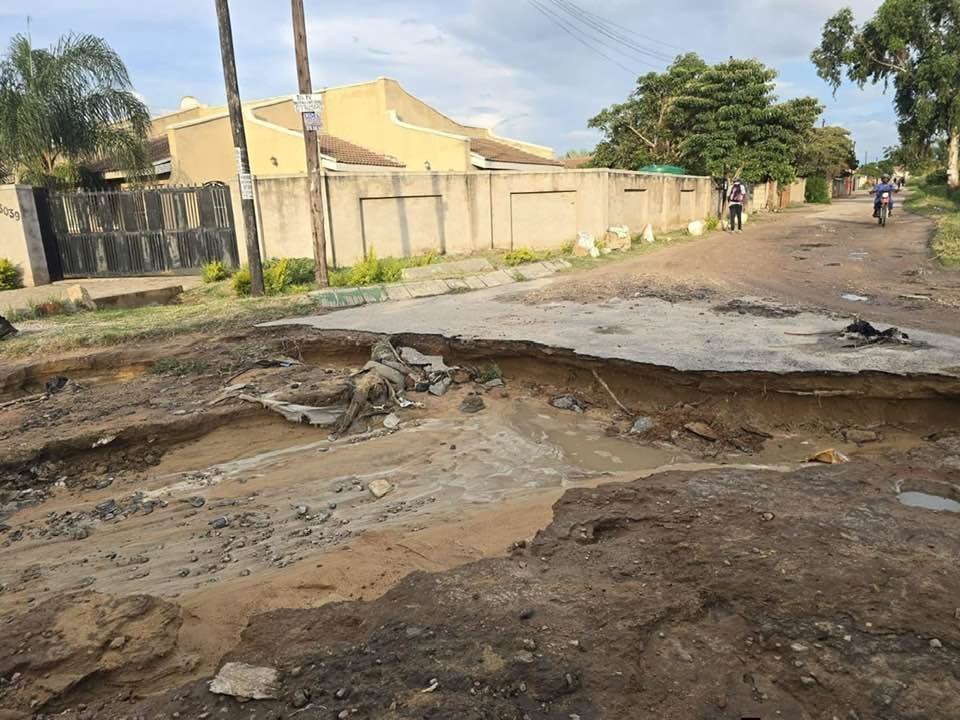
…a city in decay and a US$200 million ERP black hole
By Tonderai Godknows Mapfumo
HARARE – HARARE’S decay isn’t merely a result of unfortunate circumstances; it’s a predictable outcome of a system that has ignored fundamental economic principles for decades. At the heart of this is a failure to implement a functional Enterprise Resource Planning (ERP) system. As Ludwig von Mises argues, a central planner cannot efficiently allocate resources without market prices. The city’s inability to track US$200 million in revenue exemplifies this “systemic blackout.” Unlike in a free market, where inefficient firms would face bankruptcy, the Harare City Council (HCC) merely requests increased rates from residents, further entrenching the cycle of mismanagement.

Monopoly Stagnation: Why the Sewers Stay Burst
Monopolies, particularly those backed by government privilege, are prone to stagnation. The HCC holds a monopoly on sewer and water services, which obliterates any competitive pressure to innovate or maintain infrastructure. Residents in neighborhoods like Mufakose are left with no alternative but to endure poor service quality. Without the profit-driven incentive found in a competitive market, the council has little motivation to address infrastructural decay, leading to the persistent issue of burst sewers and unsanitary conditions.
The Tragedy of the Commons: Clogged Drains and Flooding
The public ownership model in Harare has resulted in what economists call the “Tragedy of the Commons.” Clogged drains and flooding in the CBD represent this phenomenon vividly. With no private ownership to protect the long-term capital value of infrastructure, residents find themselves living in a “dirty city” where the costs of neglect are socialized and borne by the public. The bureaucratic inaction and apathy become a source of harm for everyone, revealing the failures of collective responsibility.
The Solution: The Case for Privatization
Ending Bureaucratic Management
A compelling solution lies in privatizing municipal services. By drawing from the Mises Institute’s models, we can see that privatization introduces the necessary profit-and-loss accounting vital for efficient resource allocation. Instead of relying on a bureaucratic entity, private firms would handle waste management and water services—getting paid only for visible results. This would create competition, which inherently drives quality and innovation.
Voluntary Contracts
Privatization would allow residents to engage in voluntary contracts with service providers. This shift from coercive municipal rates to choice-driven agreements empowers citizens. If a service provider fails to meet expectations, residents can switch to competitors, thus forcing service providers to maintain high standards. In the case of refuse collection, competition would encourage efficiency and raise service quality, addressing the current issues head-on.
Asset Restoration
When residents own their public spaces, there is a direct financial incentive for maintenance and restoration. As Bastiat aptly pointed out, the perversion of law deprives individuals of their rights (Bastiat, The Law). The restoration of individual property rights, facilitated through privatization, fosters an environment where residents have both the responsibility and the incentive to care for their surroundings—transforming Harare from a state of decay to one of vibrancy.
Global Models: The Power of Smart Cities
Japan (Fujisawa Sustainable Smart Town)
International smart city models provide a roadmap for Harare’s revival. For instance, Japan’s Fujisawa Sustainable Smart Town, managed by a consortium including Panasonic, utilizes Home Energy Management Systems and smart sensors to automate energy usage and security. This ensures resilience during disasters while managing resources effectively. Such frameworks show that technology and privatized governance can yield self-sustaining urban environments.
Switzerland (Zurich)
Examining Zurich’s success offers more valuable insights. Consistently rated as a top smart city, Zurich integrates IoT sensors in its drainage and waste systems to predict flood risks and streamline waste collection. This integration of technology enables better urban management, showcasing how careful planning and competitive pressures can yield urban functionality and cleanliness, benefits that Harare desperately needs.
North Korea (Mirae Scientists Street, Pyongyang)
Notably, even in politically restrictive environments like North Korea, systems such as the Mirae Scientists Street illustrate effective resource management through centralized automated systems for utilities like heating and electricity. This reinforces the idea that focused infrastructure development can lead to orderly urban environments, a principle that could be beneficially adapted to Harare’s unique challenges.
The Land Crisis: A Visible Evidence of Rot
Land Barons: Political Entrepreneurship vs. Market Entrepreneurship
The real estate landscape in Harare highlights significant failures in property rights. The “land barons,” who exploit weak property laws for personal gains, represent a form of political entrepreneurship that distorts real estate markets. In an Austrian economic model, genuine entrepreneurs create value through serving consumers, while Harare’s land barons thrive through favoritism and legal loopholes fostered by a lack of transparent property rights.
Illegal Settlements and the “Mystery of Capital”
Illegal settlements in areas like Epworth serve as another stark reminder of Harare’s institutional decay. As economist Hernando de Soto posits, these settlements represent “dead capital” because residents lack formal title deeds. Without legal recognition, they cannot leverage their properties for loans to start businesses or improve conditions. The council’s monopolization of land title issuance has obstructed informal settlements from transitioning into vibrant communities, stifling the growth of a self-improving urban fabric.
The Housing Backlog: A Product of Supply-Side Suppression
With a backlog of over 500,000 housing projects, Harare faces an alarming disconnect between supply and demand. A truly free market would adjust to housing shortages by incentivizing development. Instead, the council’s heavy-handed regulations stifle land development and create obstacles that hinder new construction. The backlog reflects a system suffocated by bureaucratic oversight, stifling growth and exacerbating the housing crisis.
Conclusion: A Call to Action
The time for change in Harare has come. The burgeoning humanitarian crisis and decades of municipal failure highlight the urgent need for reform. Inspired by principles of private entrepreneurship, individual property rights, and smart city innovations, Harare can return to its roots as the “Sunshine City.”
As Bastiat poignantly warns against the ills of legal plunder, municipal leaders at Town House must introspect rather than shift blame to the central government, especially while they drive luxury cars amid an infrastructure collapse. Privatisation, decentralisation, and competition are no longer mere options; they represent the only viable path forward for reclaiming Harare’s dignity, prosperity, and rightful place in the sun.
Tonderai Godknows Mapfumo is the Research and Advocacy Officer for COMALISO (Coalition for Market and Liberal Solutions) in Zimbabwe and an Associate of the Free Market Foundation.
Discover more from Etimes
Subscribe to get the latest posts sent to your email.