


By Jabulani Simplisio Chibaya
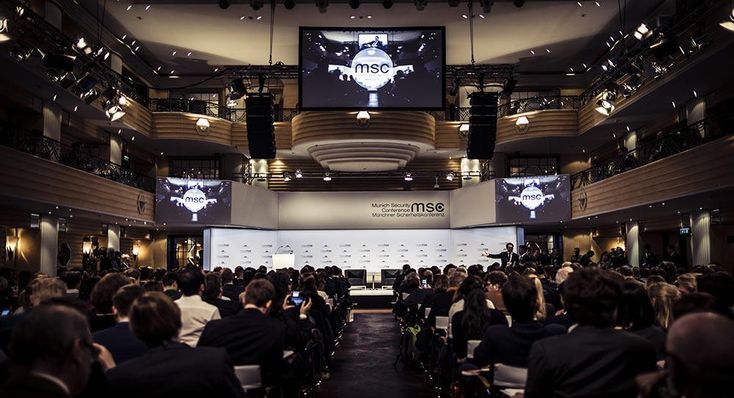
HARARE – THE 62nd Munich Security Conference (MSC), held from 13–15 February 2026 under the theme “Under Destruction,” delivered a sobering message to the world: the era of easy global interdependence is fading. In its place is a system defined by managed strategic rivalry, technological sovereignty, and the securitisation of everything — from semiconductors to supply chains, from data flows to Arctic sea routes.
For business leaders, entrepreneurs, AI innovators and fintech founders, Munich 62 was not merely about geopolitics. It was about the restructuring of the global operating system.

From Cooperative Globalisation to Strategic Rivalry
The central debate at MSC 62 was whether the rules-based international order is broken — or merely bruised.
U.S. Secretary of State Marco Rubio adopted a conciliatory tone, urging Europe to help “save the West” as a shared civilisation. Yet his dismissive posture toward the United Nations and climate commitments triggered pushback from EU High Representative Kaja Kallas, who rejected narratives of European “civilisational erasure.”
German Chancellor Friedrich Merz was blunt: the U.S.-led order “no longer exists.” Europe, he argued, must become a self-sustaining military and industrial pillar. European Commission President Ursula von der Leyen went further, proposing that Article 42.7 of the EU Treaty be strengthened to rival NATO’s Article 5.
What this means for business:
Geopolitics is no longer background noise.
Regional blocs will harden industrial policy.
Capital allocation will increasingly follow security logic.
For fintech and AI firms, compliance, jurisdictional alignment, and cross-border data strategy are now strategic boardroom issues — not legal afterthoughts.
Ukraine, the Arctic and the Militarisation of Industry
President Volodymyr Zelenskyy called for a concrete 2027 EU accession timeline. Europe pledged to compensate for dwindling U.S. military aid, even as Russia showed little appetite for serious peace talks.
Meanwhile, Arctic tensions intensified. U.S. interest in Greenland was firmly rebuffed by Danish Prime Minister Mette Frederiksen, who called territorial integrity a “red line.” UK Prime Minister Keir Starmer announced deployment of a carrier strike group to the Arctic to deter Russian threats.
Behind these headlines lies a structural shift:
Drone manufacturing deals between Ukrainian and German private firms.
The “Hansa Arrangement” between Germany and Norway covering space-based surveillance and maritime security.
A “Triple Cyber Alliance” between Romania, Moldova and Ukraine focused on joint security services and energy resilience.
Subnational diplomacy, with California Governor Gavin Newsom signing a trade and reconstruction MoU with Ukraine’s Lviv region.
Key takeaway: Defense, cyber infrastructure, AI, and advanced semiconductors are no longer neutral commercial goods. They are national security assets.
For entrepreneurs, this marks the rise of the dual-use economy — where civilian innovation and military capability increasingly overlap.
Technological Sovereignty: AI as Strategic Infrastructure
At Munich 62, AI, advanced semiconductors, and cyber infrastructure were formally reframed as pillars of sovereignty.
This has three major implications:
- AI will be regulated like critical infrastructure.
- Semiconductor access will shape geopolitical alliances.
- Cyber resilience will determine capital inflows.
The Munich Security Index 2026 reinforced this shift. G7 publics ranked cyberattacks, financial crises, and disinformation as top risks. Younger generations prioritised climate change and inequality; older generations focused on Russia and cyber threats.
For fintech, this means:
Cross-border payments will face deeper scrutiny.
RegTech and CyberTech will experience accelerated demand.
Sovereign digital currency conversations will intensify.
In effect, the digital economy is being nationalised in mindset — even if not in ownership.
Zimbabwe at Munich 62: Re-engagement in a Fragmented World
Zimbabwe’s presence at MSC 62 was both symbolic and strategic.
Minister of Defence Oppah Muchinguri-Kashiri attended for the second consecutive year, reinforcing President Mnangagwa’s “friend to all, enemy to none” engagement doctrine.
Key focus areas included:
Strengthening Zimbabwe–Germany bilateral ties (mine clearance, transfrontier conservation, humanitarian cooperation).
Positioning Zimbabwe as an active SADC security participant.
Participation in a high-level women-in-leadership peacebuilding forum.
However, the EU simultaneously extended its arms embargo on Zimbabwe to February 2027 — while signalling constructive engagement and openness to deeper trade and investment relations, following the removal of targeted sanctions on individuals and entities.
Translation for business:
Zimbabwe is navigating a delicate geopolitical balancing act — constrained in defense matters, but gradually reopening economically.
Cassava Technologies and the Rise of Trusted Digital Infrastructure
Against this backdrop, Cassava Technologies announcing its role as a founding member of the Trusted Tech Alliance — launched at the Munich Security Conference — is strategically significant.
The Alliance commits members to five principles:
Transparent corporate governance and ethical conduct
Operational transparency and secure development
Robust supply chain oversight
Open and resilient digital ecosystems
Respect for rule of law and data protection
This aligns precisely with Munich 62’s redefinition of technology as sovereign infrastructure.
For Zimbabwe and the region, this is profound:
It positions a Zimbabwe-linked technology group within global trust frameworks.
It enhances credibility for data centers, AI infrastructure, and fintech ecosystems.
It signals compliance with global cybersecurity and governance standards.
In a world where trust is becoming a currency, alignment with trusted tech coalitions lowers sovereign risk perception and attracts institutional capital.
What It Means for the World — and for Zimbabwe
Munich 62 made one thing clear:
We are entering an era where security, technology, and capital markets are inseparable.
For global markets:
Expect continued defense-tech expansion.
AI regulation will harden across blocs.
Supply chains will regionalise.
For Africa:
Digital infrastructure will determine strategic relevance.
Nations that align with trusted governance frameworks will capture AI and fintech investment flows.
For Zimbabwe:
Engagement diplomacy must now translate into technology diplomacy.
Strengthening rule-of-law and data protection frameworks will be essential.
Companies like Cassava can become bridges between African innovation and global security-aligned capital.
Munich 62 was not simply a security conference.
It was a signal that the future of entrepreneurship, fintech, AI, and sovereign capital will be shaped less by ideology — and more by trust, resilience, and strategic alignment.
In a world “under destruction,” opportunity belongs to those who can build trusted systems amid fragmentation.
Jabulani Simplisio Chibaya is a Data and AI Consultant specializing in data science, artificial intelligence, blockchain, and cryptocurrency innovation. A seasoned conference speaker, he also writes on the intersection of technology, regulation, and economic development. Contact: Cell: +263 778 921 881, Email: simplisiochibaya22@gmail.com, LinkedIn: https://www.linkedin.com/in/jabulani-simplisio-chibaya