


By Jabulani Simplisio Chibaya
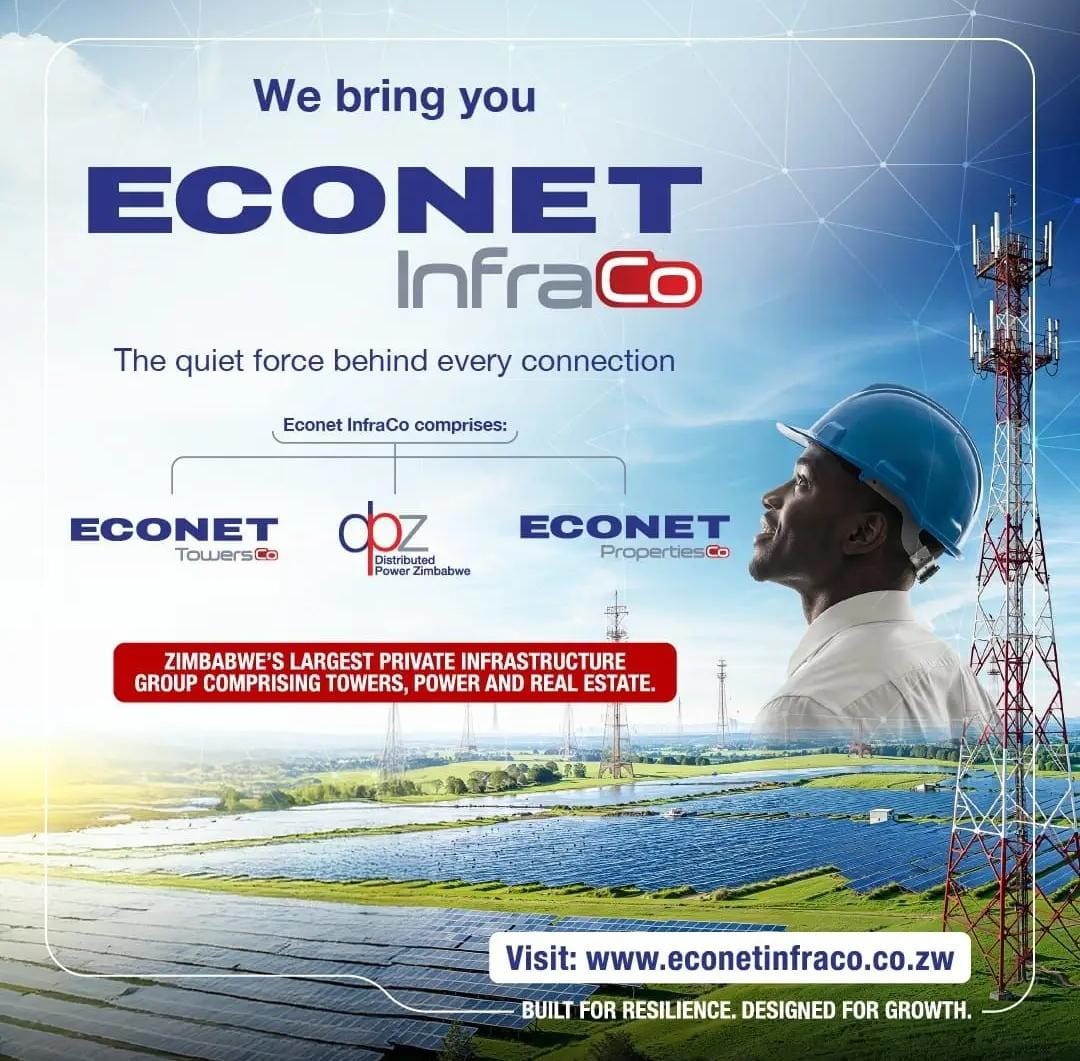
HARARE – ZIMBABWE’S telecoms and fintech landscape is entering one of its most structurally important transition phases in years. The proposed delisting of Econet Wireless Zimbabwe from the Zimbabwe Stock Exchange and the potential relisting of a separate infrastructure entity (InfraCo) on the Victoria Falls Stock Exchange (VFEX) is not just a corporate reshuffle, it is a strategic reset that changes how investors should think about value, risk, currency exposure and long-term returns. When this restructuring is viewed alongside Starlink’s renewed expansion into previously sold-out Harare and Bulawayo zones, intensifying mobile money competition, possible shifts linked to the removal of ZIDERA, and the accelerating role of artificial intelligence in telecoms and fintech, retail investors are no longer simply evaluating a telecom company. They are evaluating a technology ecosystem under competitive and regulatory pressure.
The first concern for any investor is structural clarity. It is essential to understand exactly what is being delisted and what is being relisted. Telecom operations, infrastructure assets such as towers and fibre, and fintech platforms like EcoCash are distinct economic engines with different revenue models and risk profiles. If InfraCo is listed separately on VFEX, investors must understand whether they are holding exposure to a service operator, a network infrastructure yield vehicle, a fintech platform — or a narrower slice of the former integrated business. Each of these carries different growth prospects, capital needs and valuation logic.

Closely linked to structure is the quality and transparency of information available to investors. Corporate restructurings can create value, but they can also quietly transfer value depending on how assets, debt and contracts are allocated. Retail investors should pay attention to official circulars, shareholder notices and transaction documents. Asset transfer pricing, debt allocation between the old and new entities, related-party agreements and minority shareholder protections all matter. Decisions should be grounded in primary disclosures rather than social media interpretations or market rumour.
A restructuring of this magnitude often leads to valuation reset risk. Infrastructure companies are typically valued differently from integrated telecom operators. They are often treated more like utilities or yield vehicles than growth stocks. That can mean lower earnings multiples but more predictable cash flow expectations. Investors must therefore recalibrate their expectations. A business that looks cheaper or more expensive after restructuring may simply be operating under a different valuation framework.
The VFEX listing dimension introduces its own set of opportunities and risks. A USD-denominated exchange offers currency stability, offshore investor access and potentially cleaner capital-raising channels. However, VFEX is still less liquid than the ZSE, has a smaller investor base and can experience slower price discovery. Retail investors must realistically consider exit liquidity. Owning a USD asset is attractive — but only if one can trade it efficiently when needed.
Understanding the InfraCo revenue model is another critical factor. Infrastructure entities typically earn income through tower leasing, fibre leasing, backbone capacity contracts and network access fees. Investors should examine whether leases are long-term, whether contracts are inflation-linked, and whether anchor tenants are secured. Tenant concentration risk is especially important. A stable anchor client such as the former parent telecom operator can provide predictable income — but concentration also creates dependency risk if commercial terms change in the future.
Competition dynamics are also shifting rapidly, particularly with Starlink’s expansion. The reopening of capacity in previously sold-out urban zones signals increased satellite broadband penetration. This affects enterprise connectivity, SME internet resilience planning and high-end residential broadband. For incumbent operators, the result is not immediate displacement but margin pressure and forced innovation. Pricing models, service bundling and infrastructure partnerships may all need to evolve. Investors should treat satellite broadband not as hype, but as a structural competitive variable.
The mobile money space is no longer a one-horse race. EcoCash once dominated digital transactions in Zimbabwe, but the competitive field has widened. Banks now operate stronger digital wallets, fintech startups are innovating rapidly, card rails are improving, and cross-border platforms are more accessible. Informal crypto-based remittance channels are also influencing behavior at the edges. Investors should watch wallet activity levels, merchant acceptance growth, transaction values and fee compression trends. Fintech leadership positions can erode faster than telecom infrastructure advantages.
A potential removal or easing of ZIDERA adds another layer of complexity. Reduced restrictions could improve correspondent banking relationships and remittance flows, lowering friction and increasing formal transaction volumes. That could benefit mobile money platforms through higher throughput. At the same time, it could invite stronger global remittance competitors into the market, compressing margins even as volumes grow. The outcome may be positive for usage but mixed for profitability, which investors must factor into expectations.
Artificial intelligence is becoming a decisive force across both telecom and fintech operations. On the advantage side, AI enables stronger fraud detection, network optimisation, predictive maintenance, automated customer support and smarter credit scoring for digital lending. On the risk side, AI also strengthens fraud tools, enables more convincing scams, enhances synthetic identity attacks and increases the sophistication of social engineering. Investors should assess whether companies are investing in defensive AI capabilities as aggressively as they are investing in operational AI efficiency.
Governance and incentive alignment must not be overlooked during restructuring. When assets are separated and listed in new vehicles, board composition, director independence, cross-shareholding structures and related-party transactions become especially important. Investors should evaluate whether governance frameworks protect minority shareholders and whether executive incentives are aligned with long-term value creation rather than short-term transaction completion.
Capital use following restructuring is another essential lens. Funds raised or freed through asset transfers can be directed toward debt reduction, network upgrades, AI capability development and expansion — or they can be used primarily for shareholder exits and internal balance sheet rearrangements. Growth-enabling capital allocation is generally more favorable for long-term investors than cosmetic financial engineering.
Finally, investors should expect post-event volatility and treat it as normal rather than alarming. Major corporate actions typically trigger price swings as early holders exit, arbitrage players enter and liquidity patterns shift. The disciplined investor responds not with panic but with renewed fundamental analysis — reassessing valuation, execution progress and strategic positioning under the new structure.
The overarching reality is that this is no longer simply a telecom stock story. It is now a convergence narrative involving digital infrastructure, USD capital markets, satellite competition, fintech rivalry, remittance geopolitics and artificial intelligence. In convergence plays, understanding corporate structure and incentive design is just as important as understanding earnings. For the retail investor, deeper analysis is no longer optional — it is the new entry ticket.

Jabulani Simplisio Chibaya is a Data and AI Consultant specializing in data science, artificial intelligence, blockchain, and cryptocurrency innovation. A seasoned conference speaker, he also writes on the intersection of technology, regulation, and economic development. Contact: Cell: +263 778 921 881, Email: simplisiochibaya22@gmail.com, LinkedIn: https://www.linkedin.com/in/jabulani-simplisio-chibaya
Discover more from Etimes
Subscribe to get the latest posts sent to your email.