


By Tonderai Godknows Mapfumo
HARARE – FOR any serious investor weighing Zimbabwe, the threshold question is not incentives, but enforcement. If a city cannot reliably enforce its own bylaws—even against an elected official—then property rights and regulatory compliance become uncertain.
The Mabelreign shopping centre saga (where permanent structures were allegedly built on land designated as a public car park, then later demolished after public outcry) is therefore more than a local controversy. It is a warning signal about how governance failures are interpreted by domestic and international capital.

In short: even if one building is removed, the underlying message stays. If the system that should constrain power does not work, investors price the risk and hold back capital.
Service delivery collapse: the social contract breaking
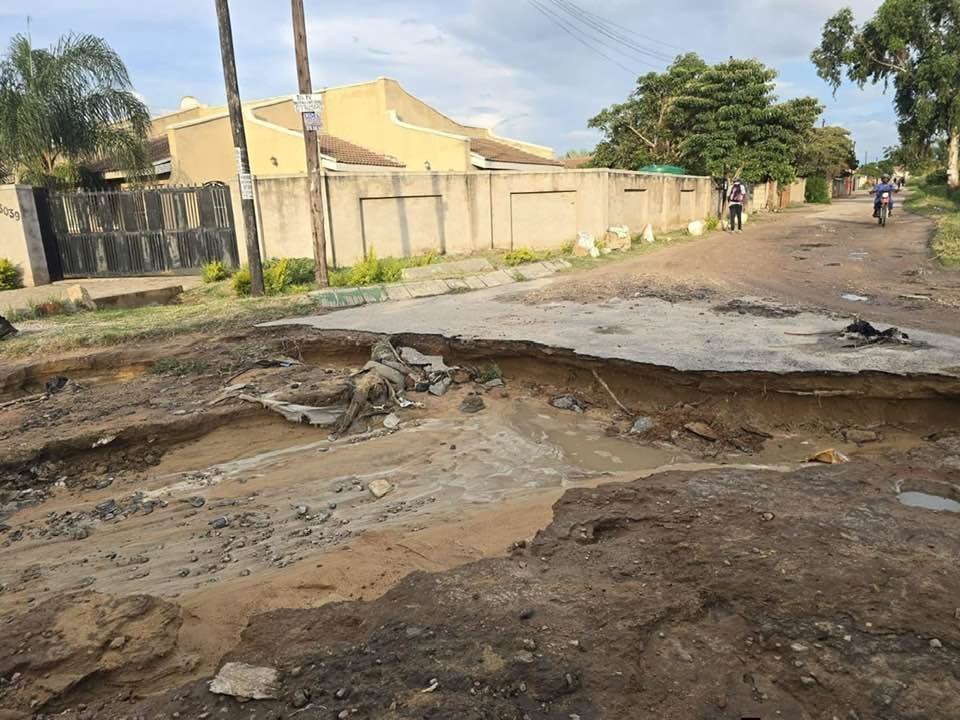
Harare’s weakening delivery of core services—water, roads, waste management—imposes direct operational costs on businesses. When council systems fail, companies must self-provide services that would normally be municipal.
That “self-provision tax” is not only capital spending (boreholes, generators, private access roads). It also increases monthly operating costs (fuel, maintenance, private waste disposal, and security), reducing profitability and raising the break-even point.
It becomes a structural competitiveness problem. Even when businesses pay, they often still face poor service delivery, which destroys the expectation of reciprocity that underpins taxation and investment decisions.
Bylaws become optional: uncertainty as a governance system
Investment requires predictability: what can be built, where it can be built, and which approvals are valid over time. When zoning and development control become inconsistent, investors face uncertainty costs that are hard to hedge.
The Borrowdale cluster-housing pattern—where residents challenged projects through courts and reported procedural bypasses—illustrates how rule-following may not translate into rule-enforcement. Even when court outcomes favour residents, investors still suffer delays, uncertainty, and reputation risk.
So the issue is not only “corrupt individuals.” It is the system: rules exist, but the regulatory environment does not appear to behave consistently. Investors therefore assume that compliance today may not protect them tomorrow.
Alleged official violations: when enforcement does not protect the public
The Mabelreign case alleged that Ward 16 councillor Denford Ngadziore presided over construction on public-car-park land without proper rezoning and stakeholder consultation, before a later demolition after public pressure.
If those allegations reflect reality, then the city’s enforcement mechanisms failed at the exact stage they should work—before construction proceeded and before financial losses escalated. For investors, that means the “early warning system” of development control is unreliable.
The investor lesson is stark: if elected officials can allegedly bypass zoning without immediate consequence, then protection from politically connected competitors becomes less credible. That undermines both trust and legal certainty.
Transparency deficit: decisions that cannot be audited or verified
Governance failure is amplified when financial and regulatory records are hard to access or outdated. If audits are not current and approval registers cannot be verified, investors cannot properly assess counterparty risk.
Reports of refusals to provide records—such as registers of permitted developers—also limit independent due diligence. In that environment, investors must rely on assumptions, connections, or expensive legal processes to confirm what is supposed to be verifiable.
When transparency drops, confidence drops too. Investment analysis becomes guesswork, and guesswork must be compensated with higher returns—returns many projects cannot realistically sustain.
Why this drives investors away: the risk-premium math
These governance failures translate into investor calculations across three channels: risk, cost, and required return. First is the risk premium—the probability that licences, approvals, or operations can be disrupted.
Second is the cost of self-provision when municipal services fail. Third is the cost of uncertainty, where an investor cannot reliably predict whether zoning, procedures, or approvals will remain stable during the payback period.
When governance uncertainty dominates commercial fundamentals, projects become less bankable and capital stays away. Even if “enough” returns exist on paper, uncertainty makes those returns too expensive to trust.
Conclusion: the structure is gone, but the signal remains
The Mabelreign structures may have been demolished, but the conditions that allowed the alleged violations to occur have not automatically disappeared. Weak enforcement, procedural unpredictability, and alleged impunity remain the core investor concerns.
For reform to matter, Harare must do more than respond after public outcry. It must consistently audit finances, enforce bylaws against all power, deliver services, and process development approvals transparently and legally.
Until then, Zimbabwe’s investment promotion efforts will continue meeting a hard reality: a city that cannot govern itself reliably is interpreted globally as a place where investment outcomes cannot be protected.
Tonderai Godknows Mapfumo is the Research and Advocacy Officer for COMALISO (Coalition for Market and Liberal Solutions) in Zimbabwe and an Associate of the Free Market Foundation.
Discover more from Etimes
Subscribe to get the latest posts sent to your email.