


By Newton M. Mambande
1. Introduction: Reading Nkomo Through a Political Economy Lens
HARARE – POLITICAL economy asks two questions about any leader: How did they organise the production, distribution and exchange of power and resources? And what was the long-term effect on the structure of the economy?

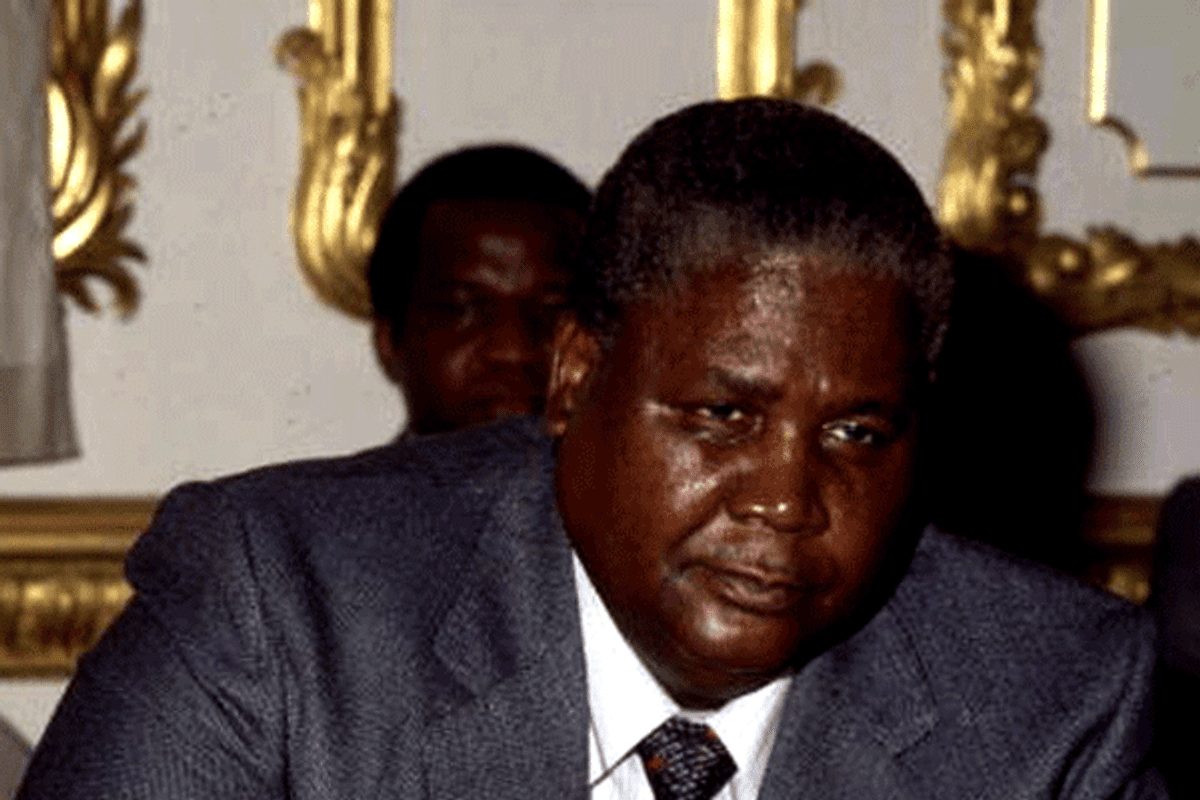
Joshua Mqabuko Nyongolo Nkomo (1917–1999) is remembered in popular memory as “Father Zimbabwe”. Using a political economy framework, this article examines his birth and childhood, ethnicity and race, education and political career, his record as a businessman, his choice of negotiated struggle over protracted war, and the 1987 Unity Accord. It also reflects on contested episodes in telecommunications licensing and state enterprise, and distils lessons of leadership for Zimbabwe’s Vision 2065.
2. Birth, Childhood, Ethnicity and Race: Roots in Matabeleland
Joshua Nyongolo Nkomo was born on 19 June 1917 at Semokwe Reserve, near Matobo in Matabeleland South, then Southern Rhodesia. He was Ndebele, from a family with cattle and small-scale farming livelihoods. The Ndebele identity itself emerged in the 19th century from the Nguni migration under Mzilikazi, with intermarriage and integration of local Sotho-Tswana and Kalanga communities.
His childhood was rural, shaped by cattle culture, oral history and mission education. Like many of his generation, he navigated a colonial racial order that restricted African land ownership, labour mobility and political rights. Race under Rhodesian law was not only social; it was economic: it determined access to land, credit, business licenses and the franchise. Nkomo’s early experience of that racialised political economy would shape his later insistence on broad, non-racial citizenship and on negotiated change rather than exclusion.
3. Education, Work and the Making of a Trade Unionist
Nkomo’s formal schooling included St. Francis College at Marianhill, Natal, and later studies at South African institutions. He trained as a social worker and teacher. On returning to Rhodesia, he worked at Rhodesia Railways in Bulawayo as a stock clerk and welfare officer. The railway was the backbone of Rhodesia’s settler economy, moving tobacco, minerals and maize. In that workplace Nkomo organised workers, learned industrial negotiation, and saw how logistics and transport determined growth.
He contested a parliamentary seat for Matabeleland and lost to Mike Hove, father of later politician Sekai Holland. The defeat did not end his political ambition. It redirected it to mass organisation.
4. Nkomo the Businessman: Property, Commerce and the “First Black Millionaire” Claim
In the 1950s and 1960s Nkomo acquired property and business interests, including transport and building assets. Public accounts from the period describe him as one of the first black indigenous Africans to accumulate significant wealth in Rhodesia, with estimates often framed in the “millionaire” language of the time. The significance in political economy terms is not the label, but the fact that Nkomo understood capital formation, property rights and enterprise under racial restrictions.
That experience informed two convictions he carried into politics. First, that African advancement required both political rights and economic participation. Second, that destruction of productive infrastructure during conflict would set back black economic accumulation for a generation.
5. Political Career: From ANC to ZAPU and the 1963 Split
Nkomo’s political trajectory moved from the Southern Rhodesia African National Congress to the National Democratic Party and then to the Zimbabwe African People’s Union (ZAPU), formed in 1961. As ZAPU President, he became the most recognisable nationalist leader in the early 1960s.
On 8 August 1963, internal disputes led to a split. A group including Robert Gabriel Mugabe and the Rev. Ndabaningi Sithole left to form the Zimbabwe African National Union (ZANU). Nkomo expelled them, citing discipline and strategy differences. Historians debate personalities and tactics, but the economic consequence is clear: the split created two liberation movements with different military and diplomatic trajectories, and later, two post-independence political traditions.
6. Dialogue Over War: The Political Economy of Armed Struggle
Nkomo consistently argued for negotiation before, during and after the escalation of armed struggle. His reasoning was political-economic. He argued that large-scale war destroys bridges, roads, dip tanks, clinics and irrigation, and disrupts cattle herds and farming systems. De-stocking after dip-tank destruction, he warned, would lead to beef de-industrialisation and a long post-war recovery.
Post-1980 data show that Zimbabwe inherited significant external obligations, with war-related debt often cited in the range of hundreds of millions of United States dollars. The precise figure is contested in public records, but the point Nkomo made was structural: war finance creates debt overhangs that constrain development budgets for health, education and agriculture. He preferred a settlement that preserved infrastructure and human capital.
7. The 1987 Unity Accord and the Politics of Peace
On 22 December 1987, Nkomo signed the Unity Accord with President Robert Mugabe, merging ZAPU into ZANU-PF and becoming Senior Minister and later Vice President. The Accord ended the conflict in Matabeleland and the Midlands, which is often referred to in public discourse as Gukurahundi.
In political economy terms, peace is a public good. Without it, investment is deterred, insurance costs rise, and the state’s fiscal space is consumed by security spending. Nkomo chose unity over the path of separatist insurgency taken by other regional leaders in Southern Africa at the time, such as Alfonso Dhlakama of RENAMO in Mozambique and Jonas Savimbi of UNITA in Angola. He argued that Zimbabwe’s development was anchored on peace and territorial integrity.
The origins of the Matabeleland crisis remain contested in Zimbabwean historiography. Multiple factors are cited by scholars: post-war demobilisation challenges, arms caches, Cold War alignments, and regional destabilisation by apartheid South Africa against frontline states. What is not contested is that Nkomo’s decision to sign the Accord shifted the country from open conflict to a constitutional settlement, allowing a return to civilian administration and agricultural recovery in the south.
8. Rule of Law, Telecommunications and the Business Climate
Nkomo’s later years coincided with economic liberalisation and the opening of telecommunications. Zimbabwe licensed mobile and fixed operators in the 1990s, including the state-owned NetOne, the privately led Econet, and later Telecel, alongside the incumbent Post and Telecommunications Corporation (PTC).
Public narratives sometimes credit Nkomo with personal interventions in licensing, including the Econet case that was determined by the courts in favour of Strive Masiyiwa. Court records show the judiciary upheld Econet’s right to a licence. Nkomo, as Vice President, is recorded in contemporary press as supporting implementation of the court order and the licensing process. The broader point is institutional: Nkomo publicly aligned himself with the rule of law as a condition for investment.
The telecoms story also illustrates political economy risks. Where licensing, spectrum allocation or interconnection are politicised, investment stalls and consumers pay more. Where the process is transparent and court-proof, capital flows in, networks expand, and jobs are created. Nkomo’s stance, as reported at the time, was to reduce discretion and increase predictability for investors.
State enterprises in his era, including PTC, carried the legacy of monopoly provision. Nkomo advocated reform rather than collapse, because universal service, rural coverage and affordable prices depend on viable infrastructure.
9. State and Political Corruption: Nkomo’s Record and Warnings
Corruption is the diversion of public resources for private gain. In political economy, it acts like a tax on production and a brake on investment. Nkomo’s public speeches repeatedly warned against nepotism, tender abuse and the misuse of state power. He contrasted the liberation project of broad empowerment with narrow patronage.
On the specific companies named in public debate, the record is mixed and contested. NetOne is state-owned. Econet emerged through court-validated licensing. Telecel entered through a licensed, foreign-invested structure. PTC was later unbundled. Nkomo’s contribution was to argue for rules over favours, and for courts over directives. The lesson for 2026 is the same: institutions, not personalities, must allocate economic opportunities.
10. Lessons of Leadership from Nkomo’s Life and Times
From a political economy perspective, five lessons stand out.
Lesson 1: Accumulate, Then Protect Productive Capital. Nkomo’s business background made him cautious about destroying infrastructure. Dip tanks, rail spurs, irrigation and abattoirs are sunk capital. Once lost, they take years to replace. Development policy must price in the cost of conflict and prioritise protection of productive assets.
Lesson 2: Negotiate to Preserve Fiscal Space. War creates debt and diverts budgets. Nkomo’s preference for settlement was an attempt to keep fiscal space for schools, clinics and agriculture. Today, debt sustainability and public investment efficiency are the modern equivalents.
Lesson 3: Unity is a Growth Strategy. The 1987 Accord was not only political. It reduced the risk premium on investment in Matabeleland and the Midlands. Peace lowers the cost of capital. National unity, when it is constitutional and rights-based, is therefore an economic policy.
Lesson 4: The Rule of Law is Industrial Policy. Nkomo’s reported support for court decisions in telecommunications signalled to investors that contracts and licences would be honoured. Predictable rules attract capital. Arbitrary discretion repels it.
Lesson 5: Representation Without Economic Inclusion is Incomplete. Nkomo fought for political rights and for African participation in business and property. Vision 2065 requires the same: black industrialists, farmer aggregation, value addition, and SME finance.
11. Nkomo’s Legacy for Zimbabwe’s Development Path
Nkomo died on 1 July 1999 and was declared a National Hero. His legacy is contested, as all transformative leaders’ are. To some he is the architect of unity. To others he is the symbol of a path not taken. In political economy terms, his legacy is threefold.
First, he modelled an African bourgeoisie that combined enterprise with mass politics. Second, he institutionalised peace as a development variable through the Unity Accord. Third, he insisted that African progress must be measured not only in votes, but in factories, farms, railways and schools.
The unresolved question is how to translate that legacy into structural transformation. Zimbabwe still exports too many raw materials and imports too many finished goods. Agricultural value chains remain thin. Manufacturing capacity is underutilised. Youth unemployment is high. Nkomo’s answer would be integration: link farms to factories, factories to regional markets, and markets to skills.
12. Conclusion: Father Zimbabwe as Political Economist
Joshua Mqabuko Nyongolo Nkomo’s life spanned colonial racial capitalism, the liberation struggle, and the first two decades of independence. Born in 1917 in Matabeleland, educated in mission schools, shaped by Rhodesia Railways, and tested in business under racial restrictions, he carried a political economy view of freedom: rights plus production.
He chose dialogue over maximalist war, unity over fragmentation, and the rule of law over discretion. He warned that infrastructure once destroyed is hard to rebuild, that debt once accumulated constrains budgets, and that peace is the foundation of investment.
For Zimbabwe in 2026 and beyond, Nkomo’s method matters more than his myth. Negotiate where possible. Protect productive capital. Unify to lower risk. Submit economic decisions to law. Measure progress in value added, not in slogans.
That is the political economy of Father Zimbabwe. That is the work that remains.
Newton M. Mambande is an entrepreneur and researcher and the Founder and Chief Executive Officer of Ayanda Enterprises (Private) Limited. He has published peer-reviewed research and writes on economic history, agribusiness, public policy and industrialisation. He can be reached at newtonmunod@gmail.com or +263 773 411 103.
Discover more from Etimes
Subscribe to get the latest posts sent to your email.