


By Tinotenda Bhunu
HARARE – WALK through any Zimbabwean town and you will see an economy at work.
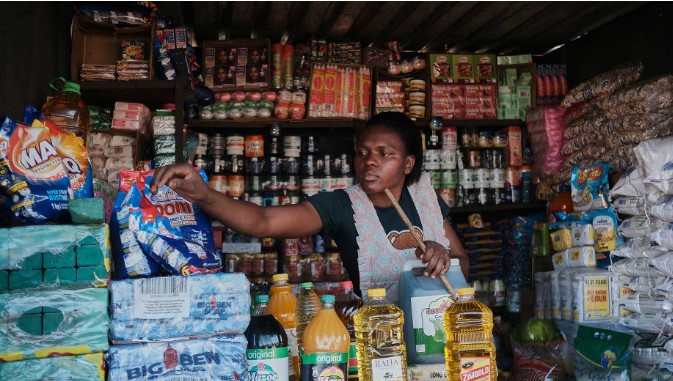
A woman selling vegetables by the roadside. A young man repairing phones from a small shop. A carpenter making furniture in his backyard. A kombi carrying passengers across town. Someone selling clothes through WhatsApp. A farmer bringing tomatoes from rural areas to an urban market.

None of these activities necessarily appear in the grand buildings of the formal economy.
Yet they employ people. They generate income. They move goods. They provide services. They feed families.
They are the economy.
And this is where Zimbabwe has a problem: we often confuse an economy that is informal with an economy that is unproductive.
It is not.
The informal economy is not simply a collection of people avoiding taxes or regulations. In many cases, it is a response to the structure of the formal economy itself.
When registering a business is complicated, when compliance costs are high, when access to finance is limited, when property rights are uncertain, and when taxes consume a significant portion of a small entrepreneur’s margins, people naturally look for alternatives.
They do not stop being entrepreneurs.
They simply operate outside the system.
Consider the young person selling products through WhatsApp. They may have no storefront, no corporate office, and no large balance sheet. But they have suppliers, customers, transport costs, inventory, and cash flow.
That is an economic enterprise.
The problem is that our policies often treat such entrepreneurs as a problem to be solved rather than as an economic asset to be unlocked.
There is a fundamental difference between formalising people and making formalisation attractive.
The first approach says: register, comply, pay, and report.
The second asks: what would make an informal entrepreneur voluntarily want to become formal?
That is the question Zimbabwe should be asking.
A small business owner is more likely to enter the formal economy when formalisation gives them something meaningful in return.
Perhaps it means access to affordable credit.
Perhaps it means secure property rights.
Perhaps it means the ability to use their property as collateral.
Perhaps it means simpler taxation.
Perhaps it means fewer licences and permits.
Perhaps it means reliable infrastructure.
Perhaps it means access to government procurement.
In other words, formalisation must come with benefits.
You cannot build a successful formal economy simply by sending inspectors into informal markets.
You build it by making the formal economy more valuable than the informal one.
This is particularly important for Zimbabwe because entrepreneurship has become one of the country’s greatest survival mechanisms.
When formal employment opportunities are limited, people create their own.
When supermarkets are expensive, small traders find cheaper supply chains.
When banks are reluctant to lend, entrepreneurs find alternative ways of financing their businesses.
When conventional employment fails to absorb young people, the informal economy absorbs them.
This does not mean we should romanticise informality.
There are serious costs to operating outside the formal system. Workers may lack social protection. Businesses struggle to access finance. Consumers may have limited legal protection. Government loses revenue. Businesses remain small because they cannot easily access the institutions that allow them to grow.
But the answer cannot simply be to punish informality.
The better question is: why do businesses remain informal in the first place?
This changes the entire policy conversation.
If a trader can operate profitably with a table and a mobile phone but finds the formal registration process expensive and burdensome, the policy failure is not necessarily the trader.
If a small manufacturer cannot obtain finance because they lack formal title to the property where they operate, perhaps the problem is not their entrepreneurial ambition but the absence of economic institutions that recognise their assets.
If a rural farmer cannot easily convert their land into productive capital because property rights are weak, the country is not merely losing tax revenue.
It is losing investment.
It is losing productivity.
It is losing jobs.
And ultimately, it is losing wealth.
This is why property rights, taxation, regulation, and entrepreneurship should not be discussed as separate policy issues.
They are connected.
An entrepreneur needs the confidence that what they build today will still belong to them tomorrow.
They need to know that expanding their business will not expose them to an unpredictable regulatory burden.
They need a tax system that allows the business to survive long enough to grow.
They need financial institutions willing to recognise their economic potential.
And they need an environment where success is rewarded rather than treated with suspicion.
Zimbabwe has millions of economic actors.
The challenge is not necessarily creating more entrepreneurs.
The challenge is creating an environment in which the entrepreneurs we already have can grow.
Imagine what would happen if the small informal trader became a registered company, hired five workers, accessed credit, rented formal premises, paid taxes, and eventually supplied supermarkets.
Imagine if the backyard manufacturer became a factory.
Imagine if the rural farmer became a commercial producer.
Imagine if the WhatsApp business became an e-commerce company.
That is how economies grow.
Not simply because governments announce growth targets, but because individual people are given the freedom and security to turn small economic activities into larger enterprises.
Perhaps Zimbabwe’s biggest economic statistic is one we cannot easily find in a government report.
It is the number of people waking up every morning and trying to make something work.
They are selling.
They are producing.
They are transporting.
They are building.
They are trading.
They are taking risks.
They are creating livelihoods in an economy that often gives them very little certainty.
We should not look at them merely as informal workers.
We should look at them as future formal businesses waiting for the right institutional environment.
Zimbabwe does not need to eliminate the informal economy overnight.
It needs to make the formal economy worth joining.
Because perhaps our economy is not as small as the statistics suggest.
Perhaps it is simply an economy we have not yet learned how to fully see.
The real opportunity is not to destroy the informal economy. It is to unlock it.
Tinotenda Bhunu is an economist by profession. LinkedIn: https://www.linkedin.com/in/tinotenda-bhunu-114645208?utm_source=share&utm_campaign=share_via&utm_content=profile&utm_medium=android_app
Discover more from Etimes
Subscribe to get the latest posts sent to your email.