


By Jabulani Simplisio Chibaya
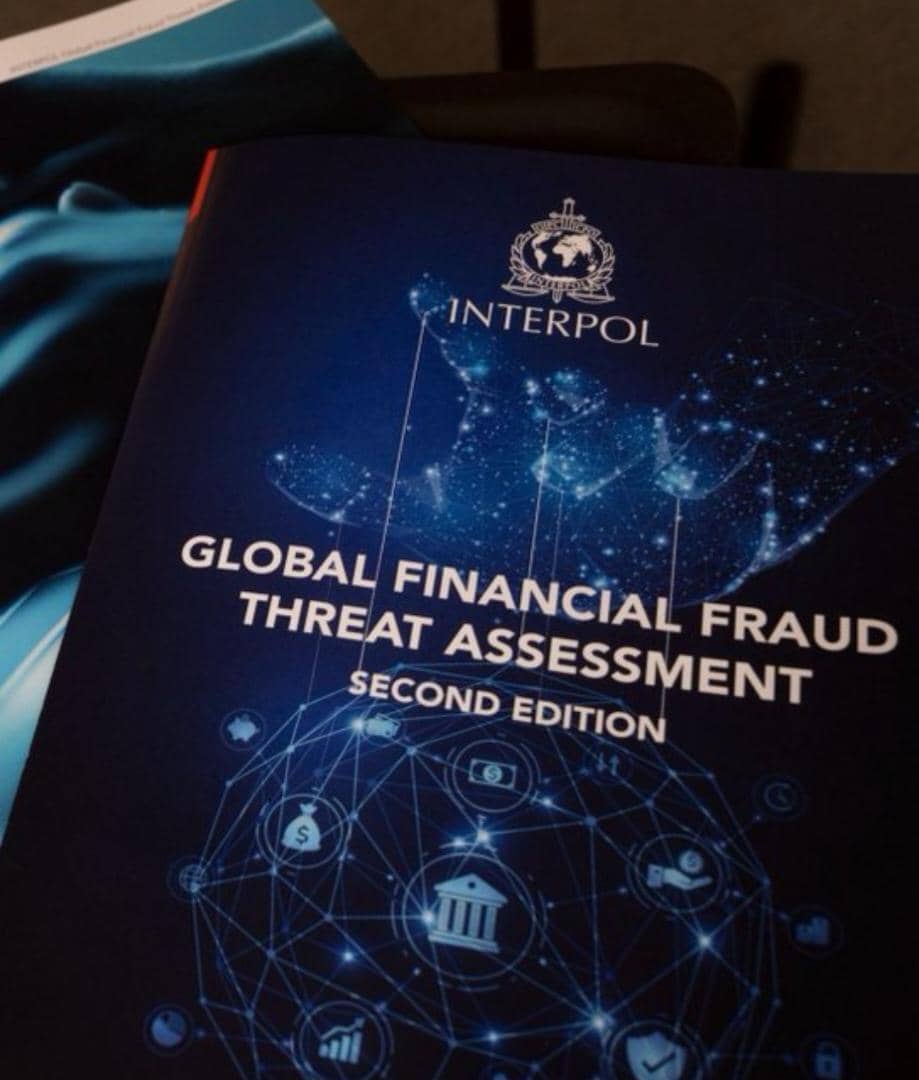
HARARE – FINANCIAL fraud is no longer a peripheral risk—it is now a core feature of the global digital economy. According to the INTERPOL Global Financial Fraud Threat Assessment 2026, fraud has evolved into one of the top five global crime threats, with estimated losses reaching US$442 billion in 2025 alone.
But the real story is not just scale—it is structure. Fraud today is organized, technologized, and globalized. It behaves less like isolated criminal activity and more like a distributed, AI-powered industry.

The Nature of Modern Financial Fraud: From Deception to Digital Infrastructure
At its core, financial fraud remains deceptively simple: deception for financial gain. But its execution has fundamentally changed.
Modern fraud is:
Industrialized – run like businesses with roles, KPIs, and supply chains
Transnational – spanning continents in seconds
Polycriminal – linked to human trafficking, terrorism financing, and money laundering
Technology-amplified – powered by AI, automation, and digital platforms
Fraud is no longer just about tricking individuals—it is about exploiting systems at scale.
Modus Operandi: How Fraud Actually Works Today
- Social Engineering at Scale
Fraudsters exploit trust using:
Business Email Compromise (BEC)
Impersonation (CEOs, banks, government officials)
Romance and emotional manipulation
These attacks are no longer manual—they are AI-optimized and psychologically engineered.
- Hybrid Fraud Models
A striking trend is the rise of multi-layered fraud schemes, where:
A romance scam evolves into crypto investment fraud
Failed scams pivot into sextortion
Victims are later targeted again through “recovery scams”
This “stacking” of fraud tactics increases conversion rates and lifetime victim value.
- Synthetic Identity and Deepfake Fraud
AI has enabled:
Voice cloning from seconds of audio
Deepfake videos for impersonation
Creation of entirely new “synthetic identities”
Fraudsters can now manufacture trust on demand.
- Fraud-as-a-Service (FaaS)
Dark web marketplaces offer:
Phishing kits
Fake trading platforms
AI chatbots for victim grooming
Money laundering services
This has reduced barriers to entry—anyone can now become a fraudster with minimal technical skill.
The Rise of Scam Centres: The Human Cost Behind the Machine
One of the most disturbing developments is the global expansion of scam centres.
Victims from 80+ countries have been trafficked into forced fraud operations
These centres operate like call centres for crime
Workers are often coerced into running scams targeting victims globally
This creates a dual victim model:
- Individuals defrauded online
- Individuals forced to commit fraud
Fraud is no longer just cybercrime—it is human exploitation at scale.
Spotlight: Operation Serengeti 2.0 (Africa’s Wake-Up Call)
Operation Serengeti 2.0 highlights both the scale and sophistication of fraud in Africa:
19 African countries involved
1,209 arrests made
88,000 victims identified
US$97.4 million recovered
Key Insights:
Fraud in Africa is highly organized and rapidly expanding
West African syndicates are scaling globally
Southern and Eastern Africa are emerging operational hubs
Sectors targeted include finance, energy, education, healthcare
This operation revealed a critical truth:
Africa is not just a victim—it is also a battleground and operational base in global fraud networks.
Industries and Sectors Under Attack
Fraud is increasingly targeting high-value, high-trust ecosystems:
- Financial Services
BEC attacks on banks and corporates
Crypto investment scams
Payment system manipulation
- Energy & Infrastructure
High-value transactions make them prime BEC targets
- Healthcare
Sensitive data + urgent payments = vulnerability
- Education
Weak cybersecurity + large payment flows
- Retail & E-commerce
Advance payment fraud
Fake marketplaces
Key Trends That Should Alarm Every Executive
1. Fraud is Growing Faster Than Defenses
77% of business leaders report rising fraud
54% increase in global fraud alerts
2. AI is a Force Multiplier
AI-driven fraud is 4.5x more profitable
Entire fraud campaigns can be automated
3. Fraud is Borderless
Criminal networks collaborate across regions
Funds move instantly through crypto and laundering networks
4. Psychology is the Primary Attack Surface
Fraud is less about hacking systems and more about:
Manipulating trust
Creating urgency
Exploiting fear and emotion
5. Fraud is Linked to Larger Criminal Ecosystems
Terrorism financing (especially in Africa via crypto scams)
Human trafficking (scam centres)
Organized crime syndicates
Institutional Gaps: Why Systems Are Failing
Despite progress, major vulnerabilities remain:
- Slow Cross-Border Coordination
Fraud moves faster than legal cooperation.
- Outdated Detection Systems
Traditional fraud detection cannot:
Detect deepfakes
Identify synthetic identities
Track decentralized finance flows
- Fragmented Regulation
Different countries, different rules → exploitable gaps
- Underreporting
Victims often:
Feel shame
Avoid reporting
Lack support systems
What Business Leaders Must Do Now
- Treat Fraud as a Strategic Risk, Not IT Risk
Fraud is now:
A board-level issue
A financial stability risk
A reputational threat
- Invest in AI-Driven Defense
Fight AI with AI:
Behavioral analytics
Real-time anomaly detection
Deepfake detection systems
- Redesign Trust Protocols
Move beyond:
Email-based approvals
Static authentication
Adopt:
Multi-factor verification
Zero-trust architectures
- Strengthen Human Intelligence
Your weakest link is people.
Train staff to detect:
Social engineering
Phishing and impersonation
Emotional manipulation tactics
- Build Cross-Border Intelligence Networks
Collaborate with:
Regulators
Law enforcement
Industry peers
Fraud is a network problem—solve it with networks.
What Fraud Experts Must Master
To stay relevant, fraud professionals must develop:
AI & Deepfake Detection Skills
Understanding synthetic media is now essential.
Data Intelligence & Behavioral Analytics
Fraud detection is shifting from rules to patterns.
Crypto & Financial Forensics
Track illicit flows across:
Blockchain
Informal transfer systems
Psychology of Deception
Understanding how people are manipulated is key.
Cyber-Operational Thinking
Fraud experts must think like:
Attackers
System architects
Intelligence analysts
The Jaw-Dropping Reality
Fraud is now a US$442 billion global industry
Victims are not just individuals—but entire economies and institutions
AI has turned fraud into a scalable, automated business model
Human trafficking is now embedded in cybercrime operations
Fraud networks operate with the efficiency of multinational corporations
Final Takeaways: The Future of Fraud
Financial fraud is no longer evolving—it has transformed.
It is:
Smarter (AI-driven)
Faster (real-time global execution)
Deeper (psychological manipulation)
Wider (cross-sector and cross-border)
The key strategic shift:
From fraud prevention → to fraud resilience
Organizations that survive will be those that:
Assume breach
Design adaptive systems
Invest in intelligence, not just compliance
Closing Thought
Fraud has become the shadow economy of the digital age—mirroring innovation, scaling with technology, and exploiting every gap in trust.
The question is no longer:
“Can we stop fraud?”
But rather:
“How fast can we adapt before it outpaces us?”
Jabulani Simplisio Chibaya is a Data and AI Consultant specializing in data science, artificial intelligence, blockchain, and cryptocurrency innovation. A seasoned conference speaker, he also writes on the intersection of technology, regulation, and economic development. Contact: Cell: +263 778 921 881, Email: simplisiochibaya22@gmail.com, LinkedIn: https://www.linkedin.com/in/jabulani-simplisio-chibaya
Discover more from Etimes
Subscribe to get the latest posts sent to your email.