


The Gift Zimbabwe Refuses to Open
By Tonderai Godknows Mapfumo
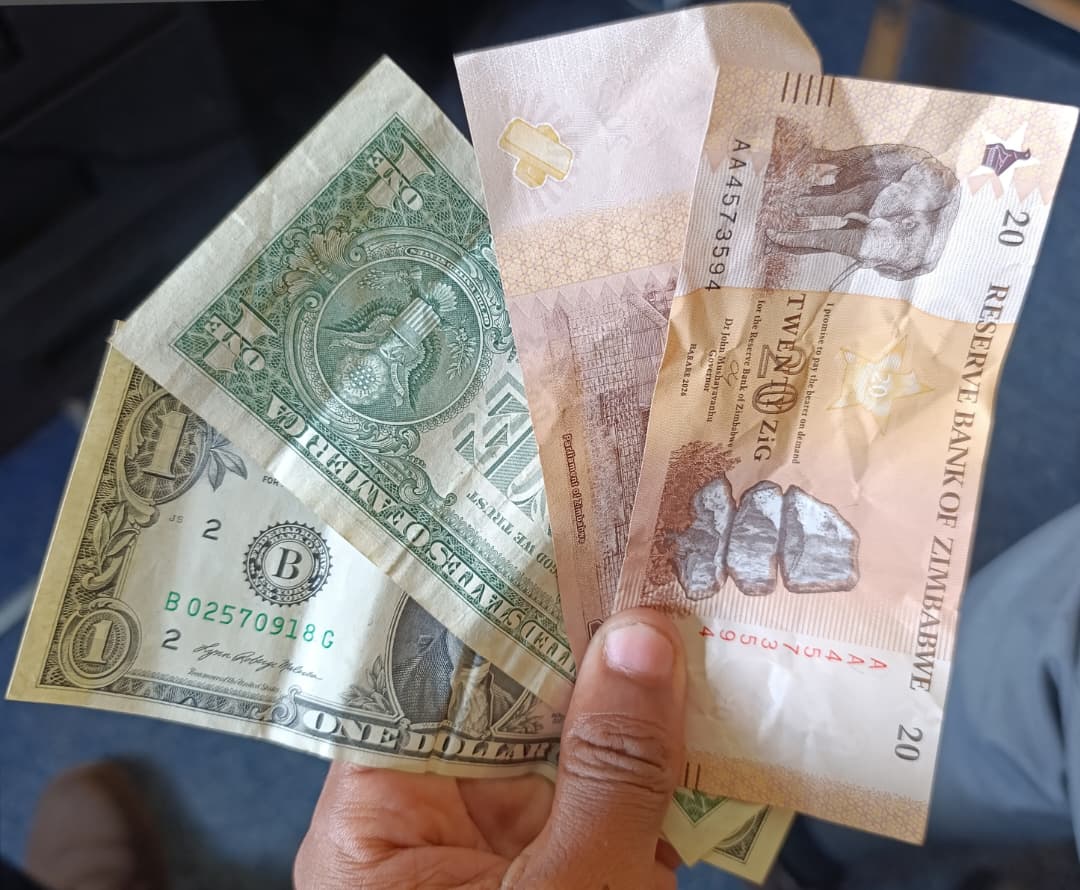
HARARE – FOR nearly two decades, Zimbabwe has sat on a gift that most African countries would kill for. In 2009, after hyperinflation destroyed the Zimbabwean dollar, the country effectively dollarised — adopting the United States dollar as its primary currency. No currency crisis. No parallel market chaos. No agonising debates about devaluation. Just a clean, hard, trusted currency circulating through the formal banking system.

Today, that gift remains unopened. Worse, our authorities seem embarrassed by it.
Instead of treating dollarisation as the foundation for something bigger — a regional financial hub, a safe haven for capital, an African Singapore — Zimbabwe’s policymakers have spent the last decade quarrelling with the dollar. Bond notes. RTGS dollars. Gold coins. The doomed ZiG. Each attempt to “reclaim monetary sovereignty” has been a confession of failure. Each one has driven Zimbabweans back to the very thing the state claims to want to replace: the US dollar.
The Singaporean lesson is staring us in the face. We refuse to see it.
The Singapore Lesson: Drama-Less Capital
In the 1960s and 1970s, when the British pound was collapsing and Asian currencies were under pressure, Singapore made a counterintuitive choice. It did not invent a nationalist currency. It did not quarrel with its colonial inheritance. Instead, it took the currency board system left behind by the British and presented itself to the world as the place without currency drama.
The message to global capital was simple: your money is safe here. No surprise devaluations. No exchange controls. No political interference in the value of your holdings.
Capital, being more sensible than most governments, followed safety. Singapore became a financial hub not because it had oil or minerals, but because it had credibility. The currency board was the anchor. Rule of law, property rights, and a low-corruption civil service were the chains.
Zimbabwe has stumbled into a similar advantage by accident of history. Dollarisation gave us what Singapore built deliberately: a hard currency, open capital account, and no exchange rate drama. But where Singapore leaned into its inheritance, Zimbabwe has tried to legislate against it. Where Singapore marketed stability, Zimbabwe apologises for it.
The African Opportunity Zimbabwe Is Wasting
Zimbabwe’s open and lawful use of the US dollar within the formal banking system is a rare competitive advantage on the continent. Consider the alternatives:
- Nigeria suffers recurring devaluation crises and has some of the tightest capital controls in the world.
- Kenya’s shilling has lost over 30% of its value in five years.
- Ghana defaulted on its external debt and restructured its currency.
- Angola and Ethiopia still maintain multiple exchange rates that confuse investors.
Only a handful of African countries — Zimbabwe, Liberia, and partially South Sudan — have full dollarisation. Yet only Zimbabwe treats this as a problem to be solved rather than a platform to be built.
Imagine if our authorities woke up tomorrow and decided to market Harare as the dollar capital of Southern Africa. Imagine a Harare International Financial Services Zone where banks can clear USD payments for Zambia, Malawi, Botswana, and the DRC — charging a small fee for every transaction. Imagine a diaspora bond market where Zimbabweans abroad can invest in their country’s infrastructure directly in dollars, without worrying about exchange rate collapse.
None of this requires printing money. None of this requires begging the IMF. It only requires accepting the gift we already have.
What Must Be Done
To turn Harare into Africa’s Singapore, three things are necessary:
First, codify dollarisation into law. Pass a Dollarisation Protection Act that makes it a criminal offence for the Reserve Bank to reintroduce the Zimbabwean dollar without a national referendum. Investors will not commit to a country that might change its currency overnight.
Second, create a financial services zone. Offer 5-8% corporate tax for any bank, fintech, or investment firm that books US dollar transactions through Harare. Singapore did this in the 1970s with its Asian Currency Unit. There is no reason Zimbabwe cannot do the same.
Third, guarantee property rights and dispute resolution. No amount of dollarisation will attract capital if courts are unreliable and expropriation is always a threat. Zimbabwe must commit to independent arbitration for foreign investors — and mean it.
The Tragedy of Refusing the Gift
The deepest tragedy is this: Zimbabwe’s authorities are more embarrassed by dollarisation than excited by it. They see it as a sign of failure, a surrender of sovereignty, a colonial relic. So they quarrel with it — inventing new currencies, forcing businesses to accept local notes, punishing those who prefer dollars.
But the market has already decided. Zimbabweans use dollars for rent, school fees, groceries, and hospital bills. The parallel market exists not because people love illegality, but because the formal system cannot be trusted. Every attempt to suppress the dollar simply pushes more trade underground.
Singapore’s Lee Kuan Yew understood something our leaders do not: credibility is not a weakness. A hard currency is not a humiliation. The goal of economic policy is not to print money — it is to create conditions where money wants to stay.
Conclusion
Zimbabwe does not need a new currency. It does not need gold-backed gimmicks. It needs to accept the gift of history and circumstance: dollarisation, sitting unused in our formal banking system, waiting to be leveraged.
Harare could be the financial hub for Southern Africa. The dollars are already here. The diaspora is ready. The regional demand for a stable clearing house is real. All that is missing is the political will to stop quarrelling with the dollar and start building on it.
If we refuse to open the gift, we will remain what we have always been: a country with everything except the courage to use it.
Tonderai Godknows Mapfumo is the Research and Advocacy Officer for COMALISO (Coalition for Market and Liberal Solutions) in Zimbabwe and an Associate of the Free Market Foundation.
Discover more from Etimes
Subscribe to get the latest posts sent to your email.