


By Newton M. Mambande
1. Introduction: The Economics of a Single Drop
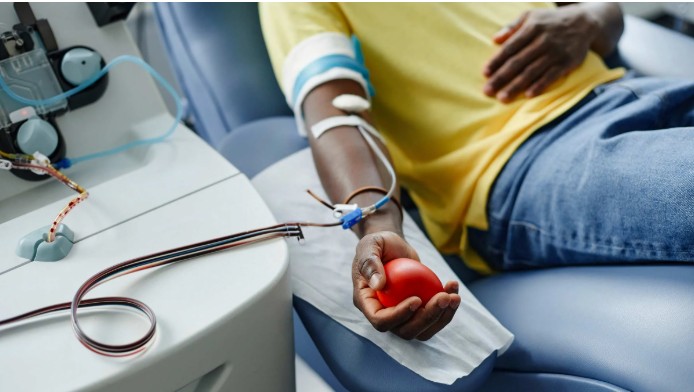
BULAWAYO – ON 14 June 2026, the world marks World Blood Donor Day under the WHO theme “One Drop of Humanity. Give Blood. Save Lives.” The slogan places humanity at the heart of donation, reminding us that each donation is “more than a medical act: it is a powerful expression of solidarity, compassion and collective responsibility.”

From a health economics lens, that “single drop” is also a unit of production, a public good, and a cornerstone of healthcare system resilience. Blood is non‑substitutable, perishable, and its demand is stochastic. Yet the global supply chain relies almost entirely on voluntary, unpaid donors. This article unpacks three health economics puzzles around that model: 1) why blood donors are not paid despite market logic; 2) the often‑cited anecdote of Steve Jobs selling blood before Apple; and 3) the “family exemption” policy, as explained by Ms. Lucy Marowa, and its implications for equity and efficiency. We then quantify the economic importance of donors for households, hospitals, and national GDP.
2. Health Economics Framework: Blood as a Merit Good with Externalities
In economics, blood fits three categories:
2.1 Merit Good
A merit good is under‑consumed if left to the market because individuals underestimate its social value. Safe blood has positive externalities: when you donate, you reduce mortality for mothers with postpartum hemorrhage, children with severe anemia, trauma patients, and cancer patients. The social benefit exceeds private benefit. Without intervention, the market would supply too little.
2.2 Public Good Characteristics
Blood is non‑excludable once in the national inventory and non‑rival until transfused. In most public systems, no one can be denied an emergency transfusion based on ability to pay. This creates a “free‑rider” problem. Voluntary donation solves it by embedding donation in social norms rather than price.
2.3 Supply Chain with Zero Price Elasticity
Blood demand is inelastic: a car accident victim cannot negotiate price. Supply is also inelastic in the short run because donation takes time and requires donor recruitment. The WHO therefore treats blood as a strategic health resource, not a commodity.
3. Why Blood Donors Are Not Paid: The Economics of Altruism vs. Commodification
Most countries, including Zimbabwe, follow WHO’s policy of voluntary, unpaid donation. Health economics gives four reasons:
3.1 Quality & Safety – “Adverse Selection”
Paying donors attracts people who may hide high‑risk behavior to earn money. This can increase the prevalence of HIV, Hepatitis B, and Hepatitis C in the donor pool. Unpaid donors typically donate for altruism, which correlates with lower risk and more honest screening. The cost of testing, discarding infected units, and treating transfusion‑transmitted infections far exceeds any savings from paying donors.
3.2 Crowding‑Out of Intrinsic Motivation
The economist Richard Titmuss argued in The Gift Relationship that monetary payment can “crowd out” altruism. When you pay, donation shifts from “gift to humanity” to “job.” Surveys suggest paid donors donate less frequently and recruit fewer new donors. The “One Drop of Humanity” theme deliberately frames donation as solidarity, not transaction.
3.3 Price Distortion and Equity
If blood had a market price, the poor could be priced out during emergencies. Public hospitals would face volatile costs. Unpaid donation helps keep the marginal cost to the patient near zero, aligning with universal health coverage goals.
3.4 Long‑Run Supply Stability
Voluntary repeat donors create a predictable donor base. Paid donors may stop when the price drops or better jobs appear. Zimbabwe’s National Blood Service depends on 100% voluntary donors for this reason.
This policy is not “anti‑economics.” It is economics applied to a market with information asymmetry, externalities, and life‑or‑death stakes.
4. The Steve Jobs Anecdote: When the Founder of Apple Reportedly Sold Blood
According to published biographies, before founding Apple, a young Steve Jobs sold his blood for approximately $35 per pint to cover living expenses. This anecdote is sometimes used to argue: “If Jobs sold blood, why can’t others?”
Health Economics Interpretation:
- Poverty Constraint vs. Policy Ideal: Jobs sold blood in the 1970s U.S., where paid plasma donation was legal. That was a survival strategy under financial constraint. Health economics calls this “distress supply.” The fact that a future billionaire once sold blood highlights inequality, not a model for policy.
- Whole Blood vs. Plasma: Jobs reportedly sold plasma/platelets, which can be donated more frequently and is sometimes compensated in the U.S. for pharmaceutical manufacturing. WHO still promotes voluntary whole blood donation for transfusion. Plasma‑for‑drugs is a separate supply chain.
- Opportunity Cost: In the mid‑1970s, Jobs’ opportunity cost of time was low. As his human capital grew, he stopped selling blood. This illustrates the economic principle: unpaid donation works when people have higher‑value uses of time and are motivated by non‑financial utility.
- Lesson for Zimbabwe: We should aim to reduce “distress donation” by ensuring donors are not economically coerced. Transport refunds and refreshments are allowed by WHO because they compensate for costs, not for the blood itself.
The Jobs story is a reminder: no one should have to sell blood to survive. Voluntary donation is a dignity issue as much as a health issue.
5. Ms. Lucy Marowa and the “Family Exemption” Policy: Equity in Private Hospitals
Ms. Lucy Marowa, a blood transfusion policy advocate, has explained a policy used by some private hospitals in Zimbabwe: “Immediate family members of a voluntary blood donor will not pay for blood transfusion when needed.”
Health Economics Analysis:
5.1 Risk‑Pooling & Reciprocity
This is a form of micro‑insurance. The donor contributes to the blood pool; the family gets priority access. It addresses the fear that “I donate, but my child may still not get blood.” Reciprocity can improve donor retention.
5.2 Incentive Compatibility
Economists call this a “club good” design. It does not pay the donor cash, thus avoiding adverse selection. But it gives a tangible benefit to the donor’s risk group – the family. Some African studies suggest family‑replacement systems can increase donation rates, though the WHO prefers 100% voluntary donation to avoid pressuring relatives.
5.3 Efficiency vs. Equity Trade‑off
Pro: Increases supply without direct payment. Helps keep blood flowing to private hospitals where stock‑outs are common.
Con: If overused, it could create “donor families” vs. “non‑donor families,” potentially undermining equity. The policy should be capped and transparent to avoid blood being treated as a barter good.
Ms. Marowa’s explanation is crucial: the policy is not payment for blood. It is recognition that blood donors create social capital. The economic value of that social capital includes lives saved and reduced financial shock to families during medical emergencies.
6. Economic Importance of Blood Donors: From Household to GDP
Blood donors generate economic value at three levels:
6.1 Household Level: Catastrophic Expenditure Averted
A unit of blood in a private Zimbabwe hospital can cost $80–$150, including screening, processing, and administration. For a rural family, that equals one to three months’ income. One donation can prevent catastrophic health expenditure. Health economics measures this as “financial risk protection.” With 100,000 units collected annually in Zimbabwe, donors help protect households from more than US$10 million in potential out‑of‑pocket costs.
6.2 Hospital Level: Production Input
Blood is an input in surgical production functions. Without it, C‑sections, cancer surgeries, and trauma care can stop. The “shadow price” of blood – what hospitals would effectively pay in a shortage – is extremely high. A stable donor base reduces stock‑outs, operating theatre cancellations, and length of stay, improving hospital productivity.
6.3 Macro Level: Labor Productivity and GDP
Severe anemia can reduce worker productivity by an estimated 20–30%. Postpartum hemorrhage is a leading cause of maternal mortality, which reduces female labor force participation. Children with transfusion‑dependent thalassemia may miss school. By helping keep these groups alive and functional, donors contribute to human capital formation. The WHO estimates each blood donation saves up to three lives on average. If Zimbabwe collects 100,000 units per year, that represents approximately 300,000 life‑years protected – a direct contribution to GDP.
6.4 Cost‑Benefit
The cost of running a voluntary donor program – recruitment, screening, processing – is approximately $25–$35 per unit. The economic value of a life‑year saved is conservatively $1,000–$3,000 using WHO‑CHOICE thresholds. The resulting benefit‑cost ratio exceeds 30:1. Few other health interventions deliver that return at scale.
7. Policy Recommendations for Zimbabwe 2026–2030
To strengthen “One Drop of Humanity,” we recommend economics‑informed policies:
Data and Costing: Publish the unit cost of blood versus the economic value saved. This helps make the case to Treasury for budget allocation to the National Blood Service Zimbabwe.
Protect Voluntarism: Keep blood unpaid. Increase transport refunds and recognition, not cash payment.
Formalize Family Exemption with Safeguards: As explained by Ms. Lucy Marowa, allow family priority for 12 months post‑donation, capped at two units, to balance reciprocity and equity.
Invest in Donor Retention: Economic evidence shows repeat donors have roughly 50% lower recruitment cost. Use SMS nudges and employer partnerships.
Youth and Corporate Drives: Students and employees often have lower opportunity cost of time. Target them to build a generational donor base.
8. Conclusion: From Altruism to Economic Rationality
World Blood Donor Day 2026 asks us to see humanity in one drop. Health economics shows that “humanity” is also rational. Paying donors would likely harm the system through adverse selection. The Steve Jobs anecdote illustrates poverty, not a policy model. Ms. Lucy Marowa’s work on family exemption demonstrates how smart incentives can boost supply without commodifying blood.
Every donor is an unpaid producer in Zimbabwe’s health economy. They create a public good that saves lives, protects households from financial shock, and keeps hospitals running. That is the true economics of “Give Blood. Save Lives.”
On 14 June 2026, donate. Not for money. For the economy of life.
Newton Mambande is an entrepreneur and researcher with published scientific research scholarship in journals. He works at the intersection of agribusiness, health systems, and development economics. He can be reached at newtonmunod@gmail.com or +263 773 411 103.
Discover more from Etimes
Subscribe to get the latest posts sent to your email.