


By Jabulani Simplisio Chibaya
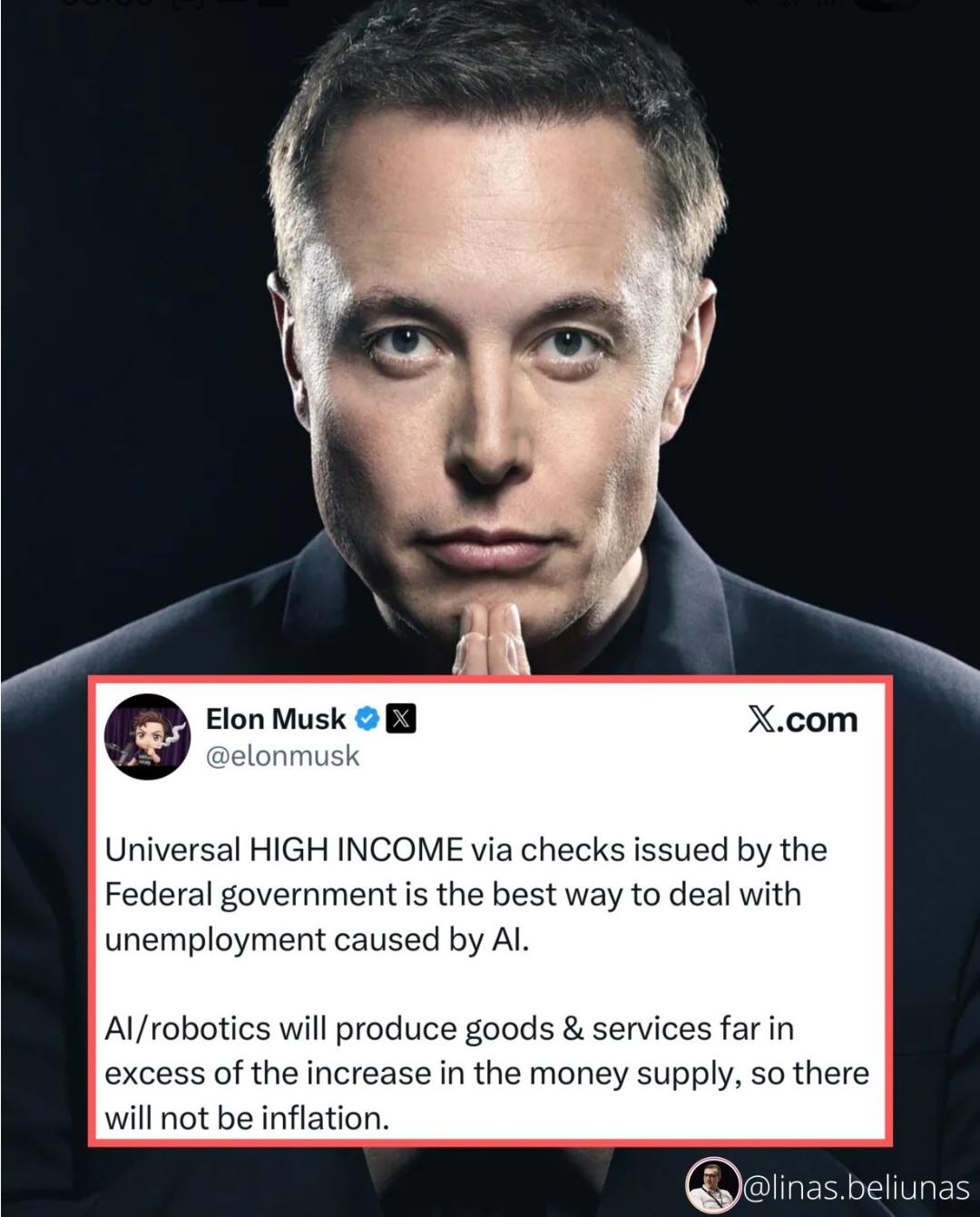
HARARE – THE modern technological imagination—echoed in the views of Elon Musk—rests on a powerful but flawed premise: that artificial intelligence will generate such overwhelming abundance that traditional economic constraints, including inflation, will fade into irrelevance. In this vision, governments can issue “universal high income” without consequence because AI-driven production will outpace any increase in the money supply. It is an elegant idea. It is also one that collides sharply with the insights of Austrian economics, which insists that economies are not mechanical systems of output, but complex processes of human coordination shaped by incentives, knowledge, and scarcity.
At the heart of the Austrian critique—most clearly articulated by Ludwig von Mises—is the rejection of the notion that money is neutral. When governments issue income through newly created money, that money does not spread evenly across society. It enters through specific channels—state employees, contractors, politically connected sectors—before reaching the broader population. This uneven injection, known as the Cantillon effect, reshapes relative prices, redistributes wealth arbitrarily, and distorts the signals entrepreneurs rely on. AI does not eliminate this dynamic. If anything, by lowering production costs in select sectors, it may conceal these distortions temporarily, creating the illusion of stability while imbalances quietly build beneath the surface.

Mises himself warned, in the aftermath of the great inflations of the 20th century, that monetary expansion often begins with noble intentions—stimulating growth, easing hardship—but ends by undermining the very structure of the economy. The lesson from Weimar Hyperinflation was not merely about excessive money printing, but about the breakdown of trust and calculation when money loses its informational role. Prices cease to reflect reality; they become artifacts of policy. In such an environment, even the most advanced technology cannot restore order, because the problem is not production—it is coordination.
This distinction becomes critical when evaluating the claim that AI-driven productivity will prevent inflation. Austrian thinkers like Friedrich Hayek drew a sharp line between “good” deflation—falling prices due to increased efficiency—and the distortions caused by monetary expansion. AI may indeed make goods cheaper to produce, but injecting new money still alters the structure of production. It encourages investments that appear profitable under distorted price conditions but prove unsustainable once those conditions change. This is the essence of the Austrian business cycle: an artificial boom, followed by an inevitable correction.
Yet the implications of this debate are not uniform across the world. In developed economies, AI will likely accelerate productivity, automate high-skilled work, and concentrate economic power in firms that control data, compute, and platforms. Universal income may be politically feasible in such contexts, but it will not resolve deeper issues of inequality, capital concentration, and the erosion of meaningful work. The risk is not immediate collapse, but a slow drift toward economic centralization, where innovation becomes dependent on state support rather than entrepreneurial discovery.
In the Global South—and particularly in Sub-Saharan Africa—the stakes are far higher. Here, the foundational assumptions behind universal income simply do not hold. Fiscal capacity is limited, currencies are often fragile, and large segments of the population operate in informal economies beyond the reach of state systems. AI, instead of cushioning unemployment, may exacerbate it by displacing low-skill and routine work without creating sufficient alternatives. Infrastructure gaps—electricity, internet access, logistics—further constrain the ability to harness AI productively. In such contexts, the promise of state-issued income risks becoming either fiscally impossible or economically destabilizing.
Zimbabwe offers a particularly instructive case. Having experienced episodes of severe monetary instability, the country provides a lived example of Austrian warnings about money, trust, and coordination. Efforts to stabilize the currency—whether through dollarization or hybrid regimes—reflect a deeper truth: economic confidence cannot be engineered through policy declarations alone. It emerges from consistent, credible institutions and market-based signals. Introducing AI into this environment does not bypass these constraints. On the contrary, it amplifies them. An AI-driven economy requires stable pricing, reliable infrastructure, and access to global markets—conditions that remain uneven.
For Zimbabwean entrepreneurs, however, there is both risk and opportunity. The risk lies in mistaking liquidity for demand—building businesses around artificial flows of money rather than real market needs. The opportunity lies in leveraging AI not as a substitute for economic fundamentals, but as a tool to enhance them: improving agricultural productivity, optimizing supply chains, expanding access to education, and integrating informal markets into formal systems. In this sense, the future of AI in Zimbabwe is less about universal income and more about targeted capability building.
This aligns with a broader Austrian insight: entrepreneurship is not driven by abundance, but by discovery under uncertainty. As Israel Kirzner emphasized, entrepreneurs succeed by identifying gaps between what is and what could be—gaps revealed through price signals and market processes. When these signals are distorted by monetary intervention, entrepreneurial judgment becomes clouded. When they are clear, even resource-constrained environments can generate innovation.
The deeper philosophical error in the “AI abundance” narrative is the belief that technology can dissolve scarcity. It cannot. It can shift scarcity—from labor to energy, from manufacturing to computation, from physical goods to attention—but it cannot eliminate it. Every economic system must still allocate limited resources among competing ends. The question is not whether AI will produce more, but how societies will coordinate what is produced, for whom, and at what cost.
For developing countries seeking to benefit from AI, the path forward is therefore grounded, not utopian. It requires investment in digital infrastructure, but also in institutional credibility. It demands education systems that emphasize adaptability, not rote learning. It calls for regulatory frameworks that enable innovation without centralizing control. And above all, it requires a commitment to sound money and transparent markets—because without these, even the most advanced technologies will struggle to deliver meaningful progress.
In the end, the promise of universal high income without inflation reflects a deeper tension in modern economic thought: the desire to escape trade-offs. Austrian economics reminds us that such escape is illusory. Trade-offs do not disappear; they are merely hidden. And when they are hidden long enough, they tend to return with greater force. The challenge of the AI age, then, is not to transcend economics, but to understand it more deeply—before the illusion of abundance gives way to the reality of constraint.
Jabulani Simplisio Chibaya is a Data and AI Consultant specializing in data science, artificial intelligence, blockchain, and cryptocurrency innovation. A seasoned conference speaker, he also writes on the intersection of technology, regulation, and economic development. Contact: Cell: +263 778 921 881, Email: simplisiochibaya22@gmail.com, LinkedIn: https://www.linkedin.com/in/jabulani-simplisio-chibaya
Discover more from Etimes
Subscribe to get the latest posts sent to your email.