


By Andrea Nokwanda Bule
LIVINGSTONE – NEARLY 500 million young Africans will enter the workforce by 2035, according to the World Bank. More than 72 million are estimated to be outside employment, education, or training, and around 11 million more join the labour market every year.
These figures define Africa’s central economic challenge: can the continent build enough businesses, infrastructure, skills, and institutions to turn its youth population into jobs, productivity, and shared prosperity?

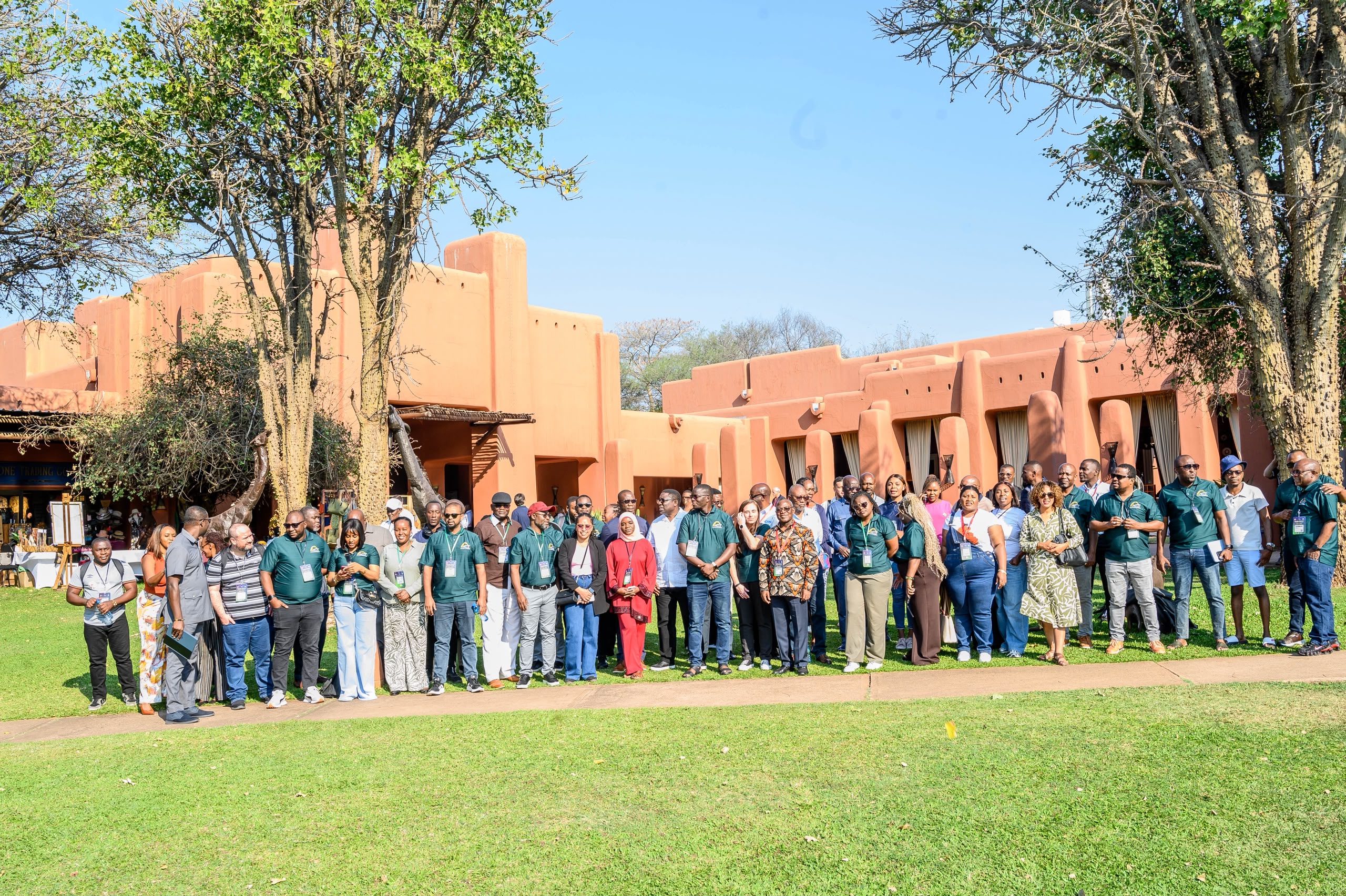
That question ran beneath the 2026 Africa Commerce Convergence Summit in Livingstone, Zambia. The Technology Information Confederation Africa (TICON), the African Marketing Confederation (AMC), and the African Supply Chain Confederation (ASCON) brought together delegates and professionals from more than 22 countries under the theme “Africa Rising: From Continental Strengths to Global Impact.”
- Beyond the Conference Room: Economic Opportunity for the Next Generation
As Ronald Mlalazi the President for ASCON Africa put it : “We cannot develop Africa without developing our young people.”
Education without economic opportunity breeds frustration. Degrees without industries to absorb graduates create a crisis of their own. Many young entrepreneurs operate at survival level because they lack finance, reliable connectivity, market access, transport, or mentorship.
Africa needs more than entrepreneurs. It needs an environment in which they can build businesses that employ others. Governments cannot carry that burden alone, and neither can universities. Professional bodies, private companies, and investors each have a critical role, above all in connecting young talent to internships, mentorships, cross-border projects, and real markets.
- The Power of Three
What set Livingstone apart was that these three bodies represent the core systems on which every modern economy depends:
Technology builds digital infrastructure.
Marketing creates demand and strong brands.
Supply chains move products and value across borders.
Our institutions have historically developed in silos, but the economy has not. A farmer needs technology for market information, marketing to build demand, and logistics to deliver. A software company needs customers, payment systems, and distribution to grow beyond a small domestic market.
This is why convergence matters. But convergence is not the achievement. Execution is.
- What This Means for Business
Many businesses still treat technology as an overhead expense, marketing as a promotional afterthought, and supply chains as a back-office detail. In practice, they form one integrated system:
A business with excellent digital tools but no customers will stall.
A strong brand with unreliable delivery will quickly lose consumer trust.
Efficient logistics paired with weak positioning will struggle to generate demand.
Businesses preparing to compete regionally must ask practical questions. Do our products meet regional standards? Can customers find us online and pay us easily? Can we deliver reliably, use data to understand our buyers, and protect our systems?
A small food processor with an outstanding product can still be shut out of regional markets by packaging, certification, transport, or payment barriers. Technology, marketing, and supply-chain professionals working together can remove those barriers.
- The Trade Paradox
Intra-African trade was among the most urgent themes at the summit. According to UNIDO analysis, intra-African exports accounted for only about 16% of the continent’s total exports in 2019.
For a continent of 54 countries and more than a billion consumers, that is a striking paradox. Too much economic value still leaves the continent before it moves across it.
Proximity does not automatically create trade. Businesses need market intelligence, finance, transport infrastructure, certification, and a working knowledge of foreign regulations. Policymakers can help by simplifying procedures, improving trade information, and strengthening digital payments. Businesses, for their part, must research specific markets rather than treat “the African market” as a slogan.
One candid point emerged from the ASCON discussions. African countries share many structural problems, yet they also compete for the same capital, talent, and customers. That does not make cooperation naive; it makes it strategic. When one country solves a problem, others should share, standardise, and build on the solution rather than repeat the same mistakes.
- From Consumers to Authors
Africa holds roughly one-fifth of the world’s population, yet its share of global data-centre capacity remains minimal. This matters because AI, cloud computing, and digital finance all depend on robust data infrastructure.
We are used to asking what technology we can import into Africa. We must become equally comfortable asking what technology we are building for Africa. That calls for sustained investment in data centres, cybersecurity, software engineering, and local technical capability, a task shared by engineers, universities, and entrepreneurs.
- My Key Takeaway: Connectivity Is Not the Finish Line
Panelists at TICON described a pattern that recurs across the continent. Malebogo (Lebo) Khanda, Secretary General of the Botswana Information Technology Society, observed that in remote communities the hardest problem is often not whether connectivity exists, but what happens after it arrives.
People need to understand what access makes possible. They need the digital literacy to use online learning, digital financial services, professional networks, and AI.
If a rural school gets reliable internet but neither teachers nor learners have the skills to use it, we have connected a building, not transformed a community.
Pair that same connection with digital skills, AI literacy, and mentorship, and the picture changes entirely. A child in a remote community can reach world-class courses, a rural clinic can consult specialists, and a small business can find global buyers.
Going forward, at Aetherlink we intend to pair every connectivity deployment in Zimbabwe with digital-skills and awareness training. A network that nobody can use productively is a cost, not an asset.
- What Policymakers and Professionals Should Take From This
For policymakers: Businesses experience policy through practical questions. How long does it take to register a company? How stable is the grid? How affordable is broadband? Technology policy cannot be separated from industrial policy, nor branding from export strategy. Engaging professional bodies directly helps close the gap between policy and conditions on the ground.
For professionals: Expertise gains value when it intersects with other fields. A technologist who understands marketing builds better products, and a marketer who understands logistics makes realistic promises. Membership in a professional body must offer tangible economic benefit: mentors, collaborators, and regional opportunities.
- Will This Become Just Another Conference?
Africa’s conferences deserve scrutiny. We are very good at panels, declarations, and photo opportunities. The real test is what happens six months later.
To its credit, Livingstone made an attempt at accountability. At the close, representatives signed formal commitments, and the upcoming conference in Addis Ababa, Ethiopia, offers a natural checkpoint.
The questions for Addis Ababa must be concrete. How many businesses gained new markets? Which collaborations moved into execution? Which commitments failed, and why? Honest accountability means exposing roadblocks as readily as celebrating wins.
The Honour Is on Us
We left Livingstone convinced that Africa’s core challenge is less a shortage of resources than a shortage of connection between them. Technologists, marketers, and supply-chain experts often work in separate rooms, while entrepreneurs navigate all three systems alone.
The promise of TICON, AMC, and ASCON is that these systems can finally work as one. Addis Ababa should not be another gathering. It should be a transparent progress report.
“Africa Rising” is a powerful statement. Now we have to prove it.
The honour is on us.
Andrea Nokwanda Bule is a Midlands State University Telecommunications Engineering graduate and the Founder and Lead Engineer of AetherLink Connectivity Solutions, a firm dedicated to bringing digital access to remote and underserved communities. Beyond her technical work, she is deeply committed to youth empowerment through career guidance and tech-focused initiatives.
+263771537759
andrea@aetherlink.co.zw
Discover more from Etimes
Subscribe to get the latest posts sent to your email.