


By Newton M. Mambande
‘19 August 1965 – 3 July 2020’
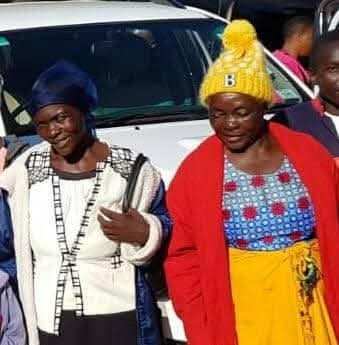
HARARE – SHE was not in the history books. She held no title. She never addressed a conference.
But Dorcas Sigauke carried forests on her back, raised a family through war and hyperinflation, and taught a generation how to survive with dignity.

Today, on what would have been her 61st birthday, I remember my mother.
A Childhood Shaped by War and Loss
Dorcas was born on 19 August 1965 at Zimpala Estate near Melsetter Village and raised in Rusitu Valley, near Mozambique. She began her education at Vimba Primary School, but in 1972, her world fractured. Her elder brother, Magavhu, died from food poisoning. The grief forced her out of school. She returned in 1974, but the damage lingered — “she never trusted anyone fully again,” she once told me.
In 1975, she witnessed Rhodesian Security Forces exchange fire with FRELIMO across the river border. The school closed. The war had arrived.
Her father, Ephraim Tumai Derera, was nearly killed by ZANLA forces after being labelled a “sell-out” — a man with a painted house, a forestry job, and links to the colonial economy. In the 1970s, even a standard house could make you a target.
Ephraim’s story is also the story of labour in colonial Rhodesia. In 1957, he was a forestry foreman at Zaaiplas Estate, then owned by Charter Estates (Private) Limited, a subsidiary of the British South Africa Company, reporting to General Manager John Ball. He earned that post after locating Cecil John Rhodes’ handwritten letter marking the Charter–Wingrove boundary. In May 1962, he was jailed and lost the contract. On 26 November 1962, my grandfather Wilton Mambande replaced him. One man witnessed the start of commercial forestry; the other saw its consolidation.
Ephraim was the son of James Ndipei Derera, who died shortly after building Sibu House for Major Dick Wilson, a Second World War veteran rewarded with land. James was buried 100 metres from that house. The land gave us life, and it took life too.
Work, Survival and Quiet Defiance
During the liberation war, Dorcas gave directions across the boundary river into Mozambique. She never joined the war, though many boys and girls from Rusitu did — to fight for land. The state even planned to resettle Rusitu people to Gokwe, but the war halted it.
In that same period, I crossed the river boundary with her to trade our meagre merchandise in Mozambique. It was there that I first learned to operate in a volatile, uncertain, complex, and ambiguous — VUCA — environment.
When the guerrillas failed to eliminate her father, they turned on the family. They assaulted Dorcas, her mother Lizzy Manhangwe, and her siblings. After surviving that persecution, the family broke apart.
During the Unilateral Declaration of Independence (UDI) period, Dorcas worked at Tilbury Estate under Border Forestry (Private) Limited, and later at The Rhodesian Wattle Company. At Tilbury, she worked in the pine and eucalyptus nursery in the silviculture department. She witnessed her great uncle Lovemore Mkhondo being beaten by a white foreman. Later, in the post-independence era, she was accused of being a political loyalist — a label that followed many who worked in state-connected industries.
At Skyline, she slashed wattle in the rain.
At independence, her mother — my grandmother — wanted her sent to fashion and textile design school. But Grandpa Ephraim insisted: “She is equal to a boy child. She must have the opportunity to pursue academics.” That insistence changed her path.
She returned to school — Biriri Primary in 1983, and Biriri High School in 1987 — earning distinctions and colours. She was offered A-Level places at Hartzell and Mutambara High Schools under the United Methodist Church. She declined. She dreamed of a Bachelor of Arts in History and Shona, and of teaching. In 1990, she applied to Mutare Teachers’ College. Her mother and relatives from my father’s side refused to support her. They insisted she should be confined to the kitchen and bedroom, reproducing and raising children.
To fund herself in the 1980s, she sold kapenta fish, supplied by Gogo, to pay her school fees.
The Trader, The Gardener, The Teacher
In 1995, she won first prize in a village beautification competition, awarded by Mr Martin Coates, Estates Manager at Border Timbers Charter Estates. In 1999, she received second prize — a coffee table — from Social Welfare Officer Mr David Handina. Small wins, but immense pride.
In 1998, she put me into business. I sold tsunga, covo, rape, and sweet cabbage leaves. She sent me with groundnuts from Bocha, and bananas, pineapples, citrus, avocados, and sugar cane from Rusitu. In the 2000s, we sold guavas from our kitchen garden — until unknown vandals destroyed them with Roundup at night. So we gathered them from the exotic pine plantations. To children of the forestry towns, guava was “wild.” To us, it was survival.
We traded sweets, biscuits, bread from Bakers Inn and Golly Bakeries, home-made tea buns, sweet potato, cassava, and yam. During hyperinflation, I reviewed prices hourly. When there was no money, we bartered for maize. I weeded fields for payment in wheat.
She loved proudly Zimbabwean brands: Olivine, Colgate, Panol, Buttercup, Surf, Mazoe, Pearlenta, Red Seal, and Tanganda Tea. She never admired South African imports. “Buy local,” she would say. “Our own must eat first.”
She told me: “Take History and Commerce.” I loved agriculture, but she said I was weak in practicals. “Go into business. Hire people.”
In February 2020, months before she passed at Mutambara Mission Hospital on 3 July 2020, she gave her last instruction: “Leave employment. Start a company.”
She did not live to see Ayanda Enterprises (Private) Limited incorporated on 20 May 2023. But Ayanda Enterprises carries her instruction.
Lessons for Us Today
Dorcas Sigauke’s life is a case study in economic history and labour economics. What can professionals, business leaders, and policymakers learn?
- For Entrepreneurs: Resilience is a business model.
She traded through war, resettlement threats, and the 2008 hyperinflation. When currency failed, we bartered. When crops were destroyed, we foraged. Adapt or perish — that is the first rule in volatile economies. - For Business Leaders: Invest in human capital, even informally.
She had no degree, yet she taught pricing, customer care, and supply chains. She chose Commerce over Agriculture for me because she saw my aptitude. Leaders must see people, not just certificates. - For Professionals: An interrupted education is not an ended one.
She dropped out in 1972, returned in 1974, and finished in 1987. At 22, she still wanted A-Levels. Lifelong learning is not a slogan — it is survival. - For Policymakers: Recognise the informal economy and women’s labour.
Dorcas fed families, paid school fees, and created employment without a bank loan or government grant. Forestry companies built towns, but women like her built households. Policy must protect informal traders, extend credit, and safeguard local production. - For All of Us: Buy local, build local.
Her loyalty to Zimbabwean brands — Olivine, Mazoe, Tanganda — was not sentiment. It was economics. Local procurement keeps money circulating at home. - VUCA is a classroom.
Crossing that river to Mozambique taught me risk, pricing, and trust. Crisis economies do not destroy entrepreneurs — they forge them.
Epilogue
I was to honour her on Mother’s Day, or on the 6th anniversary of her death on 3 July 2026. Instead, I choose to celebrate her 61st birthday today, 19 August 2026.
Dorcas Sigauke never owned land. She never signed a tender. But she planted seeds — in soil, in markets, and in me.
To every woman selling vegetables at Sakubva, to every child weeding for maize, to every leader drafting policy: remember the Dorcases. They are the economy.
May her soul rest in peace.
Newton M. Mambande is an entrepreneur and researcher with published scientific scholarship in journals. He is Founder of Ayanda Enterprises (Private) Limited. He can be reached at newtonmunod@gmail.com or +263773411103.
Discover more from Etimes
Subscribe to get the latest posts sent to your email.