


By Jabulani Simplisio Chibaya
HARARE – ZIMBABWE’S capital markets are increasingly becoming an important channel for mobilising domestic and international capital towards productive investment. The proposed secondary listing of Ariana Resources plc on the Victoria Falls Stock Exchange (VFEX), accompanied by a US$5 million private placement, represents an interesting development at the intersection of mining, capital markets and investment mobilisation. Announced on 9 November 2026, the transaction creates an opportunity for Zimbabwean and regional investors to gain exposure to an internationally listed mining company developing one of Zimbabwe’s significant undeveloped gold assets.

Ariana Resources, which already trades on London’s AIM market and the Australian Securities Exchange (ASX), is seeking to broaden its investor base through a secondary listing on the VFEX by way of introduction. The listing is particularly significant because it creates another avenue through which local institutional and qualifying retail investors can participate in the financing of a major domestic mining development. Rather than relying exclusively on foreign capital, the transaction opens a pathway for Zimbabwe’s own capital markets to participate in financing the development of a resource located within its borders.


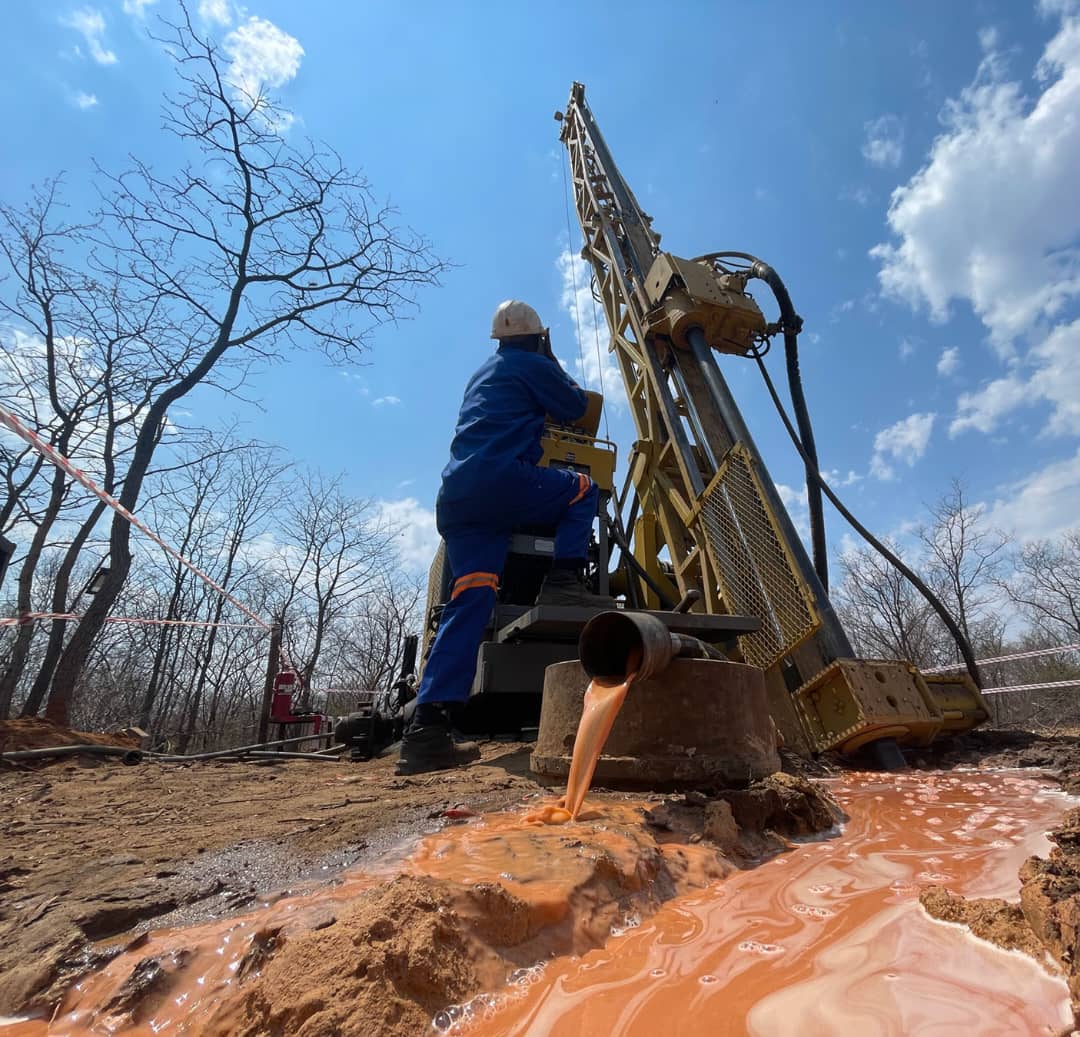
At the centre of the proposition is the Dokwe Gold Project, a 100%-owned Ariana Resources asset in Zimbabwe with a reported 1.6 million ounces of gold under the JORC resource framework. The project is positioned as a substantial long-term mining development, with a revised May 2026 Pre-Feasibility Study outlining an initial 12-year open-pit mine life and targeted average annual production of approximately 80,000 to 100,000 ounces of gold. These figures place Dokwe among the more consequential undeveloped gold projects in Zimbabwe’s mining pipeline.
The financial projections are particularly striking. At an assumed gold price of US$4,250 per ounce, the May 2026 Pre-Feasibility Study estimates a pre-tax Net Present Value (NPV), discounted at 10%, of approximately US$1.056 billion and a post-tax NPV of US$740 million. The study also projects a pre-tax Internal Rate of Return (IRR) of 92%, a payback period of approximately 1.2 years after commissioning and estimated pre-production capital expenditure of US$164 million. Importantly, these are project-model estimates based on specified assumptions, not guaranteed future returns.

There is an important distinction in the production profile. The project is designed around a 20-year operating model, comprising an initial 12-year open-pit mining phase expected to produce approximately 80,000 ounces annually, followed by an eight-year stockpile-processing phase targeting approximately 20,000 ounces annually. Peak annual production is estimated at 100,000 ounces. The project has a combined JORC-compliant Mineral Resource of approximately 1.6 million ounces, including a 1.13 million-ounce Ore Reserve at Dokwe North. This distinction matters because a mineral resource is not the same as an economically mineable reserve.
The proposed US$5 million private placement is designed to finance the next stage of development. Ordinary shares are being offered to selected eligible institutional and qualifying retail investors at US$0.023 per share, while Dendere Asset Management, acting on behalf of its investment partners, has committed US$1 million through a cornerstone subscription at US$0.022 per share. The cornerstone arrangement also includes a company call right for up to a further US$1 million, subject to the conditions outlined in the prospectus. The minimum subscription required for the placement and listing to proceed is US$3 million, inclusive of the cornerstone commitment. The offer is therefore not simply a listing exercise; it is a structured capital-raising transaction tied to a defined development programme.

The allocation of capital is equally important. Under the maximum fundraising scenario, the prospectus provides for US$5 million to support exploration and project development over the following two years. This includes approximately US$2.32 million for development activities at Dokwe, US$2.38 million for regional exploration around Dokwe and US$300,000 for wider Zimbabwean regional exploration. The programme includes geological mapping, geochemical surveys, aeromagnetic investigations, geophysical surveys, resource-extension drilling and exploration drilling. The funds are intended to advance the asset rather than finance the actual construction of the mine. The distinction is important: the company is raising development capital to improve geological confidence, complete technical work and prepare the project for its next investment decisions.

Ariana’s relationship with Hongkong Xinhai Mining Services adds another strategic dimension. Xinhai is an equity investor and technical partner with mine-development experience and an established Zimbabwean workforce. Its involvement includes technical, metallurgical and engineering input towards the Definitive Feasibility Study (DFS), alongside support for metallurgical test work. The company is targeting completion of the DFS in the first quarter of 2027. This is a critical milestone because the DFS should provide a more detailed assessment of the engineering, capital requirements, operating assumptions and technical considerations necessary to move towards a construction decision.

The VFEX listing also introduces an interesting dimension to Zimbabwe’s investment architecture. Ariana’s shares will be denominated and traded in United States dollars, with a Zimbabwean branch share register maintained by Corpserve Registrars. This gives local investors a mechanism to hold equity in an international mining company with a significant underlying Zimbabwean development asset. If dividends are declared in future, shareholders on the VFEX register will receive them in US dollars. However, investors should distinguish between USD-denominated trading and guaranteed USD returns: the prospectus makes no guarantee of dividends, capital appreciation or the future trading price of the shares.
There is also a broader strategic implication for Zimbabwe’s capital markets. For years, the conversation around mining investment has largely centred on foreign direct investment, offshore financing and the mobilisation of international institutional capital. Ariana’s proposed secondary listing introduces another possibility: allowing domestic capital to participate directly in the ownership and development of local mineral assets through an internationally listed corporate structure. This is particularly relevant for pension funds, asset managers and qualifying investors seeking exposure to the mining sector through regulated equity markets rather than solely through direct participation in mining operations.

The transaction’s timetable provides a clear framework for investors. The private placement opens on 11 November 2026 and closes on 2 December 2026. Results and share allotment are scheduled for 7 December, settlement for 9 December, and commencement of trading on the VFEX is scheduled for 11 December 2026, subject to the conditions and timetable set out in the prospectus.
Nevertheless, the investment proposition must be assessed with discipline. Dokwe remains a development-stage project, not an operating mine. Investors must consider construction financing, commodity-price volatility, metallurgical performance, permitting, environmental and social obligations, mining-title considerations, project execution and potential shareholder dilution. The prospectus itself classifies the securities as highly speculative. It is also important to understand that VFEX approval of the prospectus is not an endorsement of the investment’s merits.

Ultimately, the Ariana Resources transaction is about more than adding another counter to the Victoria Falls Stock Exchange. It is about connecting Zimbabwe’s mineral endowment with a broader architecture of capital formation, international investment and local ownership. The country has substantial mineral resources, but converting geological potential into productive mines requires patient capital, credible technical studies, sound governance and access to investment markets. Dokwe offers an interesting case study of how these elements can come together.
If successfully executed, the listing could demonstrate how Zimbabwe’s capital markets can become more than secondary trading platforms: they can serve as mechanisms for financing productive assets, broadening investment participation and retaining a greater connection between national mineral wealth and domestic wealth creation. The real test, however, will not be the listing ceremony or the capital raised. It will be whether the project progresses from geological resource to a fully financed, constructed and commercially producing gold mine.
Jabulani Simplisio Chibaya is a Data and AI Consultant specializing in data science, artificial intelligence, blockchain, and cryptocurrency innovation. A seasoned conference speaker, he also writes on the intersection of technology, regulation, and economic development. Contact: Cell: +263 778 921 881 | Email: simplisiochibaya22@gmail.com | LinkedIn: https://www.linkedin.com/in/jabulani-simplisio-chibaya Investor note: This article is for informational and educational purposes and does not constitute investment advice or an offer to subscribe. The private placement is restricted to selected eligible institutional and qualifying retail investors. Prospective investors should read the full prospectus and obtain independent professional advice.
Discover more from Etimes
Subscribe to get the latest posts sent to your email.