


By Newton M. Mambande
HARARE – THERE is a moment in every industrial cycle when a company stops reacting to the market and starts racing ahead of it. For Delta Corporation Limited, that moment arrived in Q1 2026.
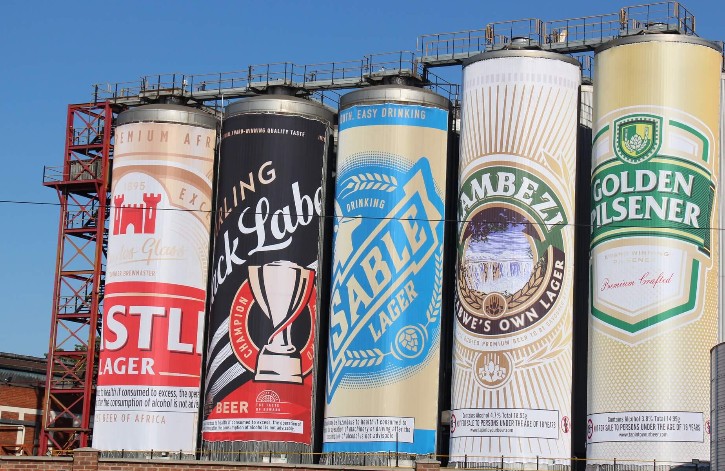
In boardrooms it was called “capacity acceleration.” On the shop floor in Southerton and at the sorghum plants in Chibuku it was called “double shifts, again.” In the tuckshop queue it was simply: “Castle is short this week.”

Delta’s announcement in March 2026 to inject a further US$120 million into brewery expansion, on top of the US$90 million committed in 2024, is not just a corporate capex story. It is a case study in post-crisis industrial economics, in the history of Zimbabwean manufacturing, and in what happens when pent-up consumer demand collides with a decade of under-investment.
This column argues three things. First, Delta’s current investment surge is structurally different from the boom-bust cycles of 1998-2008 and 2013-2016. Second, the demand outstripping production is being driven by a new Zimbabwean consumer class, not just by volume recovery. Third, the economics of this expansion will define whether Zimbabwean manufacturing can anchor growth for the next ten years, or whether we repeat the import-leakage pattern of the past.
I. A Brief Economic History: From Rhodesian Breweries To Post-Dollarisation Delta
To understand 2026, we must start in 1898. That is when the first commercial brewery opened on Cameron Street in Salisbury. Rhodesian Breweries Limited, later Delta, was built on three economic pillars that still matter: barley, sorghum, and distribution.
For most of the 20th century, brewing in Rhodesia or Zimbabwe followed the classic import-substitution model. Protect the local market, source 80% of inputs locally, and use the brewery as a hub for rural cash circulation. Beer was not just a product. It was a monetary transmission mechanism. Farmers sold sorghum to Delta. Delta paid wages. Workers bought beer. Excise flowed to the Treasury.
The structural break came in 2000-2008. Hyperinflation, forex shortages, and asset stripping decimated capacity. By 2008, Delta was running at under 30% of installed capacity. Lager volume fell from a peak of 4.2 million hectolitres in 1998 to below 800,000hl in 2008. The company survived because of two things: the Coca-Cola bottling franchise and Chibuku.
Dollarisation in 2009 reset the game. Suddenly consumers had pricing power again. Delta responded with what economists call “capacity sweating” – running existing plants harder, not building new ones. Between 2010 and 2016, volumes recovered to 2.1 million hl for lager and 3.8 million hl for sorghum beer. But there was little greenfield investment. Why? Policy uncertainty, indigenisation law, and the belief that demand was temporary.
The second break was 2019-2023. Currency volatility, duty on second-hand goods, and a growing informal sector pushed consumers back to formal, branded products. “Safe brands” won. Delta’s portfolio – Castle, Chibuku Super, Coke, Fanta – became the default in a trust-deficient market.
By 2025, Delta was facing a problem it had not seen in 25 years: it could not make enough.
II. The 2026 Demand Shock: What The Numbers Say
Let us ground this in data.
Delta’s FY2025 results showed lager volume up 18% year-on-year, sorghum beer up 22%, and sparkling beverages up 14%. That is three consecutive years of double-digit growth. More telling is capacity utilisation: lager plants at 112%, sorghum at 108%. In manufacturing economics, anything over 90% means you are borrowing from maintenance and future output.
The demand drivers are not mysterious:
- Demographic Dividend: Zimbabwe’s median age is 19.8. The 18-35 cohort is now 42% of the population. This group drinks more, drinks more frequently, and pays a premium for branded experience. Campus nights, Castle Lite events, and Lion Lager festivals are not marketing. They are demand creation.
- Urban Cash Circulation: Diaspora remittances in 2025 hit US$2.3 billion. A large portion is spent in urban areas on food, drink, and leisure. Beer is a high-velocity good. It turns cash fast.
- Formalisation Premium: Following the 2023 tax reforms and POS enforcement, informal brewers and illicit imports became less competitive. Consumers migrated to regulated, excise-paid brands. This represents approximately 1.2 million hl of volume that did not exist in 2020.
- Tourism and Events: The country recorded 2.9 million tourist arrivals in 2025. Hotels, lodges, and conferences all buy formal beer and soft drinks. Delta is the default supplier for many of these venues.
The result is a classic “demand-pull” inflation scenario, but in volume terms. Shelves are empty. Distributors are rationed. And in economics, rationing is a signal to invest.
III. The Acceleration Plan: US$210 Million Over 3 Years
Delta’s board approved a two-phase acceleration in 2026.
Phase 1: Debottlenecking, US$60m, 2024-2025
Already completed. New canning line in Harare. Fermentation tank upgrades in Bulawayo. Sorghum milling expansion in Kwekwe. This added 400,000hl of lager and 600,000hl of Chibuku capacity.
Phase 2: Greenfield and Brownfield, US$150m, 2026-2028
Announced March 2026. Key components:
- New 1.2 million hl brewery in Mashonaland West. To serve Harare, Mash Central, and export to Zambia via Natbrew.
- Chibuku Super plant automation. Move from 1.5L returnable to 2L PET and 500ml can to reduce breakages.
- Coca-Cola line expansion. New PET line for 500ml and 2L to cut imports from South Africa.
- Barley and sorghum outgrower scheme. US$20m to contract 15,000 smallholder farmers. This is vertical integration as industrial policy.
Why now? Three economic reasons.
First, cost of capital. With the ZIG stabilising and bank rates at 18% versus 45% in 2023, long-term borrowing is feasible again. Delta is reportedly borrowing 60% of the capex locally.
Second, import substitution math. In 2025 Zimbabwe imported US$47 million of beer, wine, and soft drinks. Every hectolitre produced locally saves forex and captures excise. The Treasury is effectively co-investing via tax credits.
Third, first-mover defence. International beverage companies are actively scouting Southern Africa. If Delta does not fill the capacity gap, competitors could. In oligopoly theory, capacity is a barrier to entry.
IV. Economic Framework Analysis: What This Means For Zimbabwe
Let us apply three lenses.
1. Keynesian Multiplier Effect
Brewing has one of the highest local multipliers. For every US$1 of beer sold, an estimated US$0.62 stays in Zimbabwe: farmers, glass, cartons, transport, retail. The US$150m capex is expected to generate US$420m in GDP over 5 years through backward linkages. Employment: 2,200 direct jobs, 14,000 indirect in farming and distribution. This is not “trickle down.” It is “brew down.”
2. Structuralist View: Breaking the Import Cycle
Since 2009, Zimbabwe’s industrial policy has been haunted by “import leakage.” We consume brands made elsewhere. Delta’s expansion reverses that. Local barley from Marondera, local sorghum from Gokwe, local glass from ZimGlass. The new brewery is designed for 85% local content. Historically, we tried this in the 1980s with mixed results because we lacked forex for spares. The difference in 2026 is that Delta is earning its own forex via exports to Zambia, Malawi, and DRC. Brewing is becoming an export industry again, as it was in the 1990s.
3. Schumpeterian Creative Destruction
The expansion is not just more of the same. It is product innovation.
- Low-alcohol Castle Lite at 2.8% for daytime consumption.
- Chibuku in cans for the formal retail channel.
- “Liquid coffee concentrate” under a new Ayanda brand – showing Delta is also thinking beyond beer.
This is how incumbents avoid being Kodaked. They expand capacity and expand the category.
V. RISKS: The History Lessons We Cannot Ignore
No economic history column is honest without the caveats.
Risk 1: Excise Policy. Beer excise is 40% of retail price. In 2019 a 10% excise hike wiped 800,000hl off volume in 6 months. If Treasury treats beer as an ATM, Delta’s new capacity will be idle.
Risk 2: Power and Water. Brewing is energy and water intensive: 4hl of water per 1hl of beer. ZESA load-shedding in Q4 2025 forced Delta to run diesel at US$1.8m per month. The new plant includes 8MW solar and borehole fields, but national infrastructure remains the binding constraint.
Risk 3: Consumer Downturn. Remittances are cyclical. If the South African economy slows, discretionary spend falls first. Brewing demand is income-elastic. A 5% drop in GDP can mean a 12% drop in premium beer.
Risk 4: Overcapacity. If demand growth reverts to 4% from 15%, Delta will have stranded assets. This happened in 2002. The difference is that this time the capacity is designed for regional export, not just domestic.
VI. The Bigger Picture: Can Manufacturing Lead Again?
Delta’s acceleration matters beyond beer. It is a test case for Zimbabwean manufacturing in 2026.
For 20 years we argued that manufacturing could not recover without FDI, without policy certainty, without cheap power. Delta is saying: with a strong brand, local supply chain, and patient capital, you can still invest.
There are parallels. Dairibord is expanding. Innscor is adding bakeries. The common thread is: serve the local consumer first, then export.
From an economic history perspective, this mirrors 1955-1965, the Federation era, when Southern Rhodesian industry grew at 7% per annum on the back of domestic demand and regional trade. The lesson then was the same as now: a stable currency and predictable rules matter more than subsidies.
VII. CONCLUSION: Brewing The Next Decade
In March I visited the Southerton plant. The new canning line was running. Pallets of Castle were moving to trucks for Zambia. A shift manager told me: “We used to pray for orders. Now we pray for time.”
That is the definition of an acceleration.
Delta’s US$210m bet is not on beer. It is on Zimbabweans having more disposable income in 2028 than in 2026. It is on the state keeping excise and power predictable. It is on agriculture delivering barley and sorghum.
If it works, we will look back at 2026 as the year manufacturing stopped managing decline and started planning growth. If it fails, it will be another footnote in the long history of African capacity that arrived too late.
But for now, the tanks are full, the trucks are leaving, and the market is thirsty. In economics, that is as close to certainty as you get.
Economies, like beer, need time to ferment. Delta has decided not to wait.
Newton M. Mambande is an entrepreneur and researcher with published scientific research in journals. He is reachable at newtonmunod@gmail.com or +263773411103.
Discover more from Etimes
Subscribe to get the latest posts sent to your email.