


Zimbabwe’s Sovereignty Crossroads Demands Choice.
By Newton Mambande
Introduction: The new alignment question

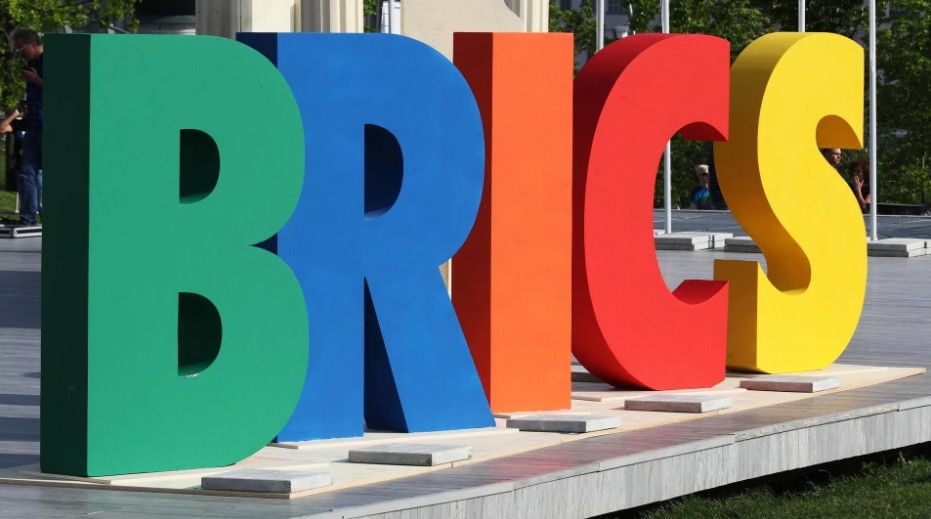
HARARE – AS Zimbabwe contemplates deeper alignment with the New Development Bank (NDB), commonly referred to as the BRICS Bank, policymakers must confront a fundamental question: Will this institution deliver the development financing that the Bretton Woods Institutions and the Paris Club have failed to provide over the past 45 years, or will it merely replicate the same conditionalities under a different flag?
This inquiry is not an argument against multilateralism; rather, it is a case for economic sovereignty. Zimbabwe’s development challenge has never been a shortage of resources. It has been—and remains—a crisis of financing architecture, policy autonomy, and an inability to learn from our own economic history. From the Economic Structural Adjustment Programme (ESAP) of the 1990s, through the sanctions-induced stagnation of the 2000s, to the Staff Monitored Programmes (SMPs) under Tendai Biti, Patrick Chinamasa, and Professor Mthuli Ncube, Zimbabwe has been trapped in a continuous cycle of borrowing, adjustment, and austerity. The cumulative external debt now exceeds US$21 billion, the majority of which is in arrears. Yet growth remains anaemic, industry remains under-capitalised, and poverty remains endemic.
This article argues that Zimbabwe should approach the BRICS Bank with extreme caution. A more sustainable path lies in the mobilisation of domestic mineral resource wealth—bullion, diamonds, platinum group metals, lithium, and rare earth minerals—to finance development internally, in the manner successfully deployed by Botswana, Saudi Arabia, and the United Arab Emirates. To substantiate this case, we must first interrogate the record of the Bretton Woods Institutions, the Paris Club, and other International Financial Institutions (IFIs) in Zimbabwe, and then draw critical lessons from states that pursued debt-free, resource-led development.
1. The Bretton Woods Legacy In Zimbabwe: Conditionality Without Development
The International Monetary Fund (IMF) and the World Bank were established at Bretton Woods in 1944 to provide short-term balance of payments support and long-term development finance. In theory, they are technical institutions. In practice, however, their lending has always been political and ideological.
Zimbabwe’s engagement with these institutions began in earnest after independence in 1980. The first decade was funded largely through grants and concessional lending. The turning point came in 1990 with the adoption of the Economic Structural Adjustment Programme (ESAP).
ESAP (1990–1995): The First Great Experiment
ESAP was designed by the World Bank and the IMF. Its pillars were trade liberalisation, fiscal austerity, privatisation of parastatals, and deregulation of prices and the exchange rate. The promised outcomes included 5% GDP growth, export diversification, and fiscal discipline. The actual outcomes were starkly different:
- Deindustrialisation: Tariff removal exposed infant industries to imports. The textiles, clothing, and furniture sectors collapsed. Over 20,000 formal jobs were lost between 1991 and 1994.
- Social Costs: User fees for health and education were introduced. Real wages fell by 30%. Poverty incidence rose from 25% in 1990 to over 40% by 1995.
- Debt Accumulation: Far from reducing borrowing, ESAP required new loans to finance the adjustment. External debt rose from US$2.7 billion in 1990 to US$4.5 billion by 1995.
The lesson of ESAP is clear: adjustment without industrial policy leads to deindustrialisation, and conditionality without sovereignty results in policy failure.
The 2000s: Sanctions, Isolation and the Paris Club
Following the land reform programme of 2000, Zimbabwe was placed under targeted sanctions by the United States, the European Union, and other Western states. Multilateral lending from the IMF and World Bank was suspended, and Zimbabwe was declared ineligible to borrow. This pushed the country towards bilateral lenders and the Paris Club of official creditors. However, because Zimbabwe was in arrears, it could not access new Paris Club financing. It was forced into expensive short-term borrowing, supplier credits, and barter deals. Debt arrears ballooned, and penalties compounded.
The economic impact was severe: hyperinflation in 2008, a collapse of productive capacity, and a loss of policy space. The Bretton Woods Institutions were not present as lenders, but their absence created a financing vacuum that was filled by opaque, high-cost debt.
2. The Staff Monitored Programme Cycle: Biti To Chinamasa To Ncube
After the Government of National Unity in 2009, Zimbabwe re-engaged the IMF through Staff Monitored Programmes (SMPs). An SMP is not a lending programme; it is a seal of approval that signals to other creditors that a country is implementing IMF-recommended policies.
- Tendai Biti (2009–2013): The first SMP focused on fiscal discipline, civil service reform, and debt clearance. The budget was balanced, but there was no capital expenditure. The economy dollarised, which ended hyperinflation but rendered exports uncompetitive.
- Patrick Chinamasa (2013–2018): SMPs continued with an emphasis on arrears clearance and re-engagement. The “Zimbabwe Accelerated Arrears Clearance, Debt and Development Strategy” (ZAADDS) was launched, premised on policy reform first, money later. Again, no new net financing materialised.
- Professor Mthuli Ncube (2018–Present): The Transitional Stabilisation Programme and subsequent SMPs have focused on austerity, currency reform, and the introduction of the ZiG. While the IMF has praised fiscal consolidation, growth has averaged below 4%, and the debt overhang persists.
The pattern is unmistakable. SMPs provide credibility but not capital. They require Zimbabwe to implement painful reforms in anticipation of financing that never arrives due to arrears to the World Bank, the African Development Bank (AfDB), and the Paris Club. Zimbabwe has effectively been running a marathon to reach a starting line that keeps moving.
The African Development Bank has been more sympathetic, but it too is constrained by Zimbabwe’s arrears, estimated at over US$1.5 billion, preventing new lending until these are cleared.
3. The Brics Bank: What Is Different And What Is Not?
The New Development Bank (NDB) was established in 2014 by Brazil, Russia, India, China, and South Africa. Its stated mandate is to fund infrastructure and sustainable development with “fewer conditionalities.”
Potential Advantages for Zimbabwe:
- Less Policy Conditionality: The NDB does not impose the same structural adjustment benchmarks as the IMF.
- Infrastructure Focus: Zimbabwe’s energy, transport, and water deficits require long-term project finance.
- Geopolitical Diversification: Borrowing from BRICS reduces over-reliance on Western institutions.
Potential Risks:
- Debt Sustainability: The NDB lends at commercial or near-commercial rates. If funded projects do not generate sufficient foreign exchange, debt servicing will become a burden.
- Collateralisation: Like other lenders, the NDB may require mineral offtake agreements or other resource-backed guarantees.
- Replication of Old Problems: The core issue is not the lender, but the borrowing model. If Zimbabwe borrows for consumption or for low-return projects, it will return to arrears within a decade.
Engaging the BRICS Bank is therefore not a panacea; it is a tool. Whether it builds or destroys depends entirely on how it is deployed.
4. Lessons From Debt-Free, Resource-Led Development
History provides powerful counter-examples to the borrowing model: Libya under Muammar Gaddafi, Nazi Germany under Adolf Hitler, and Burkina Faso under Thomas Isidore Noël Sankara. Each of these states rejected external financial dependence and chose to mobilise domestic resources.
Case 1: Libya under Muammar Gaddafi (1969–2011)
By 2011, Libya had zero external debt. This was achieved through:
- Oil Nationalisation: The Libyan National Oil Corporation retained a 51% stake in all oil ventures, ensuring revenue remained domestic.
- Sovereign Wealth: The Libyan Investment Authority invested oil surpluses abroad, and the Central Bank of Libya held over US$150 billion in reserves.
- State-Led Projects: The Great Man-Made River, free education, and free healthcare were funded from oil revenue, not loans.
While Libya’s model was authoritarian and flawed in governance, it demonstrated that a resource-rich state can fund development without IFIs. The absence of debt meant the absence of conditionality.
Case 2: Nazi Germany (1933–1939)
Economically, Hitler’s government rejected foreign borrowing and gold-standard orthodoxy. It financed rearmament and public works through:
- Mefo Bills: A system of state promissory notes that mobilised domestic savings.
- Autarky: A focus on domestic resource mobilisation and import substitution.
- Full Employment: Public works programmes funded by the state bank.
The political system was abhorrent, but the economic lesson remains relevant: a state can mobilise resources internally and achieve rapid industrialisation without external debt. The constraints are political will and institutional capacity, not access to foreign capital.
Case 3: Burkina Faso under Thomas Sankara (1983–1987)
Sankara’s revolution was explicitly anti-IMF, encapsulated in his famous statement: “He who feeds you, controls you.” His policies included:
- Debt Rejection: He refused to borrow for prestige projects, stating, “We cannot pay the debt because we are not the ones who contracted it.”
- Domestic Mobilisation: Mass campaigns for reforestation, vaccination, and local textile production.
- Anti-Corruption: State resources were redirected to health, education, and agriculture.
In four years, Burkina Faso achieved food self-sufficiency in some regions and dramatically improved health indicators with almost no external borrowing. Sankara demonstrated that moral authority and resource mobilisation can substitute for foreign loans.
5. The Zimbabwean Alternative: Minerals For Development, Not Debt For Consumption
Zimbabwe sits on one of the world’s richest mineral endowments, with estimates suggesting over US$12 trillion in mineral value—platinum, gold, diamonds, lithium, chrome, and increasingly, rare earth elements critical for the green economy. Yet we export most of these as raw materials and borrow to import finished goods. This is the opposite of Botswana, Saudi Arabia, and the UAE.
The Botswana Model
Botswana discovered diamonds in 1967. Instead of borrowing, it negotiated a 50-50 joint venture with De Beers through Debswana. Diamond revenue was invested in infrastructure, schools, and hospitals, as well as the Pula Fund sovereign wealth fund and local beneficiation. As a result, GDP per capita rose from US$70 in 1966 to over US$8,000 today, with debt-to-GDP remaining below 25%.
The Saudi Arabia and UAE Model
Oil was never merely exported; it was used to fund state budgets directly, create sovereign wealth funds for global investment, and build downstream industries. The state retained control of the resource and used it as equity, not collateral for debt.
A Zimbabwean Mineral Sovereignty Framework
To replicate this success, Zimbabwe must implement the following measures:
- Retain Majority Equity in Strategic Minerals: The state, through the Zimbabwe Mining Development Corporation (ZMDC) and the Minerals Marketing Corporation of Zimbabwe (MMCZ), should hold at least 51% in gold, diamond, and lithium projects. Private capital can be a minority partner.
- Ban Raw Export of Strategic Minerals: All lithium, rare earths, and platinum group metal concentrates must be beneficiated locally before export to create jobs and retain value.
- Establish a Zimbabwe Sovereign Wealth Fund: All mineral royalties and dividends should be directed into a fund invested in infrastructure, industry, and skills development. This fund must be protected by an Act of Parliament and subject to public audit.
- Issue Mineral-Backed Domestic Bonds: Instead of borrowing US dollars externally, the government can issue ZiG bonds backed by future gold or platinum receipts, thereby mobilising domestic savings.
- Use Bullion Reserves as a Monetary Anchor: The Reserve Bank should accumulate gold to back the currency, as the UAE and Saudi Arabia implicitly do with oil.
If 10% of Zimbabwe’s annual mineral output were retained and reinvested, the country could generate US$1–2 billion per year without borrowing. Over a decade, that amounts to US$15 billion—more than all IMF and World Bank lending to Zimbabwe since 1980.
6. Policy Recommendations For Decision-Makers
If Zimbabwe proceeds with BRICS Bank membership, it must do so on its own terms. If it chooses the resource-led path, it must do so with discipline.
If We Engage the BRICS Bank:
- Project Finance Only: No budget support. Every loan must be tied to a revenue-generating project with a clear payback mechanism.
- No Resource Collateral: Reject any loan that requires lithium, gold, or other mineral offtake as security.
- Local Content: Ensure 70% of procurement and labour is Zimbabwean.
If We Choose the Sovereign Path:
- Debt Moratorium: Negotiate a comprehensive arrears clearance strategy that does not require new borrowing.
- Mineral Governance Reform: Merge the functions of ZMDC, the Zimbabwe Miners Federation (ZMF), and MMCZ to enhance transparency and efficiency.
- Industrial Policy: Use mineral revenue to fund steel, fertiliser, and battery manufacturing.
- Public Accountability: Publish quarterly reports on mineral output, revenue, and expenditure from the Sovereign Wealth Fund.
Conclusion: Sovereignty Over Finance
Zimbabwe’s economic history since 1980 is a history of borrowed solutions. ESAP borrowed ideology. The 2000s borrowed time. The SMPs borrowed credibility. The result is US$21 billion in debt and persistent underdevelopment.
The BRICS Bank may offer better terms than the IMF, but it is still a lender. And every lender, eventually, asks for repayment. The alternative is to stop borrowing and start building. Saudi Arabia did not develop because it borrowed; it developed because it owned its oil. Botswana did not develop because of the World Bank; it developed because it owned its diamonds.
Zimbabwe owns gold. Zimbabwe owns platinum. Zimbabwe owns lithium. These are not merely exports—they are equity. They are our BRICS Bank. They are our IMF. They are our World Bank. In 2026, policymakers must therefore make a fundamental choice: Do we mortgage our minerals to finance consumption, or do we use our minerals to finance production? The former leads to another debt cycle. The latter leads to the Zimbabwe we were promised at independence.
The time for borrowing has passed. The time for building has arrived.
Newton Mambande is an entrepreneur and researcher with published scientific research scholarship in academic journals. He is the Chief Executive Officer and Founder of Ayanda Enterprises (Private) Limited. His research interests include development economics, mineral governance, and financial sovereignty in Africa. He can be reached at newtonmunod@gmail.com or +263 77 341 1103.
Discover more from Etimes
Subscribe to get the latest posts sent to your email.