


By Newton M Mambande
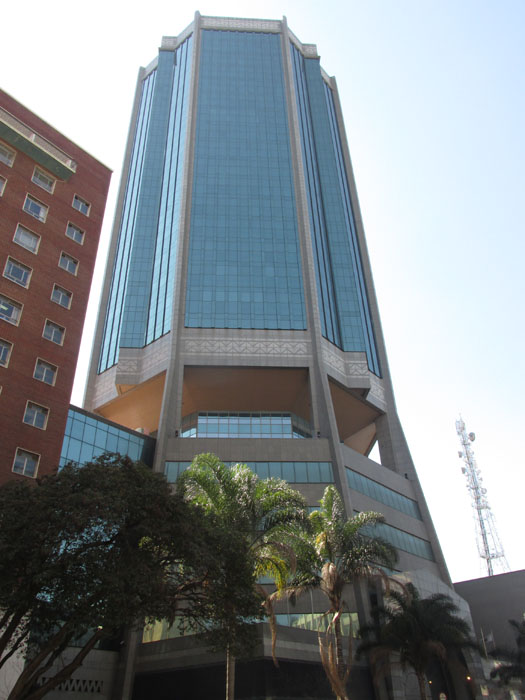
HARARE – THE Reserve Bank of Zimbabwe’s directive urging commercial banks to cut down on lending has triggered unease across the business community. In Harare, Bulawayo, Mutare, and Gweru, boardrooms are asking the same question: will capital dry up?
The short answer is no. The longer answer, grounded in financial economics and economic history, is that this is not a policy of contraction. It is a policy of correction.

For an economy like Zimbabwe’s—dollarised, import-dependent, and still recovering from decades of monetary instability—credit is not neutral. How, where, and to whom banks lend determines whether we build factories or fill shopping malls with imports. The RBZ is therefore asking banks to do what central banks do in every mature economy: act as allocators of last resort, not just conduits of money.
This article argues that the RBZ’s call to curb lending can transform business and the broader economy if it is understood as reallocation rather than restriction.
1. THE “WHY”: LESSONS FROM ZIMBABWE’S ECONOMIC HISTORY
To understand the present, we must read the past. Zimbabwe’s monetary history gives us two cautionary tales.
The First Lesson: 2007-2008 Hyperinflation
This was a crisis of quantity. Uncontrolled money printing to finance fiscal deficits destroyed the Zimbabwe Dollar. Prices doubled every 24 hours. The lesson was simple: when the money supply grows faster than output, value collapses.
The Second Lesson: 2019-2023 Credit-Led Consumption
This was a crisis of allocation. In a multi-currency environment with limited money printing, the pressure moved to the banking sector. Banks, awash with deposits and chasing yield, expanded loan books rapidly. However, much of that credit went to consumption, real estate speculation, and import financing.
A loan to import 1,000 phones creates jobs in Dubai and Shenzhen, not in Mutare. A mortgage for a third property in Harare North does not increase maize output. A revolving overdraft for a retailer to stock South African goods creates a forex outflow the moment the invoice is paid.
In financial economics terms, this is “credit misallocation.” According to the work of Borio and Disyatat at the BIS, when credit grows faster than GDP and finances non-productive assets, it leads to financial instability, currency pressure, and eventually, a correction.
Three outcomes followed in Zimbabwe:
- Demand-Pull Pressure: More ZiG and USD chasing the same limited supply of local goods pushed prices up. Inflation returned, even without printing.
- Forex Leakage: Consumer and vehicle loans became conduits for externalisation. Banks lent locally, but the money was spent abroad.
- Productive Sector Starvation: Agriculture, manufacturing, and exporters—sectors with long gestation periods—were deemed “too risky.” Capital went instead to quick-turn trading.
The RBZ’s directive is therefore a monetary policy tool. By reducing the velocity and volume of credit, it seeks to cool aggregate demand, stabilise the exchange rate, and protect the value of the ZiG. This is not new.
In 1979-1980, the US Federal Reserve under Paul Volcker raised interest rates to 20% and forced banks to contract lending. The US entered recession. But inflation fell from 13% to 3%, and the foundation for the 1990s boom was laid.
The South African Reserve Bank does the same every time inflation breaches 6%. It raises the repo rate, banks tighten, and consumption slows. Painful, but necessary.
Zimbabwe is at that juncture. The choice is between short-term comfort and long-term stability.
2. THE “HOW”: CREDIT REALLOCATION, NOT CREDIT DESTRUCTION
A common misconception is that “cut lending” means “stop lending.” It does not. It means “lend differently.”
From a financial economics perspective, banks have two functions: intermediation and allocation. Intermediation is moving deposits to borrowers. Allocation is choosing which borrowers. The RBZ is asking banks to improve the second function.
A. Sectoral Reallocation: From Consumption to Production
In an import-dependent economy, unconstrained consumer credit is economically destructive. It increases imports without increasing exports.
The alternative is to channel capital into sectors with high multipliers. Agriculture has a multiplier of 2.4 in Zimbabwe. Manufacturing has 1.8. Retail has 1.1.
This is where integrated agri-food models become relevant. Instead of funding 50 traders to import tomato paste, a bank can fund one agro-processor. XYZ Farms grows the tomatoes, ABC Foods processes them, and G Trading distributes the final products.¹ That single loan creates jobs at three points in the value chain, saves forex, and builds tax revenue. That is what “productive lending” looks like.
B. Quality over Quantity: Basel III and Prudence
Globally, banks operate under Basel III. It requires higher capital buffers for risky loans. The RBZ is enforcing the spirit of Basel.
By asking banks to slow lending, it forces them to price risk properly. A 12-month loan to a hardware shop at 18% may look attractive. But a 5-year loan to an irrigation project at 14% with a government guarantee and export contract is better for the economy.
This also protects depositors. Zimbabwe’s banking sector has not had a systemic failure since 2004 because of tight regulation. We must not undo that.
C. Term Transformation: From Overdrafts to Project Finance
Zimbabwean banks love 90-day overdrafts. They are safe and liquid. But they do not build GDP.
Curbing short-term lending nudges banks toward term finance: 3-7 year loans for greenhouses, cold rooms, processing plants, and export capacity. These are the assets that transform an economy.
The Development Bank of Southern Africa and Afreximbank do this at regional level. Our local banks must now do it at national level.
3. THE TRANSFORMATION: FROM A TRADING NATION TO A PRODUCING NATION
Zimbabwe’s structural problem is not a lack of money; it is a lack of production. We import approximately $7 billion of goods annually and export around $6 billion—a gap funded by debt, remittances, and aid. It is not sustainable.
Credit policy is the lever to change this. When credit is tight, businesses adapt in three ways that drive transformation.
1. Forced Efficiency
Cheap debt allows inefficiency. When borrowing costs rise and credit is scarce, firms must cut waste, invest in technology, and raise labour productivity. This is what Japanese firms did after 1990. It is what German Mittelstand firms do every day.
A farm that cannot get an overdraft to cover losses will instead invest in drip irrigation to cut water use by 40%. A factory that cannot borrow for new stock will automate to reduce labour cost.
2. Value Chain Integration
Banks prefer to lend to businesses with collateral and cash flow. In a tight credit environment, integrated businesses win.
A standalone retailer is risky. A retailer that is part of a group that grows, processes, and distributes is less risky. This incentivises the kind of vertical integration seen in model agri-food groups. It keeps value in Zimbabwe and reduces import leakage.
3. Attraction of Patient Capital
When local bank credit contracts, the gap is filled by equity, FDI, and DFI funding. These investors bring more than money. They bring technology, market access, and governance.
Rwanda did this post-2010. After restricting consumer lending, it created the Rwanda Development Board to attract FDI into agriculture and manufacturing. FDI rose from $100 million to $400 million in 5 years. Zimbabwe can replicate this.
4. HISTORICAL PRECEDENTS: WHAT OTHER NATIONS DID
South Africa, 1994-2000
Post-apartheid, SARB kept real interest rates high to fight inflation and stabilise the Rand. Credit to households slowed. But credit to mining and manufacturing was prioritised. The result was a stable currency and the foundation for the commodity boom of the 2000s.
Rwanda, 2010-2016
The National Bank of Rwanda imposed limits on consumer lending and directed banks to lend to agriculture and SMEs. It was unpopular. But agricultural exports doubled and GDP growth averaged 7%.
Vietnam, 2011-2014
Facing inflation and a credit bubble, the State Bank of Vietnam forced banks to cut lending to real estate and increase lending to manufacturing. There was a short recession. Then Vietnam became the world’s factory for electronics.
The pattern is clear. Countries that use credit policy to force structural change suffer for 12-18 months, then grow faster for 10 years.
5. THE RISKS AND THE MITIGATION
No policy is without cost. The risk of this directive is real, and must be managed.
Risk 1: SME Liquidity Crunch
SMEs are the engine of jobs. If banks simply stop lending, thousands will close.
Mitigation: The RBZ must ring-fence facilities. An Agriculture Value Chain Fund. A Women in Manufacturing Fund. An Export Credit Guarantee Scheme. These allow targeted lending even in a tight environment.
Risk 2: Growth Slowdown
GDP growth may dip in 2026 as consumption slows.
Mitigation: Fiscal policy must support. Government should cut non-productive spending and increase capex on roads, power, and irrigation. This is the classic “policy mix.”
Risk 3: Informalisation of Credit
If banks don’t lend, loan sharks will.
Mitigation: Banks must innovate. Invoice discounting for distributor suppliers. Contract financing for contract farmers. Asset finance for solar irrigation. This is profitable and safe.
6. THE ROLE OF THE PRIVATE SECTOR
Banks cannot do this alone. Business must also change.
- Produce Bankable Projects: A business plan for a shop will not get funded. A business plan for a processing plant with an offtake agreement will.
- Embrace Transparency: Audited accounts, proper governance, and tax compliance will separate serious firms from briefcase companies.
- Build Partnerships: Integrated groups must deepen linkages. When farms, processors, and distributors operate as one chain, banks see lower risk and lend more.
7. CONCLUSION: A TEST OF ECONOMIC MATURITY
The RBZ is not anti-business. It is pro-sustainable business.
In economic history, every nation that escaped the middle-income trap did so by making a hard choice: to prioritise production over consumption, investment over imports, and discipline over convenience.
Zimbabwe now faces that choice.
If we allow banks to continue lending indiscriminately into consumption, we will have growth that feels good for 12 months and collapses in 24. We will remain a nation that borrows to buy what others produce.
If we accept this short, sharp correction in credit, we can redirect capital into the real economy: agriculture, manufacturing, and distribution. We can build the kind of economy that creates jobs, earns forex, and feeds its people.
This is not austerity. This is alignment. Alignment of financial capital with productive capital. Alignment of monetary policy with development goals. Alignment of today’s pain with tomorrow’s prosperity.
The next 18 months will tell us which path Zimbabwe chose. As an entrepreneur and researcher, I believe we have the capacity to choose wisely. The RBZ has fired the starting gun. Now it is up to banks, business, and government to run the race.
Newton Mambande is an entrepreneur and researcher with published scientific scholarship in peer-reviewed journals. He writes on financial economics, agri-food systems, and economic policy. He can be reached at newtonmunod@gmail.com or +263 77 341 1103.
Editor’s Note: This article is a policy analysis piece based on the author’s interpretation of the Reserve Bank of Zimbabwe’s directives. The views expressed are the author’s own and are intended to contribute to public debate on economic policy.
Footnotes
XYZ Farms, ABC Foods, and G Trading are fictitious names used for illustrative purposes only. They do not refer to any real company.
Discover more from Etimes
Subscribe to get the latest posts sent to your email.