


By Tinotenda Bhunu
HARARE – Every country would like to use its own currency. There is nothing unusual about that. The United States has the dollar. South Africa has the rand. Botswana has the pula. Zambia has the kwacha. A national currency is more than a means of payment; it is a symbol of sovereignty and confidence in a country’s economy.
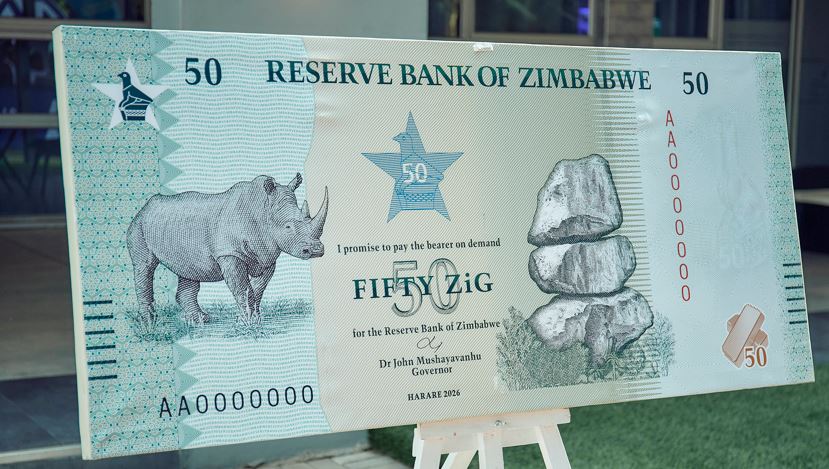
Zimbabwe’s desire to return to a mono-currency is therefore understandable. No country wants to depend permanently on another nation’s currency to conduct its daily economic activities.

But while the idea of having one currency sounds simple, the reality behind it is much more complicated. A currency does not succeed merely because it has a name, a symbol, or because a government announces that it should be used. A currency succeeds because people believe in it. And that belief is tested in the real economy.
The real test of Zimbabwe’s mono-currency ambition will not happen only inside the offices of the Reserve Bank of Zimbabwe. It will happen at Mbare Musika, where traders decide which currency they are comfortable accepting. It will happen at Siyaso, where small entrepreneurs decide whether today’s earnings will still have value tomorrow. It will happen in Gokwe, where farmers decide how they will store the money they receive after selling their produce. It will happen at Beitbridge, where cross-border traders decide which currency they trust for their transactions. It will happen in homes across Zimbabwe, where parents decide how to save for school fees, rent, and future needs. Those daily choices are the true referendum on any currency.
The debate around Zimbabwe’s transition to a mono-currency gained attention after government spokesperson Nick Mangwana publicly stated that, according to the Reserve Bank Governor, Zimbabwe has already achieved six of the eight critical conditions required before a full transition. The conditions include adequate foreign currency reserves, stable inflation, a predictable exchange rate, increased demand for the ZiG, a stable banking sector, an efficient payments system, and coordination between government spending and monetary policy.
These are important conditions. But what do they mean in simple terms?
A country, just like a household, needs savings to survive difficult moments. Imagine a family that earns money every month but has no savings. Everything appears normal until an emergency happens. A medical bill comes. School fees are due. A vehicle breaks down. Without savings, even a small problem becomes a crisis. Countries operate in a similar way.
Foreign currency reserves are a country’s savings account. They allow a nation to pay for important imports such as fuel, medicine, machinery, and other goods from outside the country. This is why economists pay close attention to import cover. In simple terms, it asks: if foreign currency stopped coming into the country tomorrow, how long could the country continue paying for its imports using available reserves? A country with stronger reserves has a cushion against shocks. A country with weak reserves becomes vulnerable to shortages and pressure on its currency.
But reserves alone are not enough. A country must also continuously earn foreign currency. Zimbabwe receives foreign currency through exports, tourism, remittances from citizens abroad, and investment. At the same time, it uses foreign currency to import goods and services. Just like a household, a country cannot permanently spend more than it earns. If foreign currency leaving the country consistently exceeds what is coming in, pressure builds. Businesses struggle to access foreign currency, the exchange rate comes under pressure, and confidence begins to weaken. This is why production matters. A strong currency is ultimately supported by a strong economy that produces goods and services.
Another important requirement is that the government must live within its means. A household cannot survive by borrowing endlessly or simply creating money whenever it runs short. Governments face a similar reality. When governments spend more than they collect and rely on the central bank to finance those gaps, too much money can enter the economy without a matching increase in production. The result can be rising prices and declining confidence in the currency. This is why fiscal discipline is one of the important foundations of any successful mono-currency system.
Price stability also matters. People can plan their lives when prices are predictable. A business owner can invest when they understand their future costs. A worker can save when they believe their salary will retain value. A farmer can increase production when they know their earnings will not disappear. Without price stability, people naturally search for alternatives.
A currency also requires a financial system that supports it. Banks must be stable. Payments must work efficiently. Businesses must be able to borrow. People must be able to save and transact without difficulty. A currency cannot succeed if people use it only because they have no choice. It succeeds when it becomes the natural choice.
This brings us to the most difficult requirement: confidence. Technical conditions can be measured. Reserves can be counted. Inflation can be calculated. Payment systems can be tested. But confidence is different. Confidence is revealed through behaviour.
Do businesses keep their savings in ZiG? Do companies sign long-term contracts in ZiG? Do landlords willingly accept rent in ZiG? Do families save for future needs in ZiG? Do investors hold long-term assets denominated in ZiG? Those decisions reveal the true strength of a currency.
Economists have long argued that money works because people accept it today while believing that others will accept it tomorrow. In simple terms, money works because people trust it.
A government can create a currency. A government can declare it legal tender. But the government cannot manufacture trust overnight. Trust is earned through consistent policies, sound institutions, and years of experience. Zimbabwe’s challenge has arguably never been only about creating a currency. The bigger challenge has been maintaining confidence in that currency.
Businesses and investors do not look only at today’s policies. They ask whether those same policies will still exist tomorrow. Consistency creates confidence. Confidence encourages saving. Savings finance investment. Investment creates businesses. Businesses create jobs. Jobs improve lives.
The journey towards a mono-currency is therefore not simply about meeting eight conditions on paper. It is about building an economy strong enough to support one currency. Zimbabwe has made progress, and that progress should not be ignored.
But the final question is not simply: “Have we met the conditions?” The bigger question is: “Are Zimbabweans confident enough to choose the ZiG when they have other options?”
Because a mono-currency is not created when the government announces it. It is created when ordinary people, from Mbare to Gokwe, from businesses to households, freely decide that it is the currency they trust. That is when a currency moves from being a policy instrument to becoming an economic reality.
History has shown that countries which experience prolonged reliance on a foreign currency face a difficult journey when trying to rebuild confidence in their own money. Once citizens and businesses become accustomed to pricing, saving, and planning in another currency, restoring trust in a local currency requires more than a policy announcement.
It requires discipline. It requires consistency. It requires production. It requires an economy strong enough to support the currency it uses.
The ultimate success of Zimbabwe’s mono-currency project will not be measured by government declarations or official timelines. It will be measured by the choices of ordinary Zimbabweans. When a trader at Mbare willingly accepts ZiG. When a farmer in Gokwe saves in ZiG. When a business owner plans in ZiG. When families believe that the value of their money will be protected—that will be the moment Zimbabwe will know that it is truly ready for a mono-currency.
Tinotenda Bhunu is an economist by profession. LinkedIn: https://www.linkedin.com/in/tinotenda-bhunu-114645208?utm_source=share&utm_campaign=share_via&utm_content=profile&utm_medium=android_app
Discover more from Etimes
Subscribe to get the latest posts sent to your email.