


How artificial intelligence, beneficiation policy and a new National AI Strategy could make Zimbabwe a leading AI-enabled critical-minerals economy
By Jabulani Simplisio Chibaya
Executive Summary

Zimbabwe is sitting on a rare double windfall. Global demand for lithium, platinum, gold and chrome is driving a mineral export boom: first-quarter 2026 mineral revenue reportedly rose 57% year-on-year to US$2.37 billion, in a sector that already contributes roughly 14.5% of GDP and close to 80% of export earnings [9][10]. At the same time, Harare has launched a National Artificial Intelligence Strategy (2026–2030) built on six pillars spanning talent, infrastructure, sectoral adoption, research, international partnership and governance [1][2], and has enacted a beneficiation policy that bans the export of raw ore and lithium concentrate in favour of processed, higher-value product [6][7].
Individually, each of these is a headline. Together, they form a blueprint — and, as this analysis shows stage by stage, the use cases closely resemble those widely cited in Rio Tinto’s publicly reported AI-in-mining programmes: exploration targeting, orebody modelling, predictive maintenance, metallurgical process optimisation, logistics, safety and ESG monitoring. The difference is scale and maturity, not the underlying playbook. A mining sector that digitises now — while capital is flowing in, while processing plants are being built, and while national AI policy is still being written — can move directly into an intelligent, beneficiation-first industry rather than retrofitting AI onto legacy infrastructure a decade from now.

The Boom Zimbabwe Cannot Afford to Waste
Zimbabwe’s mining sector grew 7% in 2025 and is projected by government and industry sources to grow a further 10% in 2026, with industry revenue climbing from US$5.9 billion in 2024 toward a long-run government target of US$21 billion once the current investment pipeline matures [10]. Since 2023, the Zimbabwe Investment and Development Centre has approved new mining licences worth a reported US$3.52 billion, and non-lithium commitments — Zimplats alone has reported deploying over US$750 million into expansion and beneficiation — indicate this is not a single-commodity story [10]. Gold, still Zimbabwe’s largest export earner, and platinum group metals from the Great Dyke are being joined by a lithium sector that has attracted more than US$2 billion in investment from Chinese partners since 2021 [11].

The catch is that commodity booms are cyclical, but industrial capability is not. Zimbabwe’s February 2026 decision to suspend exports of unprocessed minerals and lithium concentrate was a wager that beneficiation, not raw tonnage, is where the greater value sits [6][7]. Artificial intelligence is one technology layer that could help that bet pay off faster, cheaper and safer — and it applies at every stage of the value chain, not just at the processing plant.
Mapping the Opportunity: AI Across Zimbabwe’s Mining Value Chain — Pit to Port
Rio Tinto’s publicly reported AI programmes rest on applying intelligence systemically, from exploration through to port logistics, rather than in isolated pilots. Zimbabwe’s mines are not yet operating at that scale or integration — but every stage of that same value chain has a direct, mappable Zimbabwean equivalent, and in several cases the foundations are already visible on the ground.
| Value Chain Stage | AI/ML Use Case | Key Technologies & Methods | Zimbabwe Context |
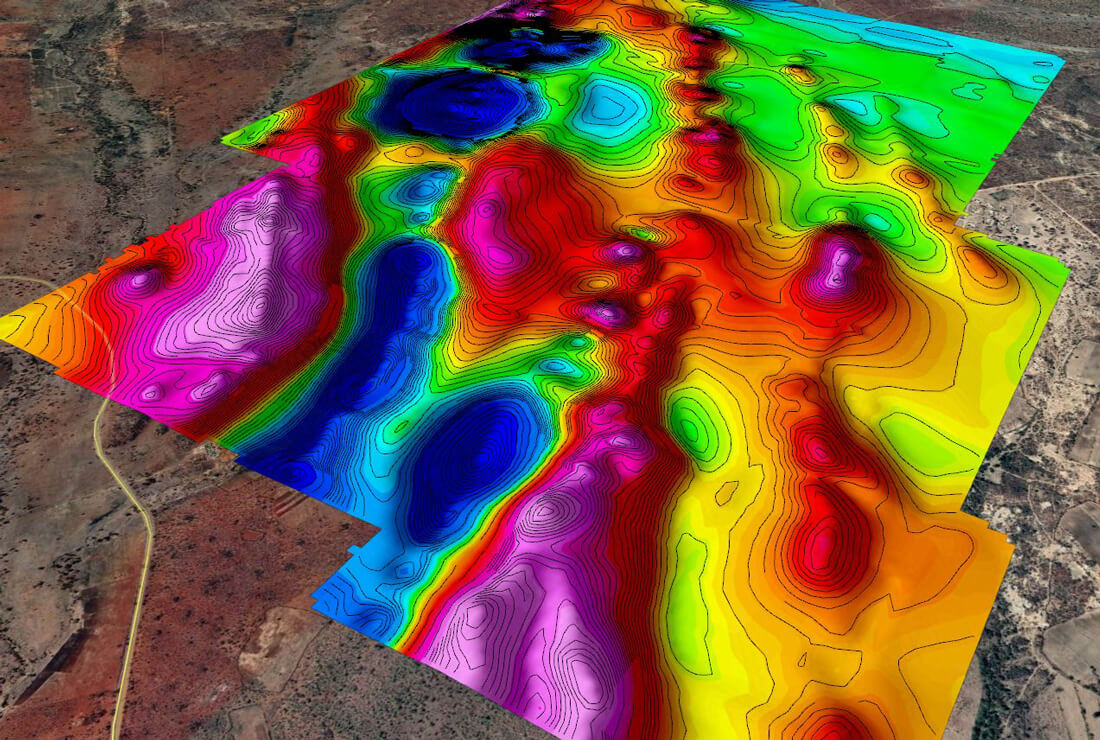
| Exploration | AI-guided geophysical interpretation and satellite subsurface mapping to target new deposits without costly, invasive drilling | Remote-sensing machine learning, drone photogrammetry, geophysical inversion | Zimbabwe School of Mines’ new Drone Training School and MineTech Innovation Hub already teach autonomous surveying, 3D modelling and AI skills [14]; officials have flagged the under-explored margins of the Great Dyke as ripe for this kind of targeting [15] |
| Orebody Modelling & Geology | Machine-learning grade estimation and geological domaining, capturing nonlinear ore relationships that traditional kriging can miss | Neural-network grade estimators, support-vector regression, Bayesian domain models | An internationally proven technique [17] not yet systematically applied in Zimbabwe, but a natural extension of the ore-deposit geology and mineral-exploration modules already taught at Midlands State University and the Zimbabwe School of Mines [16][14] |
| Mine Planning & Design | AI-assisted pit and stope design, blast-pattern and schedule optimisation | Optimisation algorithms, digital-twin simulation | Early-stage; digital-twin technology is already being piloted at several Zimbabwean operations [13] |
| Operations & Automation | Automated drilling and loading, IoT-based fleet monitoring, dispatch optimisation | Autonomous/semi-autonomous equipment, IoT sensors, cloud computing | Already deployed at varying maturity at Zimplats, Unki, Murowa Diamonds, Mimosa, Freda Rebecca and Caledonia [13] |
| Predictive Maintenance | Sensor-based failure prediction for smelters, mills, converters and power infrastructure | Vibration, temperature and pressure analytics; machine learning | The single highest near-term payoff — see case study below |
| Processing & Metallurgy | Real-time optimisation of crushing, milling, flotation, leaching and smelting to lift recovery rates | Predictive process-control models, sensor-driven feed blending | Directly relevant to Zimplats’ smelter expansion and to the new lithium sulphate plants — see case study below |
| Logistics & Supply Chain | AI-optimised rail, road haulage and port/export scheduling | Route and scheduling optimisation | Emerging need as beneficiated product volumes grow and rail rehabilitation proceeds |
| Safety & Training | VR/AI safety simulation; drone-based hazard and structural monitoring | Virtual reality, computer vision, drone survey | Already being built into curricula through the Zimbabwe School of Mines Drone Training School [14] |
| Sustainability, ESG & Community | Environmental monitoring, ASM traceability, labour and community-engagement auditing | Computer vision, blockchain-linked traceability | Directly supports the pending Mines and Minerals Bill’s social-responsibility certification requirements [5] |
| Cybersecurity & Data Governance | Securing the OT/IT convergence that AI adoption creates | Network segmentation, secure remote access, continuous monitoring | Mimosa Mine’s 2026 Rockwell Automation/Mine Elect project is the sector’s first public case study [12] |
Orebody Modelling and Geology: Building the Digital Foundation
Rio Tinto’s competitive advantage in this area is publicly associated with machine-learning models that combine sparse exploration drill-hole data with denser production data to build continuously updated, probabilistic 3D orebody models. Zimbabwe’s equivalent foundation is only starting to form. The country’s geology and mining-engineering programmes — Midlands State University’s ore-deposit geology and mineral-exploration modules, and the Zimbabwe School of Mines’ geology and metallurgical-assaying diplomas [16][14] — already teach the geological fundamentals. What is missing, in this analysis, is a dedicated, funded research partnership — along the lines of Rio Tinto’s publicly reported long-term collaboration with the University of Sydney — that would apply neural-network grade estimation and geological-domain modelling to Zimbabwean orebodies rather than relying solely on traditional geostatistics. Given how much of the country’s 60-plus confirmed mineral types remain incompletely modelled, this is arguably the single highest-leverage, lowest-capital AI investment available to government and mining houses alike.
Predictive Maintenance and Metallurgy: A Case Zimbabwe Has Already Experienced
Zimbabwe does not need a hypothetical case for predictive maintenance — it has a documented and costly one. In the March 2026 quarter, scheduled maintenance on Zimplats’ furnace at the Selous Metallurgical Complex halted matte tapping and reduced the company’s quarterly gold output by 57%, with total 6E (platinum-group-metal) production falling in step; accumulated concentrate stocks of roughly 63,000 ounces were reported to have sat unprocessed for months awaiting the smelter restart [15][16]. Unki and Mimosa were reported to have lost further volume the same year to unplanned electricity disruptions [15]. When the furnace did restart, Zimplats’ subsequent quarter reportedly saw platinum, palladium, gold and rhodium output all rise by 170–186%, largely from clearing the backlog — an illustration of how much value can sit idle behind a single piece of unplanned downtime [16].
This is precisely the failure pattern that vibration-, temperature- and pressure-based predictive-maintenance models are designed to catch weeks in advance, and precisely the process that AI-driven feed-blending and recovery optimisation is designed to protect once the plant is running. Zimplats’ own US$360 million, 38-megawatt smelter expansion at Selous is the kind of large, sensor-rich metallurgical asset where predictive models can pay for themselves fastest [15]. The same logic applies to the country’s new lithium beneficiation plants at Arcadia, Bikita and Kamativi, where every percentage point of recovery converts directly into compliance with, and profit from, the beneficiation mandate [8][11].

The Policy Foundation Is Already Being Poured
Zimbabwe’s National Artificial Intelligence Strategy (2026–2030), launched by President Emmerson Mnangagwa in March 2026 and developed with UNESCO support through a national AI readiness assessment, explicitly names mining alongside agriculture, health, education and public administration as a priority sector for AI-driven productivity gains [1]. It is structured around AI talent and capacity development, AI infrastructure and what it calls “computational sovereignty,” sectoral adoption, research and innovation, international collaboration, and governance and ethics [2] — deliberately framed around Ubuntu values, human rights and data protection rather than an imported governance template [3].
That last point matters more for mining than for almost any other sector. A mine is a machine for generating proprietary, commercially sensitive, often geologically strategic data — ore grades, reserve estimates, production schedules, remote-sensing imagery. The Strategy’s emphasis on building local data infrastructure instead of defaulting to foreign cloud storage is a direct response to the risk that Zimbabwe’s mineral intelligence, including the very orebody and metallurgical models described above, ends up permanently housed and monetised offshore [3]. Read together with Vision 2030, the Strategy effectively instructs miners to treat their operational data as a sovereign national asset, not just a corporate one.

The Value-Addition Leap: Why Metallurgy Is the Policy’s Pressure Point
In April 2026, Zimbabwe reportedly shipped Africa’s first cargo of lithium sulphate — a processed, battery-grade material — from the Arcadia mine plant built through the Prospect Lithium Zimbabwe–Huayou Cobalt partnership [11]. Industry analysts estimate that the shift in product form alone can be worth five to ten times the per-tonne price of raw spodumene concentrate [8]. Sinomine’s Bikita Minerals and Sichuan Yahua’s Kamativi project are reported to be racing to commission comparable plants, though as of mid-2026 only the Arcadia facility was reported to be fully operational — a reminder that beneficiation policy is currently running ahead of processing infrastructure [8].
This is the exact pressure point where metallurgical AI either helps or hinders the policy. A beneficiation mandate without process-control intelligence risks stranding capital in half-built or under-performing refineries; a beneficiation mandate paired with AI-optimised recovery, blending and smelter uptime could turn the same mandate into a genuine profit engine. Zimbabwe’s Mining Minister has argued publicly that the country’s future competitiveness rests on the intelligent application of technology rather than mineral abundance alone, and has committed to deepening cooperation with China specifically in AI, automation, robotics and advanced mineral processing [11]. Chinese-backed firms already account for a large share of lithium beneficiation investment and are well positioned to bring proprietary process-optimisation software into the country — but Zimbabwean engineers, universities and startups need a deliberate seat at that table, not a spectator’s view of it.
Governance: ESG, Cybersecurity and the Data Protection Act
Three governance pillars will help determine whether this AI-mining convergence builds trust or erodes it.

ESG is no longer optional. Zimbabwean officials have warned miners that ESG compliance now affects access to international capital and markets, and the pending Mines and Minerals Bill would require large operators to hold social-responsibility certificates covering community engagement, labour practice and land rehabilitation, backed by penalties including loss of mining title [5]. AI-enabled monitoring — computer-vision environmental surveillance, automated tailings and water-quality tracking, algorithmic labour-scheduling audits — can turn ESG from a compliance cost into a real-time management tool, provided it is deployed transparently rather than as a surveillance layer over workers and communities.
Cybersecurity is now a production risk, not just an IT risk. As mines digitise haulage, processing and remote monitoring, operational-technology networks become potential attack surfaces — the kind of exposure Mimosa’s 2026 OT-modernisation project with Rockwell Automation and Mine Elect was reportedly designed to address [12]. A national mining sector moving toward AI adoption would benefit from sector-specific cyber-resilience standards rather than ad hoc, mine-by-mine fixes.
The Cyber and Data Protection Act [Chapter 12:07] is the legal spine. Enacted in December 2021, the Act requires data controllers and processors — a category that includes any miner running AI systems on employee, community, geological or production data — to register, appoint a Data Protection Officer, and process data lawfully under the supervision of the Postal and Telecommunications Regulatory Authority and a dedicated Cyber Security Centre [4]. For mining companies building AI pipelines that touch cross-border cloud services, drone imagery or biometric access control, compliance with the Act is not a side issue: it is the difference between an AI programme that survives regulatory scrutiny and one that becomes a liability.

A Roadmap: Three Horizons to an AI-Powered Mining Sector
Horizon 1 (2026–2027) — Foundations. Digitise operational-technology and IT networks mine-by-mine, following the Mimosa model; register as data controllers under the Cyber and Data Protection Act; pilot AI-assisted exploration and predictive maintenance at two or three flagship smelters and lithium plants; launch a university-anchored orebody-modelling research partnership.
Horizon 2 (2028–2029) — Scale and Local Capacity. Extend digital-twin, MLOps and metallurgical process-control platforms across mid-tier PGM, gold and lithium operations; formalise artisanal and small-scale mining through AI-enabled traceability apps; stand up sector-specific cybersecurity standards; and localise AI talent through university-industry partnerships, building on the technical training academies already being established with Chinese processing partners [11].
Horizon 3 (2030 and beyond) — Sovereign, Integrated Intelligence. Build a national mining-data platform — a Zimbabwean equivalent of an integrated operational “single source of truth” — hosted on sovereign infrastructure, linking exploration, orebody, processing and export data into one trusted picture, while Zimbabwean-owned AI vendors compete for contracts currently won by default by multinational suppliers.

The Startup Opportunity: Building an AI Value Chain, Not Just an AI Sector
The biggest strategic error Zimbabwe could make is treating mining AI as something only large Chinese or Western contractors can deliver. There is real room for domestic startups and adjacent industries to build the picks and shovels of this transformation:
- Geospatial and exploration-analytics startups that process satellite and drone imagery for junior miners who cannot afford enterprise geophysics contracts.
- Orebody and grade-estimation software firms, translating university geology research into deployable tools for mid-tier miners.
- ASM fintech and traceability apps, extending Zimbabwe’s mobile-money strength into gold and lithium supply-chain verification for artisanal producers.
- Predictive-maintenance and metallurgical-analytics integrators serving smelters and processing plants that cannot justify a full enterprise build-out.
- Cybersecurity and compliance-as-a-service firms helping smaller operators meet Cyber and Data Protection Act obligations without hiring a full in-house team.
- Energy-tech startups applying AI to optimise solar-hybrid mini-grids for off-grid and near-grid mining sites, directly addressing the power disruptions that have reportedly affected Unki and Mimosa’s output.
- Contractors and adjacent industries — engineering, procurement and construction firms, rail and haulage logistics operators, equipment distributors such as Mine Elect, and vocational training providers such as the Zimbabwe School of Mines — all sit downstream of AI-enabled mining demand and stand to capture new service revenue as mines digitise.
Zimbabwe’s tech ecosystem — anchored by hubs such as Tech Hub Harare and Impact Hub Harare, and the newly established National Innovation Acceleration Centre — remains small relative to Nairobi or Lagos, but early-stage funding across African tech markets has been climbing steadily, with fintech, clean energy and logistics among the fastest-growing categories. A deliberate government and Chamber of Mines effort to route even a modest share of mining capital expenditure toward local AI vendors, rather than exclusively toward imported turnkey systems, would do more for long-term industrial depth than almost any other single policy lever.
The Export and Value-Addition Advantage
Zimbabwe does not merely have minerals the world wants; it has a rare, live opportunity to be the African country that demonstrates critical-mineral wealth and artificial intelligence can be built together, from the ground up. The lesson from the Zimplats smelter shutdown is not that beneficiation is inherently risky — it is that beneficiation without predictive, AI-enabled process control may be fragile, while beneficiation with it can compound. Every orebody model that finds ore without new drilling, every furnace failure predicted weeks in advance, every percentage point of recovery an AI-optimised plant adds, converts directly into the beneficiation premium the government is now demanding by law. That is the real prize behind the boom: not just more tonnes leaving the country, but far more value staying in it.
References
- UNESCO, “Zimbabwe launches National Artificial Intelligence Strategy,” https://www.unesco.org/en/articles/zimbabwe-launches-national-artificial-intelligence-strategy
- OECD.AI, “Zimbabwe National Artificial Intelligence Strategy 2026–2030,” https://oecd.ai/en/dashboards/policy-initiatives/zimbabwe-national-artificial-intelligence-strategy-2026-2030
- CIPESA, “Zimbabwe’s National AI Strategy: Policy Lessons for Africa,” https://cipesa.org/2026/05/zimbabwes-national-ai-strategy-policy-lessons-for-africa/
- Michalsons, “Zimbabwe’s Cyber and Data Protection Act — Overview,” https://www.michalsons.com/blog/zimbabwes-cyber-and-data-protection-act-overview/78795
- 263Chat, “ESG No Longer Optional, Government Warns Miners,” https://www.263chat.com/esg-no-longer-optional-government-warns-miners
- Boston University Global Development Policy Center, “Zimbabwe’s Lithium Pivot: Promises and Pitfalls of Mining,” https://www.bu.edu/gdp/2026/03/23/zimbabwes-lithium-pivot-promises-and-pitfalls-of-mining/
- McCarthy Tétrault, “Zimbabwe’s Lithium Export Ban,” https://www.mccarthy.ca/en/insights/blogs/spotlight-can-asia/zimbabwes-lithium-export-ban
- Discovery Alert, “Zimbabwe’s Lithium Export Ban Extension: 2026 Industry Update,” https://discoveryalert.com.au/zimbabwe-lithium-export-ban-extension-processing-capacity-2026/
- Mining Zimbabwe, “Zimbabwe’s Mineral Export Earnings Surge 57% in Q1 2026 to US$2.37 Billion,” https://miningzimbabwe.com/zimbabwes-mineral-export-earnings-surge-57-in-q1-2026-to-us2-37-billion/
- Mining Weekly, “Zimbabwe mining investment rising steadily and extends beyond lithium,” https://www.miningweekly.com/article/zimbabwe-mining-investment-rising-steadily-and-extends-beyond-lithium-2026-06-26-1
- Mining Zimbabwe, “Zimbabwe-China tech alliance will shape the future of mining – Kambamura,” https://miningzimbabwe.com/zimbabwe-china-tech-alliance-will-shape-the-future-of-mining-kambamura/
- International Mining, “Rockwell Automation advances mining cybersecurity at Mimosa Mine in Zimbabwe,” https://im-mining.com/2026/09/01/rockwell-automation-advances-mining-cybersecurity-at-mimosa-mine-in-zimbabwe/
- A. Chilunjika, “Application of fourth industrial technologies: a case of Zimbabwe’s mines,” IDEAS/RePEc, https://ideas.repec.org/a/ssi/jouird/v6y2024i4p124-140.html
- African Mining News, “Zimbabwe School of Mines: Shaping the future of mining in the SADC region,” https://www.africanminingnews.co.za/education/zimbabwe-school-of-mines-shaping-the-future-of-mining-in-the-sadc-region/
- The Herald, “Zim platinum production seen rebounding,” https://www.heraldonline.co.zw/zim-platinum-production-seen-rebounding/
- Mining Zimbabwe, “Zimplats Gold Production Plunges 57% as Smelter Shutdown Crushes Output,” https://miningzimbabwe.com/zimplats-gold-production-plunges-57-as-smelter-shutdown-crushes-output/
- MDPI Minerals, “Addressing Geological Challenges in Mineral Resource Estimation: A Comparative Study of Deep Learning and Traditional Techniques,” https://doi.org/10.3390/min13070982
Jabulani Simplisio Chibaya is a Data and AI Consultant specializing in data science, artificial intelligence, blockchain, and cryptocurrency innovation. A seasoned conference speaker, he also writes on the intersection of technology, regulation, and economic development. Contact: Cell: +263 778 921 881 | Email: simplisiochibaya22@gmail.com | LinkedIn: https://www.linkedin.com/in/jabulani-simplisio-chibaya
Discover more from Etimes
Subscribe to get the latest posts sent to your email.