


By Tonderai Godknows Mapfumo
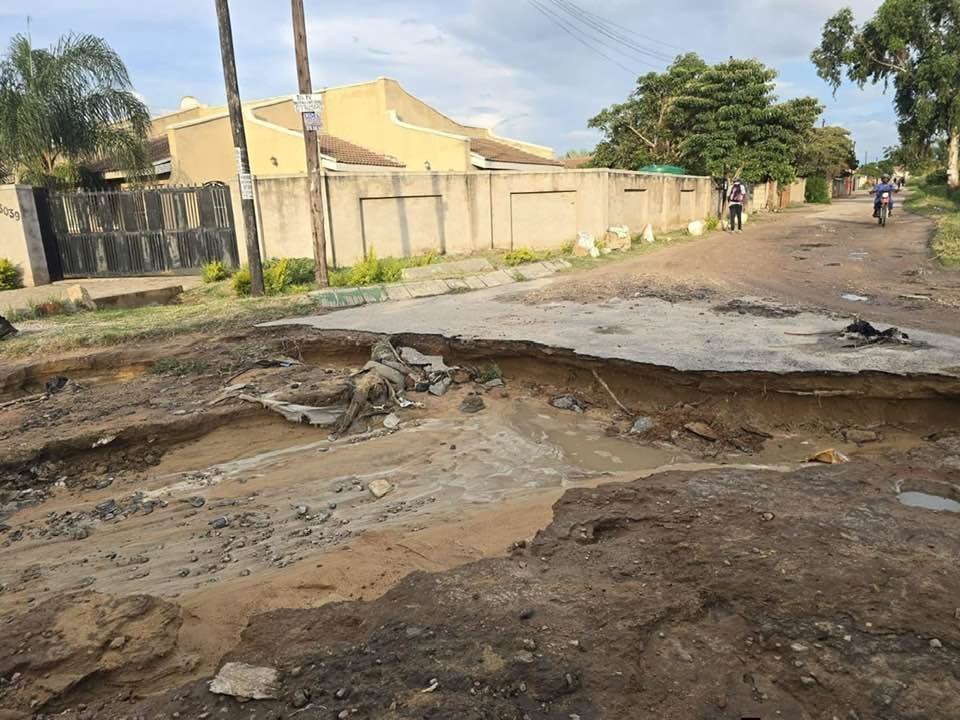
HARARE – MAYOR Jacob Mafume is correct to state that Harare’s outdated infrastructure is buckling under rapid population growth and that traditional revenue streams are no longer sufficient. His admission that “the era of depending solely on municipal balances…is over” is a necessary first step. However, this is a challenge that many cities have faced and overcome. The real question is not whether Harare needs investment, but whether it has the political will to adopt the governance reforms that make investment possible.
The Bogotá Model: Prioritising People Over Cars

In the 1990s, Bogotá, Colombia, was plagued by chaos, violence, and crumbling infrastructure. Mayor Enrique Peñalosa took office and transformed the city not with expensive mega-projects, but by prioritizing people. He invested in a rapid bus transit system (TransMilenio) and created hundreds of kilometres of bike lanes and pedestrian spaces. The lesson for Harare is not about copying a bus system, but about making courageous, pro-poor decisions that prioritize the majority over the elite. Harare’s leadership must ask: are we designing a city for cars and a few, or for people and the many?
The Kigali Example: Governance as the Foundation
Rwanda’s capital, Kigali, offers an even more pertinent lesson. Emerging from a devastating genocide, Kigali is now one of Africa’s cleanest and safest cities. This was not achieved through massive foreign aid alone, but through ruthless efficiency, strict enforcement of anti-corruption measures, and a citizenry that takes pride in its environment. Kigali’s leaders enforced laws consistently, from plastic bag bans to strict building codes. Harare’s struggle is not just about money; it is about a perceived collapse in governance systems. No amount of investment will be sustainable if the systems to manage and maintain it are not adequately strengthened, and if the citizen-state contract is absent.
The Singapore Story: Leveraging Land Value
Singapore is a masterclass in infrastructure funding. With no natural resources, it became a first-world city-state by leveraging its most valuable asset: land. Through its land acquisition and leasehold system, the state captures a significant portion of the value it creates through public infrastructure. This revenue is then reinvested. Harare sits on prime real estate but has failed to capitalize on it. The city could explore similar mechanisms, such as land value capture – taxing the increase in property value that results from public investments like roads or sewers. This is a more sustainable alternative to relying solely on beleaguered ratepayers.
Mayor Mafume’s Missed Opportunity
The mayor’s speech largely focused on the problem; however, it left the specifics of the solution largely unaddressed. He mentioned “new investment opportunities and revenue collection strategies” but failed to outline the tough governance reforms that make these viable. Investors rarely give money to poorly managed cities; they invest in systems that are predictable and accountable. Furthermore, the city’s historical neglect, particularly in high-density areas, has created a culture of non-payment. Residents feel they receive no services and thus see no reason to pay rates. To break this cycle, the city must make a new “social contract”: visible improvements in exchange for compliance.
Conclusion: An Opportunity, Not an Excuse
Harare’s outdated infrastructure is not an excuse for failure; it is an opportunity for a generational reset. The city must abandon the “woe is me” narrative and adopt the bold, reform-minded approach of cities like Bogotá, Kigali, and Singapore. This requires political courage to make hard decisions, a commitment to transparent and accountable governance, and a genuine partnership with residents. Without this, Harare will remain a city of unfulfilled potential, and Mayor Mafume’s dialogue risks being remembered as just another talk unless followed by decisive action.
Tonderai Godknows Mapfumo is the Research and Advocacy Officer for COMALISO (Coalition for Market and Liberal Solutions) in Zimbabwe and an Associate of the Free Market Foundation.
Discover more from Etimes
Subscribe to get the latest posts sent to your email.