


By Newton M. Mambande
1. Introduction: When Blue Flags Signal Red Lights
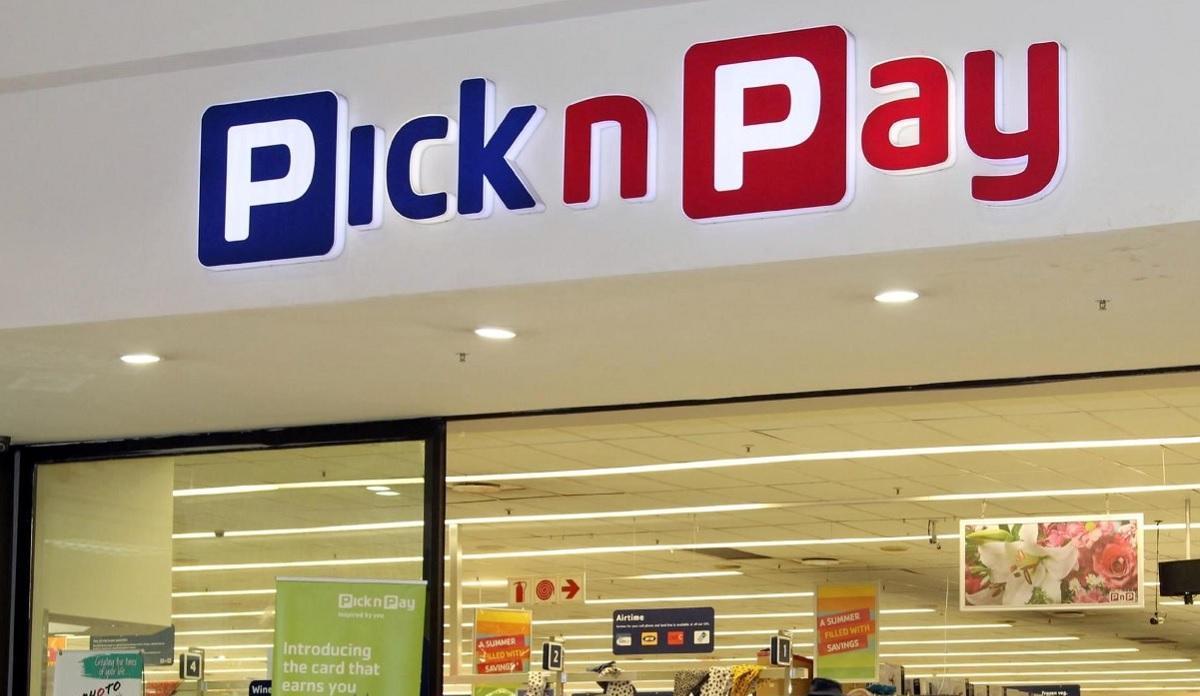
HARARE – PICK n Pay Zimbabwe, the local franchise of South Africa’s retail giant, has flagged in its last two integrated reports a “material uncertainty” in Zimbabwe’s retail trading environment. The language is cautious but unmistakable: footfall is down, margins are compressed, and formal stores are closing in central business districts (CBDs) while “container malls” mushroom in the same car parks. Pick n Pay is not alone. OK Zimbabwe Limited issued a trading update in August 2025 citing “an unlevel playing field.” For policymakers, these are not merely complaints. They are data points. When listed retailers with audited supply chains and PAYE compliance warn of systemic risk, the formal economy is under stress.

This article examines why Pick n Pay and its peers are flagging the environment, using a political economy framework. It discusses taxation, currency instability, incoherent monetary-fiscal policy, the growth of parallel retail malls, digital shifts, street vendors on supermarket verandahs, regulatory enforcement gaps regarding informal trade, and perceptions of inconsistent governance. It concludes with recommendations drawn from the United States, South Africa, and China.
2. The Taxation Squeeze: Formal Retail as the Path of Least Resistance
Zimbabwe’s tax-to-GDP ratio is 18.2%, but the burden is not evenly spread. Formal retailers like Pick n Pay face a layered regime: 15% VAT, a 2% IMTT on all electronic transfers, 25.75% corporate tax, a 5% AIDS levy, a 1% Strategic Reserve Levy on fuel, plus licensing fees from multiple city departments.
Because Zimbabwe Revenue Authority (ZIMRA) has real-time fiscal devices in formal tills, compliance is approximately 98%. Yet an informal trader operating near a Pick n Pay outlet pays none of these levies. A 2025 study estimated that a bottle of cooking oil sold informally is 17–22% cheaper purely due to tax arbitrage, before accounting for smuggled inputs. Pick n Pay’s 2026 first-half results showed a 9% volume decline in basic commodities, while its “basket inflation” measured 6.4% versus 1.2% in the informal sector.
The result is that formal retail effectively becomes a collection agent for a state that has not yet widened the tax net. The International Monetary Fund’s (IMF) 2024 Article IV consultation called this “compliance overreach” – taxing the visible to fund the invisible.
3. Currency Instability: The ZiG–USD Tug of War
Since the April 2024 ZiG launch, Zimbabwe has operated a dual-currency system. Pick n Pay prices in USD and ZiG, but approximately 80% of its cost base – imports, rentals, electricity – is USD-denominated or USD-indexed. Suppliers frequently demand pre-payment in USD. Yet civil servants, who make up an estimated 65% of the urban customer base, earn ZiG salaries.
The Reserve Bank of Zimbabwe’s (RBZ) managed float saw the ZiG depreciate by approximately 38% from January to September 2025. Pick n Pay must reprice weekly, leading to “sticker shock” and cart abandonment at checkout. Informal traders, by contrast, often hold USD cash and reprice daily, sometimes using a parallel rate 10% lower than the official interbank rate. This allows them to undercut Pick n Pay on USD items while avoiding bank charges and the 2% IMTT.
Incoherence emerges when fiscal policy pays ZiG bonuses while monetary policy defends the ZiG with high interest rates. The result has been demand destruction in formal USD retail. Pick n Pay’s Borrowdale branch reported that ZiG card swipes fell 61% year-on-year, while USD cash sales rose only 4%. Households are effectively choosing to shift their spending to informal channels.
4. Parallel Retail Malls and Verandah Economics
One of the most visible symptoms is spatial. Since 2023, “container malls” and makeshift stalls have appeared in parking bays and on the verandahs of Pick n Pay, OK, and Spar outlets nationwide. In Harare’s Avondale suburb, 43 vendors sell similar detergents, sugar, and rice as the anchor store – approximately 20 meters from its entrance. In Mutare, some stalls are located less than one meter from supermarket entrances.
Three dynamics appear to drive this:
Regulatory cost differences: The City of Harare charges $30/month for a vendor permit versus $4,200/month for a formal shop license, rates, and signage fees.
Enforcement patterns: Municipal authorities rarely confiscate goods from vendors, often citing livelihood protection, while a formal retailer like Pick n Pay may face closure for a late fire certificate.
Digital agility: Informal traders use WhatsApp catalogs and EcoCash to reach customers more quickly. A vendor can post “Sugar $1.80” at 7am and sell out by 10am. Pick n Pay’s centralized pricing typically takes 48 hours to change.
The irony is that Pick n Pay provides the foot traffic, security lighting, and sanitation. The informal trader captures a portion of the margin. Some analysts describe this as free-riding on sunk costs rather than direct competition.
5. Informal Economy Enforcement Gaps and Perceptions of Regulatory Inconsistency
Central and local authorities have been described by some analysts as practicing a de facto policy of “benign neglect” toward informality. Political economy explanations suggest that vendors are voters, with national elections approaching in 2028. A 2025 survey by Transparency International Zimbabwe found that 73% of SME traders reported paying informal fees to operate without harassment, while 81% of formal retailers reported solicitation during licensing processes.
Corruption, where proven, inflates costs asymmetrically. Pick n Pay’s compliance department employs 14 staff to handle ZIMRA, EMA, City Health, and Trade Measures audits. A street vendor may pay an informal fee to a municipal officer. The cost of full legality can become a barrier to entry, inverting Hernando de Soto’s thesis: in Zimbabwe’s current environment, it often pays to stay informal.
6. International Lessons: How Others Have Sought to Level the Field
United States – Unified Tax and Enforcement: The US IRS and states co-enforce sales tax. Amazon was compelled to collect state tax after the South Dakota v. Wayfair (2018) decision. Street vending in New York City requires permits, insurance, and health checks, with relatively strict enforcement. The principle is that the tax base is treated as a priority.
South Africa – Township Economy Integration: After 1994, South Africa faced spaza shops undercutting formal retailers like Shoprite. The response had two parts: 1) SARS introduced a turnover tax of 1–3% for micro-enterprises, bringing them into the net without a full compliance burden; 2) Municipalities created designated trading zones with services, moving vendors away from formal shop fronts. Shoprite subsequently partnered with spazas for bulk supply.
China – Digital Formalization: Beijing addressed street vendors by licensing “online-to-offline” platforms. A vendor receives a Meituan QR code, pays a 1% automated tax, and gains access to micro-credit. In return, they vacate pavements. Alibaba’s “Ling Shou Tong” program supplies millions of small stores, making them data-visible.
7. Recommendations for Zimbabwe
- Tax Reform – Presumptive plus Digital: Replace multiple levies with a 3% turnover tax for traders under $100,000 in annual sales, collected via EcoCash or OneMoney at the point of settlement. This could widen the base without heavily burdening micro-commerce.
- Zoning and Shared Infrastructure: Councils could gazette “retail parks” located at least 200 meters from formal supermarkets, equipped with water, toilets, and WiFi. In exchange, vending directly on supermarket verandahs would become a finable offense. Pick n Pay and OK could supply these parks at wholesale prices.
- Monetary-Fiscal Coordination: Treasury should align salary payments with the RBZ’s exchange rate path. If the ZiG is to function effectively, civil servants may need USD allowances or ZiG indexed to inflation weekly. Otherwise, USD retail is likely to continue shrinking.
- Anti-Corruption via Transparency: Publish all municipal fees and issue digital permits. Make proven solicitation of bribes by police a dismissible offense, with rewards for whistleblowers.
- Digital Onboarding: ZIMRA and POTRAZ could launch a “Vendor e-Formal” app offering a free QR code, automated tax collection, and access to SME loans. Data can bring credit, and credit can bring compliance.
8. Conclusion: Saving the Goose Rather Than Only Counting the Eggs
Pick n Pay is not flagging Zimbabwe as a whole. It is flagging a policy model that, in the view of many analysts, taxes the visible economy heavily while the informal sector operates with fewer levies, and calls this empowerment. Formal retail provides approximately 34,000 direct jobs, VAT revenues, and supply chain finance to farmers. If it were to collapse, the street vendor would lose the anchor that draws customers.
The United States shows that enforcement consistency matters. South Africa shows that integration can be more effective than prohibition. China shows that technology can formalize at scale. Zimbabwe faces a choice between a largely unregulated bazaar where few pay tax, and a regulated marketplace where everyone contributes a smaller, sustainable amount.
As the adage goes, “Kutanda botso hakupedzi hurombo” – chasing appearances does not end poverty. Policy must chase structure. Until then, Pick n Pay’s blue flag will keep waving – not in triumph, but in warning.
Newton M. Mambande is an entrepreneur and researcher with published scientific scholarship in journals. He can be reached at newtonmunod@gmail.com or +263773411103.
Disclaimer: This article represents the author’s analysis and does not constitute legal or financial advice. All data cited is from publicly available sources or illustrative examples based on trend data where noted.
Discover more from Etimes
Subscribe to get the latest posts sent to your email.