


By Tinotenda Bhunu
HARARE – I RECENTLY had the opportunity to visit Ghana. While I was excited about the trip itself, what fascinated me most was not the tourist attractions or the food. It was the level of development taking place across the country.
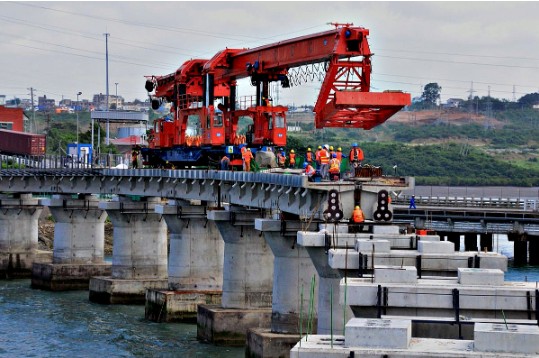
Whether you travel to the north, south, east, or west, one thing becomes impossible to ignore: cranes dominate the skyline. New roads are being built. Housing estates are expanding. Office buildings, factories, shopping centres, and public infrastructure are rising almost everywhere. There is a visible sense that the country is building for the future.

As an economist, I could not help but ask myself one simple question: What is driving all this development?
Economic growth is not measured only by GDP statistics or government announcements. Sometimes the clearest evidence is what you can see with your own eyes. When cranes become a permanent feature of a country’s skyline, they represent more than construction—they represent confidence. Every project reflects an investor who believes the future will be better than the present.
Behind every new building is capital seeking returns. Behind every new factory is confidence that production will be profitable. Behind every industrial park is an expectation that businesses will expand, jobs will be created, and incomes will rise. Development is ultimately a product of investment, and investment follows confidence.
During my stay, I found myself reflecting on the future. If Ghana maintains its current momentum, I foresee it emerging as the industrial hub of West Africa. The pace of infrastructure development, the expansion of commercial activity, and the confidence reflected in private investment suggest that the country is laying the foundations for long-term industrialisation rather than pursuing short-term projects. While no country’s future is guaranteed, Ghana appears to be positioning itself as one of the region’s leading centres of manufacturing, commerce, and industry.
Of course, construction alone does not guarantee economic success. Buildings without productive economic activity eventually become monuments rather than engines of growth. Sustainable development requires policy consistency, secure property rights, reliable electricity, efficient transport networks, access to finance, and a business environment that rewards entrepreneurship and innovation. These are the ingredients that transform concrete and steel into lasting prosperity.
One of the greatest lessons from Ghana is that development does not happen by accident. It is the result of creating an environment in which investors have the confidence to commit their capital for decades, not just months. Governments have an important role in providing stability and infrastructure, but it is private enterprise that ultimately creates wealth, expands industries, and generates employment.
This experience also made me reflect on the rest of Africa. Too often, our conversations focus on politics rather than productivity. We celebrate policies more than outcomes. Yet what changes people’s lives are growing businesses, expanding factories, modern infrastructure, and productive investment. These are the foundations upon which prosperous nations are built.
Every African country can draw lessons from Ghana’s experience. Development should not be measured by speeches or ambitious national plans alone, but by whether businesses are investing, whether industries are expanding, and whether the private sector has the confidence to build for the future.
As I left Ghana, I did so with optimism—not because development has been completed, but because I witnessed a country actively investing in tomorrow. The cranes across the skyline are more than construction equipment; they are symbols of ambition, confidence, and belief in the future.
For me, that was the biggest lesson from Ghana: countries become prosperous not simply because they desire development, but because they consistently create the conditions that make investment, enterprise, and long-term growth possible.
Tinotenda Bhunu is an economist by profession. LinkedIn: https://www.linkedin.com/in/tinotenda-bhunu-114645208?utm_source=share&utm_campaign=share_via&utm_content=profile&utm_medium=android_app
Discover more from Etimes
Subscribe to get the latest posts sent to your email.